Table of Contents
Gut Health and Regenerative Therapies: A Functional Wellness Approach
Abstract
Gut health affects much more than digestion. The intestinal lining helps control nutrient absorption, immune activity, inflammation, and communication between the digestive system and the rest of the body. When this barrier becomes damaged, increased intestinal permeability—often called “leaky gut”—may develop in connection with certain diseases, medications, infections, poor diet, and other health problems.
Regenerative medicine is being studied for its ability to support tissue repair, intestinal stem cells, mucosal healing, and inflammatory control. One investigational compound attracting attention is BPC-157, or Body Protection Compound-157. Laboratory and animal research suggests that BPC-157 may support epithelial repair and cytoprotection, but human evidence remains limited, and BPC-157 is not an FDA-approved medication.
At Health Coach Clinic, an integrative wellness approach looks beyond one treatment. Nutrition, health coaching, functional medicine, lifestyle changes, chiropractic care, rehabilitation, and medical oversight may work together to support the body’s natural healing environment. The goal is not simply to cover symptoms but to identify factors that may be contributing to poor health and address them safely and appropriately.
Can Regenerative Therapies Help Improve Gut Health?
The answer is potentially, depending on the therapy and condition being treated.
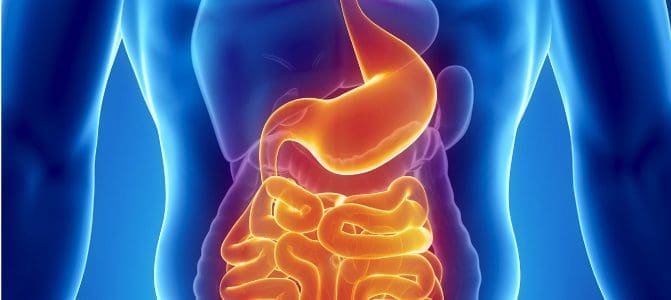
Regenerative medicine focuses on helping damaged tissues repair, replace, or restore normal function. In the digestive system, researchers are studying several approaches, including:
- Intestinal stem-cell regeneration
- Stem-cell-derived organoids
- Microbiome therapies
- Immune-based therapies
- Tissue-signaling compounds
- Regenerative peptides
- Nutrition that supports tissue repair
The intestine already has a strong natural ability to regenerate. Cells lining the digestive tract are constantly being replaced.
Specialized intestinal stem cells help create these new cells. Because of these findings, researchers want to learn whether regenerative medicine can strengthen or restore this natural repair process when disease, inflammation, aging, or injury interferes with it.
The California Institute for Regenerative Medicine has supported research exploring intestinal stem cells and organoid technology for inflammatory bowel disease. The goal is to understand whether damaged intestinal lining may eventually be replaced or repaired with healthier tissue (California Institute for Regenerative Medicine [CIRM], n.d.).
Why Is the Intestinal Barrier So Important?
The intestinal lining is only one cell layer thick in many areas, but it performs a major job.
It must allow nutrients to enter the body while helping keep bacteria, toxins, and unwanted materials inside the digestive tract.
Cells in this lining are held together by structures called tight junctions.
Think of them like the seals between tiles in a shower. The tiles may look strong, but if the seals weaken, unwanted material can pass through areas where it normally would not.
Increased intestinal permeability may occur when the intestinal barrier becomes disturbed.
Factors that may affect barrier health include:
- Chronic intestinal inflammation
- Certain infections
- Heavy alcohol use
- Some medications
- Poor dietary patterns
- Changes in the gut microbiome
- Severe illness
- Metabolic problems
- Chronic gastrointestinal disease
- Long-term stress and poor sleep
The popular term “leaky gut” is often used for this increased permeability. However, patients should remember that leaky gut is not an explanation for every health symptom.
Finding the cause matters.
Gut Health Is About More Than Digestion
One major theme of functional medicine is that different body systems influence one another.
The gut interacts with the:
- Immune system
- Brain
- Liver
- Hormonal system
- Metabolism
- Musculoskeletal system
- Cardiovascular system
Research has also shown that the gut microbiome may influence inflammation and several disease processes. Williams et al. (2023) described the microbiome as an important target for regenerative and immune research because gut microorganisms and their metabolites interact with inflammatory, metabolic, and immune pathways.
This is one reason Health Coach Clinic places strong attention on functional medicine, nutrition, health coaching, laboratory testing, wellness, and lifestyle factors rather than viewing every symptom in isolation.
What Is BPC-157?
BPC-157 is a synthetic 15-amino-acid peptide related to a compound studied in gastric tissue.
The initials BPC stand for Body Protection Compound.
BPC-157 has attracted interest because experimental research suggests that it may influence several biological processes involved in healing.
Researchers have studied possible effects involving:
- Epithelial cell repair
- Blood-vessel formation
- Tissue protection
- Collagen production
- Cell migration
- Inflammatory signaling
- Nitric oxide pathways
- Gastrointestinal tissue healing
A recent scientific review described experimental evidence involving BPC-157 and tissue repair, blood-vessel development, cell migration, collagen, and inflammatory pathways. However, the researchers also emphasized a major limitation: human clinical evidence remains very limited (Yuan et al., 2026).
This gap between experimental evidence and proven medical treatment matters.
Could BPC-157 Help With Leaky Gut?
This is one of the major reasons BPC-157 has become popular online.
Experimental studies suggest that BPC-157 may support cytoprotection.
Cytoprotection means protecting cells from damage and helping tissue maintain or restore normal function.
In gastrointestinal research, scientists have investigated whether BPC-157 may:
- Protect epithelial cells
- Support blood flow to damaged tissue
- Help cells migrate into injured areas
- Promote tissue-repair signaling
- Influence inflammatory activity
- Support intestinal barrier stability
These mechanisms could theoretically be useful when intestinal tissue is damaged.
However, there is an important distinction:
A biological mechanism is not the same as proven clinical effectiveness.
Animal research showing improved intestinal healing does not automatically prove that BPC-157 will treat human intestinal permeability, Crohn’s disease, ulcerative colitis, irritable bowel syndrome, gastritis, or another gastrointestinal disorder.
Human clinical trials are still needed.
BPC-157 Is Not FDA Approved
Patients researching peptide therapy online should understand the current regulatory situation.
As of August 2026, BPC-157 is not an FDA-approved drug.
The FDA has stated that available safety information for compounded BPC-157 is limited. The agency has raised concerns about possible immune reactions, peptide-related impurities, and problems with characterizing the active pharmaceutical ingredient. The FDA states that it currently lacks enough safety information to know whether compounded BPC-157 could cause harm when administered to humans.
In July 2026, the FDA’s Pharmacy Compounding Advisory Committee formally discussed BPC-157-related bulk drug substances as part of its review of whether they should appear on the Section 503A Bulks List. The use evaluated for BPC-157 was ulcerative colitis. This regulatory review should not be confused with FDA approval for treating ulcerative colitis or leaky gut.
For this reason, responsible patient education should avoid claims that BPC-157:
- Cures leaky gut
- Cures inflammatory bowel disease
- Is proven safe for long-term human use
- Has an established human dosing standard
- Can replace approved gastrointestinal treatments
Regenerative peptides remain an area where medical supervision and careful review of the evidence are especially important.
The Microbiome and Intestinal Regeneration
One exciting area of regenerative science involves the connection between gut bacteria and intestinal stem cells.
The gut contains trillions of microorganisms. Collectively, they are known as the microbiome.
These organisms produce substances that communicate with intestinal cells and the immune system.
Recent research suggests that changes in the microbiome can even influence how intestinal stem cells behave.
The International Society for Stem Cell Research reported research showing that age-related changes in gut bacteria affected intestinal stem-cell function. In experimental models, changing the microbial environment improved intestinal regeneration.
Researchers are also studying microbiome-related treatments after stem-cell transplantation because bacterial metabolites may help strengthen the intestinal barrier and assist tissue repair.
These findings support an important functional-health principle:
Supporting the environment around the intestinal cells may be just as important as targeting the cells themselves.
A Health Coaching Approach to Gut Repair
For most people, improving digestive health starts with the basics, not an experimental peptide.
Health coaching can help turn medical and nutritional recommendations into daily habits.
A gut-supportive wellness program may include:
Improving Food Quality
Whole foods provide protein, vitamins, minerals, healthy fats, antioxidants, and other compounds required for normal tissue repair.
Depending on individual tolerance, a plan may emphasize:
- Lean proteins
- Fish
- Vegetables
- Fruits
- Healthy fats
- Whole-food carbohydrates
- Fiber-rich foods
- Fermented foods when appropriate
Health Coach Clinic describes nutrition as an important part of its functional wellness model and focuses on personalized diet and lifestyle strategies.
Supporting the Microbiome
Diet strongly influences intestinal bacteria.
Different plant foods provide different fibers and compounds that feed beneficial microorganisms.
However, more fiber is not always better for every patient. Someone with inflammatory bowel disease, gastroparesis, severe bloating, or another digestive disorder may need a more individualized approach.
Getting Enough Protein
The body needs amino acids to build and repair tissue.
Protein also supports:
- Muscle maintenance
- Enzyme production
- Immune function
- Recovery after injury
- Healthy aging
Managing Stress
Stress does not mean that digestive symptoms are imaginary.
The brain and digestive system communicate through the gut-brain axis. Long-term stress may influence digestive function, eating behavior, sleep, movement, and inflammatory signaling.
Improving Sleep
Healing requires energy.
Poor sleep may make it harder to maintain healthy food choices, regulate stress, recover from exercise, and manage metabolic health.
Where Functional Medicine Fits
Functional medicine asks an important question:
What factors might be contributing to this person’s problem?
Instead of assuming that every patient with digestive symptoms needs the same treatment, a functional evaluation may consider:
- Medical history
- Nutrition
- Medications
- Sleep
- Stress
- Blood sugar regulation
- Hormonal factors
- Physical activity
- Environmental exposure
- Laboratory findings
- Gastrointestinal symptoms
- Previous infections
- Existing medical diagnoses
This does not replace conventional medicine.
Rather, it can add lifestyle, nutritional, and metabolic information to an overall care plan.
Health Coach Clinic describes its approach as science-based and patient-centered, combining functional medicine principles with nutrition, wellness, laboratory evaluation, and health coaching.
Where Integrative Chiropractic Care Fits
Chiropractic care does not directly seal a leaky intestinal barrier, and spinal adjustments should not be promoted as a cure for gastrointestinal disease.
Its value in an integrative program is different.
Dr. Alexander Jimenez’s clinical observations emphasize looking at the interaction between physical function, nutrition, metabolic health, inflammation, rehabilitation, and lifestyle rather than treating each issue separately.
Integrative chiropractic care may help address:
- Joint restrictions
- Neck and back pain
- Reduced mobility
- Movement limitations
- Poor biomechanics
- Postural problems
- Reduced physical activity after injury
- Musculoskeletal barriers to exercise
Why does movement matter for wellness?
A person who hurts every time they move may have difficulty exercising, sleeping well, maintaining muscle, controlling body weight, and following an active lifestyle.
Improving movement can support a broader wellness plan, even though chiropractic treatment itself is not a direct treatment for intestinal disease.
Health Coach Clinic already offers this combined approach through chiropractic care, functional medicine, nutrition, health coaching, and wellness services.
A Multidisciplinary Team in El Paso
At Health Coach Clinic and its associated Injury Medical Clinic PA practice in El Paso, Dr. Alexander Jimenez, DC, APRN, FNP-BC, CCST, CFMP, IFMCP, ATN, works within a multidisciplinary care model.
Dr. Jimenez combines his background in chiropractic and advanced practice nursing with functional medicine, rehabilitation, nutrition-focused wellness strategies, personal injury care, and clinical education.
He works with Dr. Maria Guadalupe Cardenas, MD, an experienced internal medicine physician who serves as Medical Director and Collaborative Physician within the clinic’s multidisciplinary model.
Public provider information lists Dr. Cardenas’s Texas medical license as J2933 and NPI as 1164426749. She has more than four decades of medical experience. Health Coach Clinic also describes Dr. Cardenas as providing medical oversight alongside Dr. Jimenez’s chiropractic, functional medicine, rehabilitation, and wellness services.
This team model can help separate different areas of patient care.
Dr. Cardenas’s medical role may include:
- Medical oversight
- Review of medical conditions
- Medication considerations
- Laboratory and imaging review
- Medical risk assessment
- Referral and care coordination
Dr. Jimenez’s integrative role may include:
- Chiropractic evaluation
- Musculoskeletal treatment
- Functional medicine evaluation
- Rehabilitation
- Injury recovery
- Mobility and biomechanical care
- Lifestyle and wellness education
Working across disciplines is especially valuable when patients have several issues at the same time.
A person may have digestive symptoms, chronic inflammation, poor metabolic health, a previous injury, back pain, poor sleep, low physical activity, and nutritional problems.
Treating only one part of that picture may miss important contributing factors.
Building the Body’s Natural Healing Environment
The future of regenerative gut medicine is exciting, but today’s strongest wellness strategy may still be improving the environment in which normal healing happens.
That means asking:
- Is the patient eating enough protein?
- Is the diet providing essential nutrients?
- Is there an underlying gastrointestinal disease?
- Is sleep adequate?
- Is stress being managed?
- Is the patient physically active?
- Are medications affecting the gut?
- Is metabolic health being addressed?
- Are persistent symptoms being medically evaluated?
Peptides, intestinal stem cells, organoids, microbiome therapies, and other regenerative approaches may become increasingly important as research develops.
But regenerative medicine should not become a shortcut around the foundations of health.
At Health Coach Clinic, the larger goal is to combine nutrition, functional medicine, lifestyle coaching, movement, chiropractic care, rehabilitation, and appropriate medical oversight to help patients improve their overall health while following the science as it develops.
The Takeaway
Regenerative medicine may eventually change how doctors manage intestinal injury and chronic gastrointestinal disease.
BPC-157 is one of several experimental compounds being studied because laboratory and animal evidence suggests possible effects on cytoprotection, epithelial repair, blood-vessel formation, tissue recovery, and inflammation.
Yet BPC-157 remains investigational.
For patients interested in improving gut health today, a safer, more complete strategy starts with identifying the factors affecting the intestinal environment. Nutrition, microbiome health, sleep, stress management, metabolic health, appropriate medical evaluation, movement, and rehabilitation can all become parts of an individualized wellness plan.
The central idea is simple:
Do not chase one treatment. Build an environment that supports healing.
That philosophy fits the Health Coach Clinic model, which combines evidence-informed functional medicine, personalized nutrition, health coaching, integrative chiropractic care, rehabilitation, and coordinated medical oversight in El Paso, Texas.
References
California Institute for Regenerative Medicine. (n.d.). Stem cell therapy for inflammatory bowel disease.
Health Coach Clinic. (n.d.). El Paso, TX Health Coach Clinic: Functional medicine and wellness.
Health Coach Clinic. (2026). Regenerative care for inflammation and wellness solutions.
International Society for Stem Cell Research. (2026). New study shows gut microbiota directly regulates intestinal stem cell aging.
Jimenez, A. (n.d.). Dr. Alex Jimenez: Functional medicine, chiropractic, and integrative healthcare.
Jimenez, A. (2026a). Regenerative medicine and integrative chiropractic approaches.
Jimenez, A. (2026b). Regenerative therapies for fitness and recovery insights.
Leibniz Institute for Immunotherapy. (2025). Protecting the gut after stem cell transplantation: New evidence for the potential of microbiome-based therapies.
U.S. Food and Drug Administration. (2026a). Certain bulk drug substances for use in compounding that may present significant safety risks.
U.S. Food and Drug Administration. (2026b). July 23–24, 2026 meeting of the Pharmacy Compounding Advisory Committee.
Ubie Health. (n.d.). BPC-157 gut healing and repair health guide.
Williams, K. L., Enslow, R., Suresh, S., Beaton, C., Hodge, M., & Brooks, A. E. (2023). Using the microbiome as a regenerative medicine strategy for autoimmune diseases. Biomedicines, 11(6), 1582.
Yoo Direct Health. (n.d.). Peptides for gut health.
Yoo Direct Health. (2026). FDA peptide update: What the recent BPC-157, KPV, and TB-500 news means.
Yuan, C., et al. (2026). From regeneration to analgesia: The role of BPC-157 in tissue repair and pain management. International Journal of Molecular Sciences, 27(6), 2876.
What's your reaction?