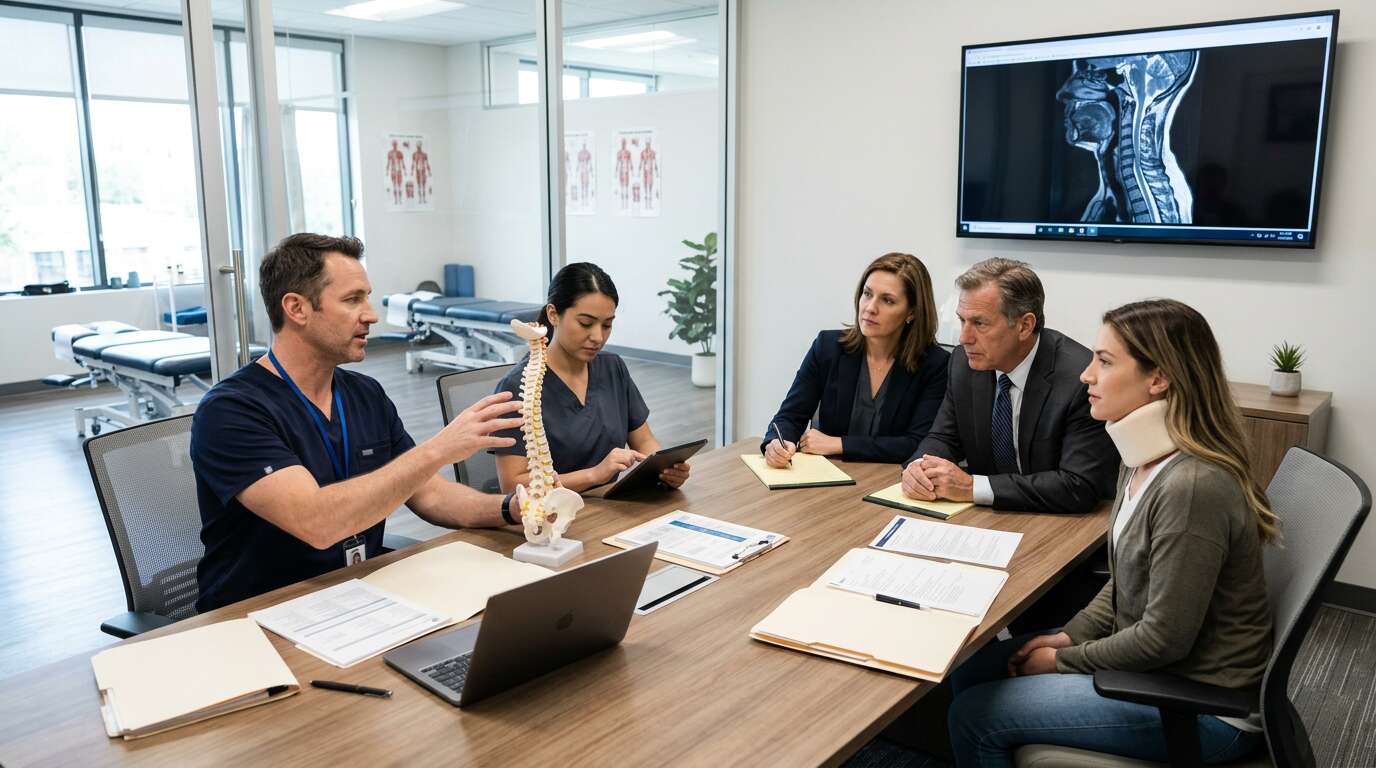
Neck pain can be debilitating. Learn how chiropractic care, combined with causation, can provide solutions and relief.
Table of Contents
Abstract
Neck pain represents one of the most common and burdensome musculoskeletal conditions worldwide, affecting millions and disrupting the intricate balance of the cervical spine, nervous system, muscles, and overall physiology. This educational post, presented by Dr. Alexander Jimenez, DC, APRN, FNP-BC, CFMP, IFMCP, ATN, CCST, explores how neck pain influences the body through detailed physiological mechanisms, outlines its varied symptoms and associated comorbidities, examines its profound effects on day-to-day functioning and personal well-being, and clarifies the critical role of establishing causation in personal injury courtroom proceedings involving neck pain. It further describes what chiropractic care is, how it works synergistically with medical oversight and non-surgical approaches to reduce neck pain and its related issues, and how such care offers valuable insights for personal injury cases. Drawing on clinical observations from Dr. Jimenez’s practice at Injury Medical Clinic PA (also known as Mission Plaza Injury Medical Clinic) in El Paso, Texas, and the collaborative expertise of Dr. Maria Guadalupe Cardenas, MD (Board Certified in Internal Medicine, NPI #1164426749, Texas MD License #J2933), with over 40 years of experience as an internist serving as Medical Director and Collaborative Physician, this post integrates evidence-based research from leading sources. It highlights how multidisciplinary, integrative chiropractic care fits within broader non-surgical treatment options and can become a foundational part of a health and wellness routine for sustained recovery and prevention.
Understanding the Physiology of Neck Pain and How It Affects the Body
The cervical spine, comprising seven vertebrae from C1 to C7, serves as a critical bridge between the skull and the thoracic spine, supporting the head’s weight—approximately 10 to 12 pounds—while enabling a wide range of motion for daily activities such as looking over the shoulder while driving or turning the head during conversation. This region is uniquely vulnerable due to its high mobility, complex ligamentous and muscular supports, and dense innervation. Neck pain arises when injury, degenerative changes, poor posture, or other factors disrupt this delicate system, triggering cascades of physiological responses that extend far beyond local discomfort.
At the biomechanical level, the cervical spine relies on coordinated interactions among intervertebral discs, facet joints (zygapophysial joints), ligaments, and deep and superficial musculature. Facet joints, in particular, are richly innervated by medial branches of the dorsal rami and can become primary pain generators when overloaded. Research indicates that cervical facet joint pain accounts for a substantial portion of chronic neck pain cases, with prevalence estimates ranging from 49% to 60% in certain populations, including those post-whiplash (Manchikanti et al., 2004; Lord et al., 1996). When these joints experience abnormal loading—such as during rapid hyperextension-hyperflexion in a rear-end collision—mechanoreceptors and nociceptors activate and send pain signals via the spinal cord. This process involves peripheral sensitization, where injured tissues release inflammatory mediators like prostaglandins, cytokines, and substance P, lowering the threshold for pain perception and amplifying signals.
Central sensitization can follow, in which the spinal cord and brain heighten responsiveness to stimuli, leading to ongoing pain even after tissue healing begins. Proprioceptive disruptions are equally significant. The cervical muscles and joints contain abundant muscle spindles and joint receptors that provide feedback to the central nervous system for head and eye coordination. Neck pain impairs this sensorimotor control, often altering muscle recruitment patterns: deep cervical flexors like the longus colli weaken while superficial muscles such as the upper trapezius and sternocleidomastoid overactivate, creating a cycle of stiffness, instability, and further strain (Peng et al., 2022). This imbalance can alter instantaneous axes of rotation and load-sharing across segments, contributing to compensatory changes higher or lower in the kinetic chain, including the jaw (temporomandibular joint), shoulders, and even the lumbar spine.
Inflammatory and neurological pathways further illustrate the body’s response. Acute injury triggers an inflammatory phase with edema and chemical irritation of nerve roots or the dorsal root ganglion, which can cause radicular symptoms. Over time, if unresolved, this can lead to chronic inflammation, disc degeneration (loss of hydration and height), osteophyte formation, and ligamentous thickening. The global burden is immense: according to the Global Burden of Disease Study 2021, neck pain affected approximately 203 million people in 2020, with an age-standardized prevalence of 2450 per 100,000, projected to rise to 269 million by 2050 primarily due to population growth and aging (GBD 2021 Neck Pain Collaborators, 2024). Females experience higher rates, peaking in middle age.
These physiological underpinnings explain why neck pain is rarely isolated. Disruptions in cervical mechanics and neural signaling can influence autonomic function, sleep architecture, and even cognitive processing through pathways involving the brainstem and higher centers. In clinical observations at Injury Medical Clinic PA, patients frequently present with patterns linking local cervical dysfunction to systemic effects, underscoring the need for comprehensive evaluation that addresses both mechanical and functional contributors.
Common Symptoms of Neck Pain and Associated Clinical Presentations
Neck pain symptoms vary widely depending on the structures involved, the condition’s acuity, and individual factors such as prior health status. The most frequent presentation is localized pain or stiffness in the posterior neck, often described as aching, sharp, or burning, which may worsen with specific movements or prolonged postures. Many individuals report restricted range of motion, with difficulty turning the head, looking upward, or tilting side to side. This limitation stems from protective muscle guarding, joint hypomobility, or soft-tissue adhesions.
Radiating symptoms are common with nerve involvement. Pain, numbness, tingling, or weakness may extend into the shoulders, upper back, arms, or hands, following dermatomal patterns (for example, C6 affecting the thumb and index finger). Headaches, particularly cervicogenic headaches originating from upper cervical segments like C2-C3, frequently accompany neck pain; these often start at the base of the skull and radiate to the temples or forehead. Studies show that 70% or more of people with migraine also experience neck pain, which correlates with greater disability (Neurology Advisor, 2024).
Additional symptoms include muscle spasms or trigger points that create referred pain patterns, dizziness or balance issues related to proprioceptive impairment, and fatigue from constant muscular effort. In whiplash-associated disorders (WAD), nearly 90% report neck pain, with high rates of headache (around 70%), shoulder pain (75%), and sleep disturbances (up to 66%) (various systematic reviews summarized in recent literature). Acute cases may feature swelling or marked tenderness, while chronic presentations often involve intermittent flares linked to activity or stress.
Dr. Jimenez’s clinical experience highlights that symptoms rarely exist in isolation; patients often describe a constellation including referred pain to the jaw or scapula, difficulty concentrating, and secondary effects on sleep and mood. Thorough history-taking and examination—incorporating orthopedic tests, goniometric range-of-motion measurements, and neurological screening—help differentiate mechanical, radicular, or myofascial origins. This detailed symptom profiling guides targeted interventions and, in personal injury contexts, supports precise documentation.
Comorbidities Linked to Neck Pain
Neck pain frequently coexists with other conditions, amplifying overall burden through shared physiological pathways and bidirectional influences. Common comorbidities include other musculoskeletal issues such as low back pain, shoulder pain, and temporomandibular disorders (TMDs). Meta-analyses indicate higher TMD prevalence in those with neck pain (odds ratio around 3.64), with reduced jaw mobility and lower pressure pain thresholds in masticatory muscles (recent systematic review, 2025). Headache disorders, particularly migraine and tension-type headache, show strong associations, with neck pain present in 73–90% of cases and contributing to increased frequency and severity.
Mental health comorbidities are prominent: depression and anxiety elevate the odds of moderate-to-severe neck symptoms by three- to fourfold, independent of other factors (Johnston County Osteoarthritis Project data). These relationships likely involve central sensitization, shared inflammatory pathways, and the psychological impact of persistent pain. Systemic conditions such as diabetes, cardiovascular disease, lung problems, and obesity also correlate with higher neck pain rates, possibly through mechanisms of systemic inflammation, reduced tissue resilience, or altered biomechanics from excess weight or sedentary behavior.
In older adults, neck and shoulder symptoms associate with greater functional disability and multimorbidity. These comorbidities complicate management because treating neck pain in isolation may overlook contributors like metabolic inflammation or sleep apnea that sustain symptoms. At Injury Medical Clinic PA, the integrative model recognizes these interconnections: functional medicine assessments evaluate inflammation, nutrition, hormonal factors, and lifestyle elements that may worsen cervical issues, while medical oversight from Dr. Cardenas addresses coexisting internal medicine concerns such as hypertension or diabetes that affect recovery capacity.
How Neck Pain Affects Day-to-Day Life and the Whole Person
The impact of neck pain extends well beyond physical discomfort into nearly every domain of daily living, affecting mobility, productivity, emotional well-being, and social participation. Simple activities become challenging: turning the head to check blind spots while driving may cause sharp pain or fear of movement (kinesiophobia), reducing driving confidence or leading to avoidance. Desk work or smartphone use often intensifies symptoms through sustained forward head posture, resulting in end-of-day stiffness, reduced concentration, and decreased work output. Sleep is frequently disrupted; pain upon lying down or difficulty finding a comfortable position leads to fragmented rest, which in turn heightens pain sensitivity the next day through impaired recovery and increased inflammation.
Functional limitations appear in household tasks, exercise, and recreational activities. Lifting groceries, carrying a child, or participating in sports may provoke flares, prompting activity modification or complete avoidance that contributes to deconditioning and weight gain. Quality-of-life measures consistently show declines, with higher Neck Disability Index scores correlating with poorer physical and mental health outcomes (cross-sectional studies on cervical spondylosis). Psychosocial effects include irritability, anxiety about the future of the condition, reduced social engagement due to discomfort in conversations or outings, and, in chronic cases, depression.
In personal injury scenarios, these life impacts become measurable losses: missed work days, reduced earning capacity, and diminished ability to perform family roles. Clinical observations from Dr. Jimenez’s practice reveal that patients often report a cascade—initial pain leads to poor sleep, which worsens mood and muscle tension, further restricting movement and perpetuating the cycle. Addressing these requires a whole-person approach that restores not only joint mechanics but also sleep hygiene, stress resilience, and gradual return to valued activities. Non-surgical strategies, including graded exercise and education, help rebuild confidence and function, preventing the transition from acute episode to chronic disability.
Establishing Causation in Personal Injury Cases Involving Neck Pain
In personal injury litigation, particularly motor vehicle collisions or workplace incidents resulting in neck pain, proving causation is essential. Causation requires demonstrating that the incident more likely than not (reasonable medical probability) produced or substantially aggravated the injury, linking the mechanism of trauma to the clinical findings and functional losses. This differs from mere temporal association; courts and insurers assess biomechanical plausibility, temporal relationship (symptoms beginning or clearly worsening soon after the event, often within hours to days for soft-tissue injuries), the absence or clear aggravation of pre-existing conditions, and objective, reproducible documentation.
Chiropractic care contributes meaningfully here through detailed initial examinations that capture the patient’s description of the mechanism (for example, rear-impact producing rapid cervical extension-flexion), immediate or early symptom onset, and quantifiable findings such as restricted range of motion measured by goniometer, positive orthopedic tests, muscle spasm graded for tenderness, and postural observations. Serial re-examinations document improvement consistent with tissue healing phases (inflammatory, proliferative, remodeling), strengthening the narrative that the trauma caused a treatable injury. Objective measures that survive scrutiny—such as documented multi-level ligamentous findings or consistent neurological signs—carry greater weight than subjective reports alone.
Failure to thoroughly document these elements can undermine a claim. In practice at Injury Medical Clinic PA, Dr. Jimenez’s dual training as a chiropractor and nurse practitioner supports comprehensive records that integrate biomechanical assessment with broader medical context, helping attorneys establish the required causal chain. Evidence-based guidelines and research on whiplash mechanisms further support the biological plausibility of such injuries even in lower-speed impacts when individual factors are considered.
What Chiropractic Care Is and How It Integrates with Non-Surgical Treatments
Chiropractic care is a non-invasive, hands-on healthcare discipline focused on diagnosing, treating, and preventing neuromusculoskeletal disorders, with particular emphasis on the spine and its influence on overall function. Doctors of Chiropractic use spinal manipulation (also called adjustment), mobilization, soft-tissue techniques, therapeutic exercise, and patient education to restore joint mobility, reduce muscle tension, improve proprioception, and alleviate pain. The approach is grounded in the understanding that proper spinal alignment and motion support nervous system function and mechanical efficiency.
Evidence supports its use for neck pain. Clinical practice guidelines based on multiple randomized trials recommend spinal manipulative therapy, especially in combination with exercise and other modalities, for both acute and chronic neck pain, with strong recommendations for multimodal approaches in chronic cases (Bryans et al., 2014). Recent meta-analyses confirm reductions in pain intensity and disability with manipulative therapy, often comparable or superior to usual care in the short term, with low rates of serious adverse events (primarily transient soreness). Mechanisms include mechanical effects on facet joints and discs that reduce nociceptive input, neurophysiological modulation of pain pathways, improved muscle coordination, and enhanced local circulation that supports healing.
Integrative chiropractic care expands this foundation by combining it with functional medicine, rehabilitation, nutritional support, and medical oversight. At Injury Medical Clinic PA, this model incorporates spinal adjustments to restore segmental motion, targeted exercises to strengthen deep cervical stabilizers and correct imbalances, soft-tissue work to address trigger points, and lifestyle interventions to reduce systemic inflammation. Non-surgical treatments such as spinal decompression, laser therapy, acupuncture, and regenerative options (when appropriate under medical supervision) complement chiropractic care. The reasoning is clear: addressing mechanical dysfunction alone may leave inflammatory, nutritional, or strength deficits unresolved; combining modalities targets multiple contributors for more durable outcomes.
How Chiropractic Care Reduces Neck Pain and Its Comorbidities
Chiropractic interventions reduce neck pain by restoring normal joint kinematics, decreasing abnormal loading on facet joints and discs, and normalizing muscle activation patterns. Adjustments can improve range of motion, reduce local inflammation through enhanced fluid dynamics, and interrupt the cycle of guarding and central sensitization. When combined with exercise, patients experience better long-term disability reduction because strengthened muscles provide active support that passive adjustments alone cannot sustain.
For comorbidities, the benefits are multifaceted. Improved cervical mechanics can lessen referred headache and TMD symptoms by reducing convergent nociceptive input. Better sleep and reduced pain intensity often alleviate associated anxiety and depressive symptoms. Functional medicine elements within the integrative model address shared inflammatory drivers—through anti-inflammatory nutrition, stress management, and metabolic optimization—that link neck pain to conditions like obesity or metabolic syndrome. Clinical observations show that patients receiving coordinated care frequently report not only less neck pain but also improved energy, mood, and capacity for daily activities, breaking the comorbidity cycle.
Chiropractic Insights into Personal Injury and the Multidisciplinary Team
Chiropractic documentation provides critical insight into personal injury cases by establishing the timeline, mechanism correlation, objective deficits, and response to care. Serial findings that improve with treatment support both the existence of injury and the appropriateness of non-surgical management, which is often preferred before considering more invasive options.
This work occurs within a multidisciplinary framework at Injury Medical Clinic PA. Dr. Alexander Jimenez, DC, APRN, FNP-BC, leads clinical care with expertise in spinal trauma, functional medicine, and rehabilitation. Dr. Maria Guadalupe Cardenas, MD, board-certified in Internal Medicine with over 40 years of experience, serves as Medical Director and Collaborative Physician. She provides medical direction, chart review, and oversight for complex cases involving comorbidities, ensuring that chiropractic and rehabilitative services align with broader medical needs such as managing hypertension, diabetes, or medication interactions. This collaboration—common in integrative injury clinics—allows for coordinated diagnostics, appropriate referrals when indicated, and comprehensive documentation that strengthens both clinical outcomes and legal support. Additional team members contribute rehabilitation, nutrition, and fitness expertise, creating a seamless continuum from acute injury care through long-term wellness.
Chiropractic Care for Neck Pain Relief | El Paso, TX (2025 Recovery Guide) Chiropractic Treatment- Video
Benefits of Chiropractic and Non-Surgical Care in Health and Wellness Routines
Adding chiropractic and complementary non-surgical treatments to a regular health and wellness routine offers preventive and restorative benefits. Periodic adjustments help maintain joint mobility and posture, reducing the risk of recurrent episodes from daily stressors. Combined with strength and mobility exercises, ergonomic education, and anti-inflammatory lifestyle practices, these approaches support resilience against both traumatic and cumulative injuries.
Patients who integrate such care often experience sustained reductions in pain, improved function, better sleep, and enhanced overall vitality. In the personal injury context, early and consistent non-surgical management can reduce chronicity and support fair claim resolution by demonstrating proactive recovery. Dr. Jimenez’s clinical insights, shared through platforms such as healthcoach.clinic and professional networks, emphasize patient empowerment: education on posture, movement, and self-care equips individuals to become active participants in their recovery and long-term health.
This educational overview underscores that neck pain is a complex, whole-person issue best addressed through evidence-informed, integrative strategies that restore mechanics, reduce inflammation, support comorbidities, and document causation when relevant. Individuals experiencing neck pain are encouraged to seek evaluation from qualified providers for personalized guidance.
References
- Bryans, R., Decina, P., Descarreaux, M., Duranleau, M., Marcoux, H., Potter, B., Ruegg, R. P., Shaw, L., Watkin, R., & White, E. (2014). Evidence-based guidelines for the chiropractic treatment of adults with neck pain. Journal of Manipulative and Physiological Therapeutics, 37(1), 42–63. sciencedirect.com/science/article/pii/S0161475413002376
- GBD 2021 Neck Pain Collaborators. (2024). Global, regional, and national burden of neck pain, 1990–2020, and projections to 2050: A systematic analysis of the Global Burden of Disease Study 2021. The Lancet Rheumatology. healthdata.org/research-analysis/library/global-regional-and-national-burden-neck-pain-1990-2020-and-projections
- Manchikanti, L., Singh, V., Rivera, J., & Pampati, V. (2004). Prevalence of facet joint pain in chronic spinal pain of cervical, thoracic, and lumbar regions. BMC Musculoskeletal Disorders, 5, 15. link.springer.com/article/10.1186/1471-2474-5-15
- Peng, B., et al. (2022). Neck pain: Do we know enough about the sensorimotor control system? Frontiers in Computational Neuroscience, 16, 946514. frontiersin.org/journals/computational-neuroscience/articles/10.3389/fncom.2022.946514/fullfrontiersin.org/journals/computational-neuroscience/articles/10.3389/fncom.2022.946514/full
- Additional supporting literature on comorbidities, daily impact, and treatment efficacy drawn from systematic reviews in The BMJ, Journal of Orthopedic & Sports Physical Therapy, and related peer-reviewed sources on neck pain epidemiology and management.
SEO Tags: neck pain symptoms, neck pain comorbidities, cervical spine physiology, chiropractic care for neck pain, personal injury causation neck pain, integrative chiropractic El Paso, non-surgical neck pain treatment, Dr. Alexander Jimenez DC APRN, Dr. Maria Guadalupe Cardenas MD, Injury Medical Clinic PA, functional medicine neck pain, whiplash recovery, daily life impact neck pain, evidence-based chiropractic neck pain, multidisciplinary injury care El Paso
Disclaimer: This post is for educational purposes and does not constitute personal medical or legal advice. Consult qualified healthcare providers and legal professionals for advice specific to your circumstances.
What's your reaction?