
Table of Contents
PRP for Sciatica: Can Platelet-Rich Plasma Help the Real Source of Nerve Pain?
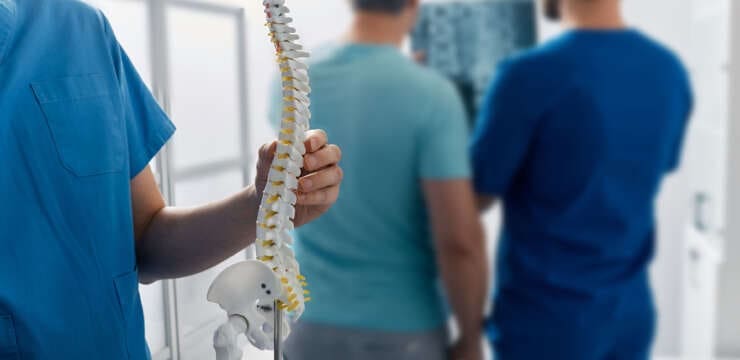
Sciatica is more than simple back pain. It usually starts when a lumbar disc or nearby structure irritates or compresses a lumbosacral nerve root. That can cause pain, burning, tingling, numbness, or weakness that travels from the lower back into the buttocks and down the leg. Because both inflammation and pressure play a role, some people look beyond short-term pain control and ask whether treatment can also support healing. That is where platelet-rich plasma, or PRP, enters the conversation (Davis et al., 2024; Koes et al., 2007).

What PRP is and why it matters in sciatica
PRP is made from a patient’s own blood. The blood is processed to concentrate the platelets, and the platelet-rich layer is then injected into the targeted area. Platelets release growth factors and other signaling molecules that may help reduce inflammation and support tissue repair. In musculoskeletal medicine, PRP is considered an autologous treatment because it is derived from the same person receiving it, which may reduce the risk of rejection-type reactions compared with non-autologous products (Yoo et al., 2024; Hospital for Special Surgery, 2024; Cleveland Clinic, 2024).
For sciatica, the idea is not simply to numb pain for a few days or weeks. The goal is to improve the biological environment around irritated discs, ligaments, joints, and nerve roots. Early spine studies suggest PRP may help some patients by calming inflammatory signals and supporting longer-term recovery. Still, the research is evolving, and PRP should be described as promising rather than proven for every type of sciatica (Machado et al., 2023; Yoo et al., 2024).
How PRP may help relieve sciatica
PRP may help in several ways:
- It may decrease inflammatory chemicals around an irritated nerve root, thereby reducing leg pain and numbness. (Wang et al., 2024; Wongjarupong et al., 2023).
- It may support disc and soft-tissue repair by delivering growth factors to damaged tissue. (Yoo et al., 2024; Cleveland Clinic, 2024).
- It may help create a more favorable healing environment for nerve recovery. Much of this nerve-regeneration evidence is stronger from laboratory and animal studies than from large human sciatica trials, so this point should be stated carefully. (Wang et al., 2024).
- Because PRP targets healing pathways, some clinicians use it when they want a regenerative option instead of repeating steroid-based injections. (Machado et al., 2023; Muthu et al., 2025).
PRP versus steroid injections
Steroid epidural injections remain common because they often provide faster short-term relief. A 2024 systematic review and meta-analysis found that epidural steroid injections helped with sciatica due to lumbar disc herniation in the short and medium term, but their long-term effects were limited, and they did not significantly improve sciatic nerve function in the studies analyzed (Zhang et al., 2024).
PRP may have a different pattern. In a 2023 randomized controlled trial of single-level lumbar disc herniation, epidural PRP showed significant reductions in leg pain at 6, 12, and 24 weeks, with no adverse events reported. The authors determined that epidural PRP outperformed triamcinolone in that study (Wongjarupong et al., 2023).
A second randomized trial reported that PRP gave more sustained relief than epidural local anesthetic and steroids for low back pain related to prolapsed intervertebral discs and radiculopathy (Singh et al., 2023). More recent meta-analyses add a balanced but encouraging message: one 2025 review found epidural PRP produced benefits comparable to steroid epidurals overall, while another found steroids worked better at 1 month, but PRP performed better by 6 months for pain and disability. Taken together, these findings suggest that steroids may act faster, while PRP may last longer in selected patients (Muthu et al., 2025; Ermawan et al., 2025).
Why the evidence is promising but not perfect
Science is not one-sided. An intradiscal randomized controlled trial in patients with discogenic low back pain without Modic changes found no significant benefit of intradiscal PRP over control at 1 year, and one serious adverse event, spondylodiscitis, was reported after intervention. That does not mean PRP never works. It means that the results depend on the study design, patient selection, the injection target, and PRP preparation (Schepers et al., 2022).
That is why the best summary is this: PRP for sciatica is promising, especially for disc-related radicular pain, but it is not a guaranteed remedy and is not yet supported by a uniform protocol. Reviews of lumbar spine PRP repeatedly note major differences in platelet concentration, injection method, target tissue, and follow-up timing across studies (Yoo et al., 2024; Machado et al., 2023).
Common PRP techniques used for sciatica
Lumbar spine PRP is not just one procedure. Studies have examined several targets:
- Intradiscal PRP, where the injectate is placed into a painful or damaged disc. (Yoo et al., 2024; Schepers et al., 2022).
- Epidural PRP, where the injectate is placed in the epidural space around the spinal nerves. This space is around the spinal nerve structures, not inside the spinal cord itself. (Cleveland Clinic, 2025; Yoo et al., 2024).
- Interlaminar or transforaminal epidural routes, which are different ways to reach the irritated area. Both appear in the lumbar PRP literature. (Yoo et al., 2024).
- Facet-joint or ligament-based injections are sometimes used when back pain and instability are part of the picture, along with nerve irritation. (Yoo et al., 2024).
Why an integrated chiropractic and APRN clinic may help
Sciatica is rarely just a needle problem. High-quality guideline reviews for radicular low back pain support multimodal care that may include education, staying active, exercise, manual therapy, and interdisciplinary rehabilitation. That means an injection can be one part of care, but movement correction and whole-person management still matter (Khorami et al., 2021; Zaina et al., 2023).
This is where an integrated chiropractic clinic with APRN support can make sense. The chiropractor can address joint mechanics, posture, movement patterns, and rehabilitation. The APRN can evaluate medical drivers that affect healing, such as inflammation, medication use, metabolic stress, sleep, nutrition, and other health factors. On Dr. Alexander Jimenez’s public clinical site, his team describes a model that combines chiropractic care with functional medicine, acupuncture, sports medicine, rehabilitation, and personalized assessments. In his PRP commentary, he also notes that PRP appears most useful when paired with rehabilitation and metabolic review, rather than being treated as a stand-alone injection. Those are clinical observations from practice, not large PRP-specific randomized trials, but they fit the broader guideline idea that sciatica care often works best when it is coordinated and multidisciplinary (Jimenez, 2026; Dr. Alex Jimenez, n.d.).
Safety, candidacy, and realistic expectations
PRP is usually described as minimally invasive and generally low-risk because it is derived from the patient’s own blood. Common short-term issues include soreness, bruising, or swelling at the injection site, and infection remains a remote but real risk with any injection procedure. Results also vary. Some people need more than one treatment, and not every patient with sciatica is a viable candidate (Hospital for Special Surgery, 2024; Cleveland Clinic, 2024; Jimenez, 2026).
Patients also need honest screening. Marked motor weakness, worsening neurologic loss, or failure of conservative care can require specialist referral, and some people may still need surgery. Earlier evidence indicates that surgery can relieve leg pain faster than conservative care in some cases, although long-term differences may narrow over time (Khorami et al., 2021; Koes et al., 2007; Davis et al., 2024).
Final thoughts
PRP for sciatica is one of the more intriguing regenerative options in spine care. The strongest current message is not that PRP cures every case. PRP may help selected patients with disc-related sciatica by reducing inflammation and supporting tissue healing, and in some studies, it appears to provide longer-lasting relief than steroid injections. At the same time, the evidence is still mixed, especially for intradiscal use, and treatment quality depends heavily on proper diagnosis, image-guided technique, and follow-through rehabilitation. In a well-run integrated clinic, PRP may be most valuable when combined with chiropractic biomechanics, exercise-based recovery, and APRN-led medical and functional support for long-term healing.
References
- Davis, D., et al. (2024). Sciatica. StatPearls.
- Ermawan, R., Corrigan, H., Fachreza, M. S., Mercy, G., Angeline, A., Jiwandono, B. S., Yudistiro, I., & Abdulhamid, M. (2025). Epidural Platelet-Rich Plasma Long-Term Outcome Is Better Than Steroid for Prolapsed Lumbar Intervertebral Discs: A Meta-Analysis of Randomized Controlled Trials. Spine Surgery and Related Research.
- Jimenez, A. (2026, March 16). PRP Therapy Body Detoxification and Tissue Repair Explained. DrAlexJimenez.com.
- Khorami, A. K., Oliveira, C. B., Maher, C. G., Bindels, P. J. E., Machado, G. C., Pinto, R. Z., Koes, B. W., & Chiarotto, A. (2021). Recommendations for Diagnosis and Treatment of Lumbosacral Radicular Pain: A Systematic Review of Clinical Practice Guidelines. Journal of Clinical Medicine, 10(11), 2482.
- Koes, B. W., van Tulder, M. W., & Peul, W. C. (2007). Diagnosis and treatment of sciatica. BMJ.
- Machado, E. S., et al. (2023). Systematic Review of Platelet-Rich Plasma for Low Back Pain. Biomedicines, 11(9), 2404.
- Muthu, S., Viswanathan, V. K., & Gangadaran, P. (2025). Is platelet-rich plasma better than steroids as epidural drug of choice in lumbar disc disease with radiculopathy? Meta-analysis of randomized controlled trials. Experimental Biology and Medicine, 250, 10390.
- Schepers, M. O., Groot, D., Kleinjan, E. M., Pol, M. M., Mylenbusch, H., & Klopper-Kes, A. H. J. (2022). Effectiveness of intradiscal platelet rich plasma for discogenic low back pain without Modic changes: A randomized controlled trial. Interventional Pain Medicine, 1(1), 100011.
- Singh, G. K., Talawar, P., Kumar, A., Sharma, R. S., Purohit, G., & Bhandari, B. (2023). Effect of autologous platelet-rich plasma (PRP) on low back pain in patients with prolapsed intervertebral disc: A randomised controlled trial. Indian Journal of Anaesthesia, 67(3), 277-282.
- Wang, S., Liu, Z., Wang, J., Cheng, L., Hu, J., & Tang, J. (2024). Platelet-rich plasma (PRP) in nerve repair. Regenerative Therapy, 27, 244-250.
- Wongjarupong, A., et al. (2023). Platelet-Rich Plasma epidural injection an emerging strategy in lumbar disc herniation: a Randomized Controlled Trial. BMC Musculoskeletal Disorders, 24(1), 335.
- Yoo, M., et al. (2024). Platelet-Rich Plasma Treatment for the Lumbar Spine: A Review and Discussion of Existing Gaps. Pain Physician, 27, 283-302.
- Zhang, J., Zhang, R., Wang, Y., & Dang, X. (2024). Efficacy of epidural steroid injection in the treatment of sciatica secondary to lumbar disc herniation: a systematic review and meta-analysis. Frontiers in Neurology, 15, 1406504.
- Zaina, F., et al. (2023). A Systematic Review of Clinical Practice Guidelines for Persons With Non-specific Low Back Pain With and Without Radiculopathy: Identification of Best Evidence for Rehabilitation to Develop the WHO’s Package of Interventions for Rehabilitation. Archives of Physical Medicine and Rehabilitation.
Disclaimers
Professional Scope of Practice *
The information herein on "PRP for Sciatica: How It May Help You" is not intended to replace a one-on-one relationship with a qualified health care professional or licensed physician and is not medical advice. We encourage you to make healthcare decisions based on your research and partnership with a qualified healthcare professional.
Blog Information & Scope Discussions
Welcome to El Paso's wellness blog, where Dr. Alex Jimenez, DC, FNP-C, a board-certified Family Practice Nurse Practitioner (FNP-C) and Chiropractor (DC), presents insights on how our team is dedicated to holistic healing and personalized care. Our practice aligns with evidence-based treatment protocols inspired by integrative medicine principles, similar to those found on dralexjimenez.com, focusing on restoring health naturally for patients of all ages.
Our areas of chiropractic practice include Wellness & Nutrition, Chronic Pain, Personal Injury, Auto Accident Care, Work Injuries, Back Injury, Low Back Pain, Neck Pain, Migraine Headaches, Sports Injuries, Severe Sciatica, Scoliosis, Complex Herniated Discs, Fibromyalgia, Chronic Pain, Complex Injuries, Stress Management, Functional Medicine Treatments, and in-scope care protocols.
Our information scope is limited to chiropractic, musculoskeletal, physical medicine, wellness, contributing etiological viscerosomatic disturbances within clinical presentations, associated somato-visceral reflex clinical dynamics, subluxation complexes, sensitive health issues, and functional medicine articles, topics, and discussions.
We provide and present clinical collaboration with specialists from various disciplines. Each specialist is governed by their professional scope of practice and their jurisdiction of licensure. We use functional health & wellness protocols to treat and support care for the injuries or disorders of the musculoskeletal system.
Our videos, posts, topics, subjects, and insights cover clinical matters, issues, and topics that relate to and directly or indirectly support our clinical scope of practice.*
Our office has reasonably attempted to provide supportive citations and has identified the relevant research studies or studies supporting our posts. We provide copies of supporting research studies available to regulatory boards and the public upon request.
We understand that we cover matters that require an additional explanation of how they may assist in a particular care plan or treatment protocol; therefore, to discuss the subject matter above further, please feel free to ask Dr. Alex Jimenez, DC, APRN, FNP-BC, or contact us at 915-850-0900.
We are here to help you and your family.
Blessings
Dr. Alex Jimenez DC, MSACP, APRN, FNP-BC*, CCST, IFMCP, CFMP, ATN
email: coach@elpasofunctionalmedicine.com
Licensed as a Doctor of Chiropractic (DC) in Texas & New Mexico*
Texas DC License # TX5807
New Mexico DC License # NM-DC2182
Licensed as a Registered Nurse (RN*) in Texas & Multistate
Texas RN License # 1191402
ANCC FNP-BC: Board Certified Nurse Practitioner*
Compact Status: Multi-State License: Authorized to Practice in 40 States*
Graduate with Honors: ICHS: MSN-FNP (Family Nurse Practitioner Program)
Degree Granted. Master's in Family Practice MSN Diploma (Cum Laude)
Dr. Alex Jimenez, DC, APRN, FNP-BC*, CFMP, IFMCP, ATN, CCST
My Digital Business Card
What's your reaction?