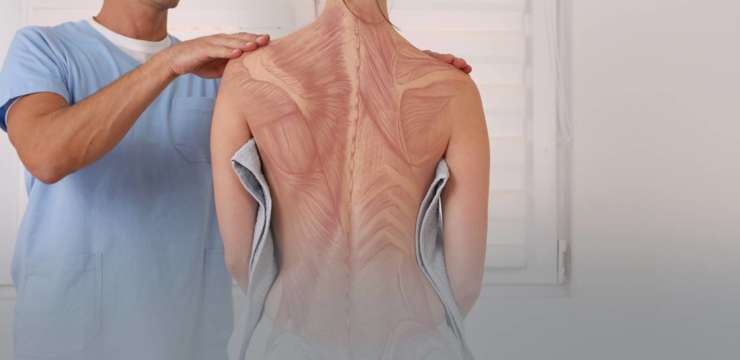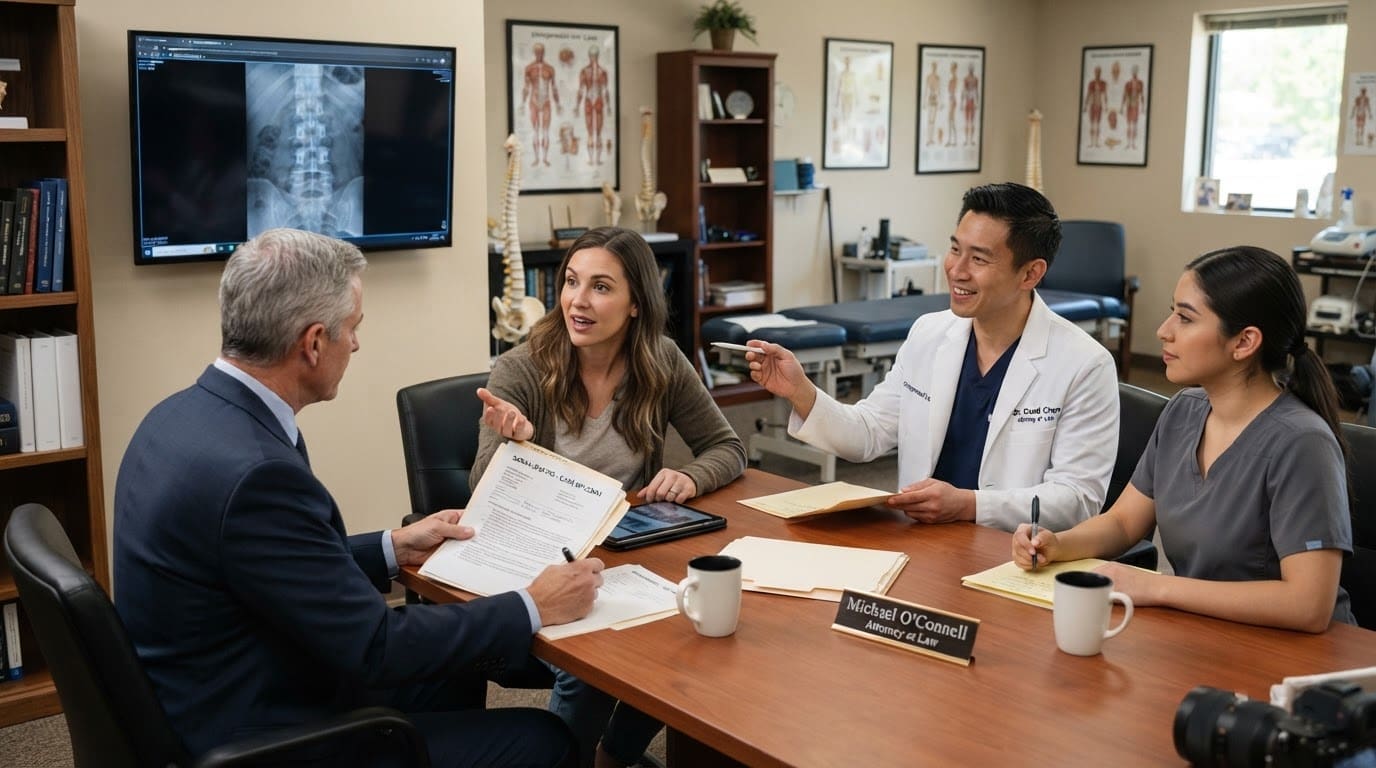
In personal injury, chiropractic care is essential for recovery. Discover its role in effective injury management through causation.
Table of Contents
Abstract
This educational post explores why causation is essential and rigorously justified in the courtroom for personal injury claims involving musculoskeletal injuries. It details the legal standards that require medical evidence, the role of expert testimony, and how chiropractic care provides critical clinical insight and documentation to support accurate causal analysis. The post defines chiropractic care, explains its evidence-based mechanisms for reducing musculoskeletal injuries and associated comorbidities through biomechanical restoration, neurophysiological modulation, and reduction of central sensitization, and shows how integrative chiropractic care functions as a cornerstone of non-surgical treatment. Drawing on the latest findings from leading researchers using modern systematic reviews, randomized trials, and neurophysiological studies, the post also describes the multidisciplinary model at Injury Medical Clinic PA (also known as Mission Plaza Injury Medical Clinic) in El Paso, Texas, where Dr. Alexander Jimenez, DC, APRN, FNP-BC, CFMP, IFMCP, ATN, CCST, collaborates with Dr. Maria Guadalupe Cardenas, MD (Board Certified in Internal Medicine, NPI #1164426749, Texas MD License #J2933), who brings over 40 years of experience as an internist and serves as Medical Director and Collaborative Physician. Clinical observations from the practice illustrate how coordinated care improves outcomes, documentation quality, and patient recovery.
Why Causation Is Important and Required in the Courtroom for Injuries
Causation forms the indispensable bridge between a traumatic event and a plaintiff’s claimed injuries in personal injury litigation. Without a clear, evidence-supported causal link, even well-documented symptoms and substantial damages may fail to support recovery. Courts require proof that the defendant’s conduct was both the factual and legal cause of the harm. Factual causation typically rests on the “but-for” test: would the injury have occurred if the defendant’s actions had not taken place? Legal or proximate causation further requires that the injury was a foreseeable result of the conduct and not too remote or trivial. In Texas and most jurisdictions, medical causation must be established to a reasonable degree of medical probability—more likely than not—through competent expert testimony when the connection is not obvious to a layperson (Guevara v. Ferrer, 2007; various state and federal standards).
Medical records alone rarely suffice when injuries involve the spine, discs, soft tissues, or delayed symptom onset. Jurors and judges lack the training to determine whether a herniated disc, facet arthropathy, or chronic pain syndrome resulted from a collision rather than pre-existing degeneration or everyday activity. Therefore, treating providers and retained experts must conduct a structured analysis that supports the traumatic mechanism and excludes alternative explanations. This process aligns with differential diagnosis methodology and is evaluated under Daubert or Frye standards for reliability. The expert must base opinions on sufficient facts, reliable principles, and a sound application of those principles to the case facts, often referencing peer-reviewed literature, imaging comparisons, and temporal relationships.
Bradford Hill criteria provide a useful framework adapted for clinical causation analysis: strength of association, consistency, specificity, temporality, biological gradient, plausibility, coherence, experiment, and analogy. In practice, temporality and biological plausibility receive particular weight. Symptoms that begin or significantly worsen within days of a high-energy event, combined with imaging showing acute findings and the absence of prior similar complaints, strengthen the causal inference. Gaps in treatment, pre-existing conditions, or delayed presentation invite defense challenges; consistent, contemporaneous documentation counters those challenges.
Chiropractic providers often serve as treating physicians who see patients from the earliest post-injury visits. Their serial examinations, objective findings, and response to care provide the longitudinal data attorneys need to show the incident caused or materially contributed to the condition. When integrated with medical oversight, this documentation meets the higher evidentiary thresholds required for complex musculoskeletal claims.
What Chiropractic Care Is and How It Works
Chiropractic care is a healthcare discipline focused on diagnosing, treating, and preventing neuromusculoskeletal disorders, with particular emphasis on the spine and related joints. Doctors of Chiropractic (DCs) complete rigorous graduate education covering anatomy, physiology, biomechanics, neurology, radiology, and clinical sciences. Core interventions include spinal manipulative therapy (SMT), mobilization, soft-tissue techniques, therapeutic exercise, and patient education. The goal is to restore normal joint motion, reduce mechanical stress on soft tissues and neural structures, improve proprioceptive input, and modulate pain processing.
Spinal manipulative therapy involves a controlled, high-velocity, low-amplitude thrust or slower mobilization applied to a restricted spinal segment or extremity joint. Biomechanically, the thrust is thought to release entrapped meniscoids, reduce intervertebral disc distortion, break abnormal adhesions, and restore segmental motion. Neurophysiologically, the rapid stretch activates muscle spindles, Golgi tendon organs, and high-threshold mechanoreceptors, generating a burst of afferent input to the spinal cord and higher centers. This input can produce segmental inhibition of nociceptive transmission, reduce temporal summation of pain, and influence descending inhibitory pathways from the periaqueductal gray and cortical regions.
Recent systematic evidence supports modest but clinically relevant benefits. The 2026 Cochrane review of 76 randomized controlled trials involving nearly 12,000 participants found that SMT may produce small reductions in pain and medium improvements in function compared with sham or placebo at one month, and larger improvements compared with no treatment, for chronic low back pain. Adverse events were limited to transient soreness; the trials reported no serious complications (de Zoete et al., 2026). Clinical practice guidelines frequently recommend SMT as a first-line or adjunctive non-pharmacologic option for acute and chronic low back pain.
In personal injury settings, chiropractic care is not merely symptomatic treatment. It supplies detailed mechanism-of-injury analysis, objective range-of-motion and orthopedic testing, and serial documentation of functional progress or plateaus. These records help establish both the existence of injury and its causal relationship to the event.
Physiological Underpinnings: How Chiropractic Care Reduces Musculoskeletal Injuries and Comorbidities
Traumatic musculoskeletal injuries trigger a cascade of local inflammation, muscle guarding, joint hypomobility, and altered afferent signaling. Persistent nociceptive input can drive central sensitization, a state of heightened excitability of dorsal horn neurons and expanded receptive fields. Patients then experience amplified pain, secondary hyperalgesia, and allodynia even after the original tissue damage has largely healed. Chronic pain, sleep disruption, reduced activity, and elevated stress hormones further promote systemic inflammation, metabolic dysregulation, and psychological distress—comorbidities that compound disability and complicate causation arguments.
Spinal manipulative therapy and associated chiropractic interventions interrupt this cascade at multiple levels. At the peripheral level, restored joint motion reduces mechanical irritation of facet capsules, discs, and ligaments, decreasing local inflammatory mediators. At the spinal level, afferent barrage from manipulation can induce long-term depression of dorsal horn neurons and raise pain thresholds, as shown in studies measuring nociceptive flexion reflexes and pressure-pain thresholds. Supraspinally, EEG and functional imaging have shown changes in cortical processing, default-mode network activity, and motor control that correlate with reductions in pain unpleasantness and catastrophizing.
Biomarker studies show modulation of stress and inflammatory markers. Twelve weeks of chiropractic care has been associated with changes in brain-derived neurotrophic factor and interleukin-6, along with reductions in certain pro-inflammatory cytokines, supporting effects on neuroplasticity and systemic inflammation. Improved sleep architecture and reduced anxiety and depression scores further illustrate the broader impact beyond the musculoskeletal system.
By restoring mechanical efficiency and normalizing sensory-motor integration, chiropractic care reduces compensatory loading on adjacent structures, lowers the risk of secondary injuries, and supports return to activity. Earlier mobilization and progressive loading promote better tissue remodeling than prolonged rest. When combined with exercise and education, these effects help prevent the transition from acute injury to chronic pain and its attendant comorbidities such as deconditioning, weight gain, and mood disorders. Reduced opioid exposure is another documented benefit in several observational studies comparing chiropractic care with conventional medical management alone for spine-related pain.
Integrative Chiropractic Care Within Non-Surgical Treatment Pathways
Integrative chiropractic care embeds biomechanical and neurophysiological interventions within a broader non-surgical framework that may include medical management, functional medicine, rehabilitation, and, when appropriate, regenerative or interventional procedures. The rationale is straightforward: tissue healing and pain modulation occur more reliably when mechanical environment, inflammatory status, metabolic health, and neural processing are addressed concurrently.
Under medical direction, imaging and laboratory work-up identify red flags or systemic contributors. Chiropractic examination then maps segmental restrictions, soft-tissue dysfunction, and motor control deficits. Treatment proceeds in stages: early pain modulation and restoration of motion, intermediate strength and proprioceptive retraining, and late functional loading that mirrors real-world demands. Soft-tissue techniques address myofascial restrictions; directional preference exercises (McKenzie-type) centralize pain; neurodynamic mobilization improves nerve glide; and diaphragmatic and postural training optimizes breathing mechanics that support spinal stability.
When inflammation is severe, coordinated medical interventions such as short-term anti-inflammatory strategies or, in selected radicular cases, epidural procedures can create a window for more effective manual and rehabilitative care. Functional medicine approaches evaluate and correct nutrient deficiencies, glycemic dysregulation, or sleep disruption that impair collagen synthesis and pain modulation. The result is a coherent pathway that maximizes the probability of durable recovery without surgery while generating the contemporaneous records needed for causation analysis.
The Multidisciplinary Team: Dr. Jimenez and Dr. Cardenas
At Injury Medical Clinic PA (Mission Plaza Injury Medical Clinic) in El Paso, Texas, the team delivers integrative care through a deliberate, collaborative structure. Dr. Alexander Jimenez, DC, APRN, FNP-BC, CFMP, IFMCP, ATN, CCST, provides chiropractic evaluation and treatment focused on joint and soft-tissue function, advanced clinical assessment as a family nurse practitioner, and functional medicine strategies that address systemic drivers of recovery. His dual licensure and trauma-specific certification support both hands-on care and the precise documentation required in personal injury matters.
Dr. Maria Guadalupe Cardenas, MD, Board Certified in Internal Medicine (NPI #1164426749, Texas MD License #J2933), brings more than 40 years of experience as an internist and serves as Medical Director and Collaborative Physician. She provides medical direction, risk stratification, medication reconciliation, laboratory interpretation, and oversight for any pharmacologic or interventional elements. Her expertise is particularly valuable when patients present with comorbidities such as hypertension, diabetes, cardiovascular disease, or complex medication regimens that can influence healing and treatment selection.
The team integrates:
- Chiropractic spinal and extremity care to restore mechanical function and proprioception.
- Internal medicine oversight for safety, diagnostic clarity, and management of systemic conditions.
- Functional medicine evaluation of inflammation, metabolic status, and lifestyle factors.
- Progressive rehabilitation and patient education.
- Detailed, mechanism-linked documentation that supports personal injury claims.
This model, common in advanced injury clinics, allows patients to receive coordinated, non-fragmented care. Medical governance ensures that advanced options are applied appropriately, while chiropractic and rehabilitative interventions address the mechanical and neurophysiological contributors to persistent symptoms. Clinical observations from the practice consistently show that patients with motor-vehicle, workplace, or sports trauma achieve better functional gains and clearer causal narratives when care is delivered within this integrated framework.
How Chiropractic Care Provides Insight for Personal Injury
In personal injury practice, chiropractic records often become the most continuous contemporaneous account of injury evolution. Initial examinations capture mechanism details, immediate symptoms, and objective findings before substantial medical treatment or attorney involvement. Subsequent visits document responses to care, changes in range of motion, strength, and functional capacity, as well as any new or residual impairments. Imaging correlations, orthopedic testing, and neurologic screening further objectify the clinical picture.
When causation is contested, the treating chiropractor can testify to the temporal relationship, the consistency of findings with the known mechanism, the exclusion of alternative explanations through differential diagnosis, and the physiologic rationale linking trauma to the observed pathology. Integrating the medical director’s evaluation strengthens the overall opinion by confirming that systemic factors were considered and that treatment decisions meet prevailing medical standards. Attorneys benefit from clear, well-reasoned narratives that link the event, the findings, the treatment response, and the residual deficits.
Evidence from Leading Researchers and Clinical Observations
Modern evidence continues to refine understanding of both causation analysis and chiropractic mechanisms. Systematic reviews confirm SMT’s safety and modest efficacy for low back and neck pain while highlighting the value of multimodal care. Neurophysiological studies show reductions in central sensitization and improved sensorimotor integration. Observational data link earlier chiropractic involvement with lower opioid utilization and reduced downstream costs in certain populations.
In the El Paso clinic, patients presenting after collisions frequently show restricted cervical or lumbar motion, positive orthopedic tests, and guarded muscle tone that improve with progressive SMT, soft-tissue work, and rehabilitation. Those with comorbid metabolic issues or sleep disruption often require the additional medical and functional medicine layers coordinated by Dr. Cardenas to achieve optimal recovery. Documentation that explicitly ties mechanism, examination findings, imaging, and functional progress has repeatedly supported successful resolution of causation disputes.
Conclusion
Causation remains the critical, rigorously justified element that transforms an injury narrative into a legally compensable claim. Chiropractic care, grounded in biomechanical and neurophysiological science, reduces musculoskeletal injuries and their comorbidities while generating the detailed clinical records that illuminate causal relationships. When delivered within an integrative, medically directed model—as Dr. Jimenez and Dr. Cardenas practice at Injury Medical Clinic PA—non-surgical pathways become more effective, safer, and better documented. The combination of hands-on expertise, medical oversight, and evidence-based protocols serves both patient recovery and the evidentiary needs of the courtroom.
References
de Zoete, A., Innocenti, T., Petrozzi, M. J., van Middelkoop, M., Assendelft, W. J. J., de Boer, M. R., van Tulder, M. W., & Rubinstein, S. M. (2026). Spinal manipulative therapy for adults with chronic low back pain. Cochrane Database of Systematic Reviews, 1, CD008112. doi.org/10.1002/14651858.CD008112.pub3
Guevara v. Ferrer, 247 S.W.3d 662 (Tex. 2007).
Hill, A. B. (1965). The environment and disease: Association or causation? Proceedings of the Royal Society of Medicine, 58(5), 295–300.
Additional supporting literature on neurophysiological mechanisms, central sensitization, and integrative care comes from peer-reviewed sources, including studies on EEG changes, biomarker modulation, and clinical practice guidelines referenced in this post. Clinical observations are drawn from practice at Injury Medical Clinic PA as documented at healthcoach.clinic/ and www.linkedin.com/in/dralexjimenez/.
SEO tags: causation personal injury, chiropractic care evidence, musculoskeletal injuries treatment, central sensitization chiropractic, integrative chiropractic El Paso, Dr Alex Jimenez, Dr Maria Guadalupe Cardenas, non-surgical injury care, Bradford Hill criteria, spinal manipulative therapy research, personal injury documentation, Injury Medical Clinic PA
What's your reaction?