Table of Contents
Understanding Spinal and Brain Injuries from Accidents: Causes, Effects, and Recovery Options

When you play sports, get into a vehicle accident, injure yourself at work, or fall hard and hit your head, your spine can face serious harm. The spine is a vital part of the human body. It supports you and protects the nerves that send messages from your brain to the rest of your body. In high-impact events, forces such as sudden bending, twisting, or crushing can cause damage to the spine. This leads to injuries from mild ones like muscle strains to severe ones like broken bones or harm to the spinal cord. These injuries often cause pain, trouble moving, and, in severe cases, loss of feeling or strength below the injury site. Brain injuries can happen, too, especially if the head gets hit or jerked hard. The brain may bump against the skull, causing issues such as headaches or confusion. Integrative chiropractic care considers the whole person. It employs gentle methods to facilitate healing without surgery. This care often works in conjunction with other doctors for optimal results.
The spine consists of bones called vertebrae, discs that cushion them, ligaments that hold them together, and the spinal cord that runs through them. High-impact events put stress on these parts. For example, flexion means bending forward, extension means bending backward, rotation means twisting, and compression means squeezing down. These stresses can cause tears in soft tissues or fractures of bones. In car crashes, the sudden stop can whip your head back and forth. This is called whiplash. It stretches neck muscles and ligaments, leading to pain and stiffness. Sports like football or diving can cause similar problems if you land wrong or get tackled hard. Work injuries can occur from lifting heavy objects or slipping. Falls, especially from heights, can compress the spine when you hit the ground.
Understanding these events helps see why injuries occur. In rear-end car crashes, the body moves forward fast, but the head lags behind and then snaps ahead. This can compress or stretch the spine. Falls often result in bumps that can lead to brain bleeds or spine fractures. Sports involve quick moves that twist the neck or back. All these can harm nerves, leading to numbness or weakness. Early care is crucial in preventing more severe problems.
Common Outcomes of Spinal Injuries
Spinal injuries from high-impact events vary. Soft tissue injuries include sprains and strains. These happen when ligaments or muscles stretch too far. Symptoms include pain, swelling, and difficulty moving. Whiplash is a common soft tissue injury from car crashes. It affects the neck, causing headaches and dizziness. Ruptured discs, or herniated discs, occur when the soft center of a disc pushes out through a tear. This presses on nerves, causing sharp pain, numbness, or weakness in arms or legs. Ligament tears destabilize the spine, making it difficult to maintain stability.
More severe injuries include spinal fractures. These are breaks in the vertebrae. Compression fractures occur when bones are crushed under force, such as in falls or car crashes. They cause back pain and a hunched posture. Burst fractures shatter the bone, sometimes pushing pieces into the spinal cord. Hangman’s fracture is a break in the second neck bone from hyperextension, like in sudden stops. These can lead to nerve damage or paralysis.
Spinal cord injuries are the worst. The cord can get compressed, bruised, or cut. Compression squeezes it, contusion bruises it, and laceration tears it. This stops signals from the brain, causing loss of movement or feeling below the injury. Complete injuries mean no function left; incomplete ones leave some. Symptoms include spasms, loss of bladder control, and breathing trouble if high in the neck. Muscle stiffness and changes in tone, like spasticity, are common.
In car wrecks, common spine injuries are herniated discs, fractured vertebrae, cervical injuries like whiplash, spondylolisthesis, where bones slip, and worsening old problems. Others include subluxations, stenosis, canal narrowing, and facet joint damage. Slips and falls cause twisting, slipped discs, broken bones, and nerve damage. These injuries require prompt medical attention to prevent long-term complications.
Brain Injuries Linked to Spinal Trauma
High-impact events often cause damage to both the brain and the spine. The brain can hit the skull from quick moves, causing concussions or traumatic brain injuries (TBIs). In crashes, the head snaps, stretching or shearing nerve fibers. Symptoms are headaches, confusion, memory loss, dizziness, and nausea. Mild TBIs need rest; severe ones need surgery to remove blood clots or relieve pressure.
Blunt cerebrovascular injury (BCVI) can happen with neck trauma. It damages arteries, leading to strokes if not caught early. In sports, head and neck injuries include concussions, hemorrhages, and skull fractures. These can be fatal if they cause bleeding in the brain.
Repeated head hits raise the risk of permanent damage, like chronic headaches or thinking problems. In accidents, whiplash can lead to diffuse axonal injury, where nerves are torn, causing coma or memory issues. Swelling or blood buildup adds pressure, harming more brain cells.
Diagnosis uses scans, such as CT or MRI, to visualize damage. Treatment includes meds for swelling and rehab to relearn skills. Chiropractic care helps by correcting spine alignment, which aids in brain healing through improved nerve flow.
Causes of Injuries in Different Events
Car accidents are a top cause of spine and brain injuries. Rear-end crashes cause whiplash and cord compression. High-speed impacts fracture bones or herniate discs. Motor vehicle crashes account for nearly half of spinal cord injuries. Symptoms such as pain or numbness may appear days later.
Sports such as football, ice hockey, wrestling, diving, skiing, snowboarding, rugby, and cheerleading carry a high risk of spine injuries. Contact or extreme moves cause fractures or cord damage, leading to quadriplegia. Sports-related head and neck hits can be fatal if they injure the spinal cord.
Work injuries come from lifting, slipping, or using machines. These cause strains, disc issues, or fractures. Falls at work compress the spine.
Falls are common, particularly among older adults. They cause bumps that can lead to brain bleeds or spinal fractures. Hitting the head can cause hematomas. In kids, falls or abuse lead to neck injuries with bleeding.
All these events involve rapid forces, such as acceleration and deceleration, which shear nerves in the brain. Prevention includes wearing helmets, using seatbelts, and practicing safe behaviors.
Symptoms and Permanent Changes
Injuries cause pain, unsteadiness, and changes in feeling or strength. Spine issues lead to numbness, weakness, spasms, and loss of bowel control. Brain injuries bring headaches, confusion, and sensitivity to light.
Severe cases cause paralysis. Quadriplegia affects the arms and legs if the neck is injured; paraplegia affects the legs if the lower back is injured. Long-term issues include infections, blood clots, depression, and bone loss. Repeated trauma worsens damage.
Diagnosis involves exams, X-rays, CT scans, and MRIs. Treatment stabilizes the spine and prevents further injury.
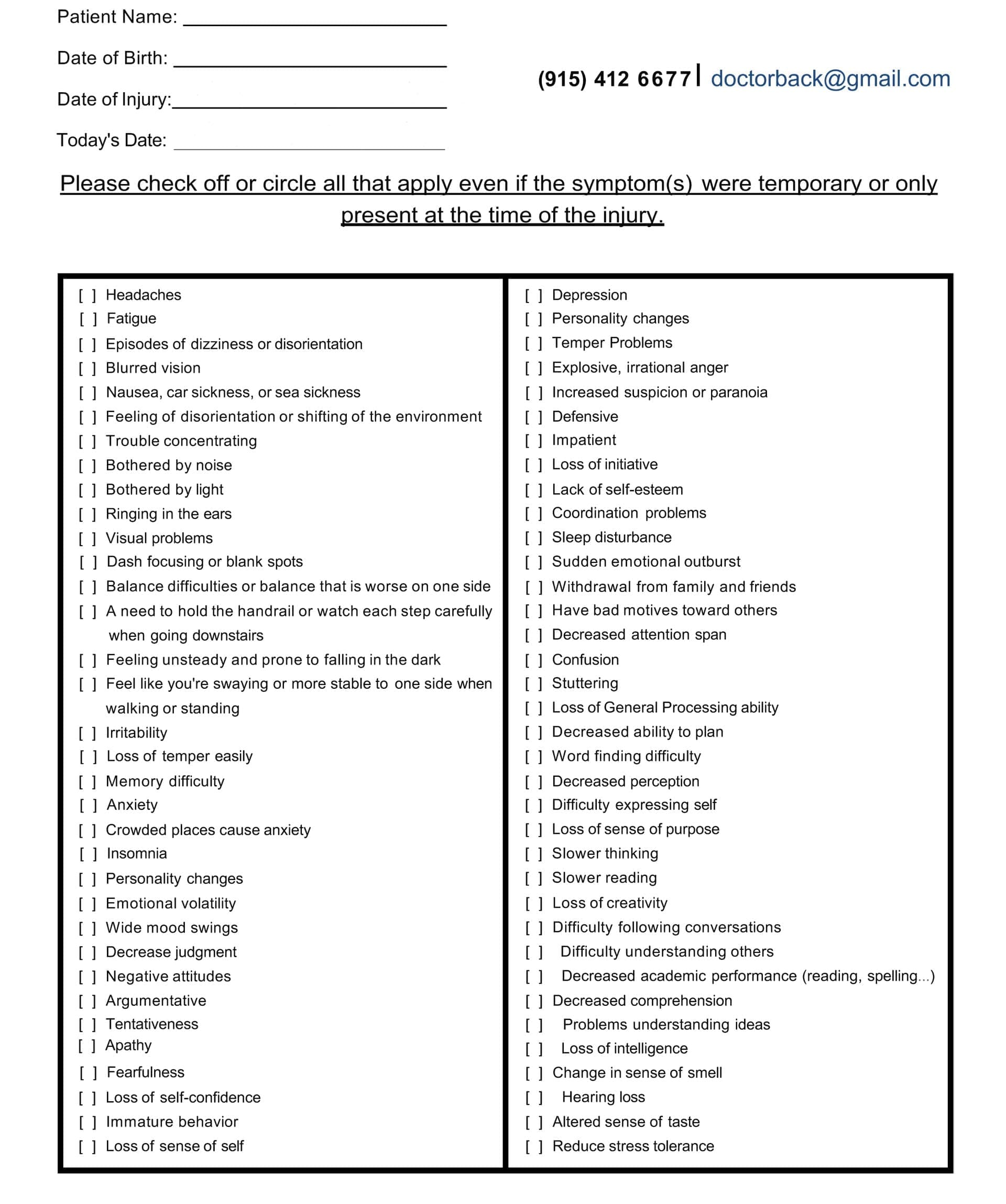
Head Injury/TBI Symptom Questionnaire:
Role of Integrative Chiropractic Care
Chiropractic care addresses trauma from a holistic perspective. It uses adjustments to realign the spine, reduce pain, and improve nerve function. This helps with whiplash, disc issues, and TBIs by boosting blood flow and healing. Techniques include manipulation, massage, and exercises.
It resets the nervous system after crashes, easing stress responses. Benefits include faster recovery, fewer medications, and improved mobility. It works with other pros for complete plans. For concussions, it aids brain recovery.
In rear-end crashes, it treats headaches with therapy. Long-term, it prevents chronic pain.
Clinical Observations from Dr. Alexander Jimenez
Dr. Alexander Jimenez, DC, APRN, FNP-BC, has over 30 years in chiropractic and functional medicine. He treats spinal and brain injuries from trauma using non-invasive methods like adjustments and nutrition. His observations indicate that early care can prevent chronic issues. He focuses on root causes, such as imbalances resulting from trauma, to restore function. For auto accidents, he uses rehab to manage pain and sciatica. His holistic approach includes a diet to reduce inflammation, helping patients recover without the need for surgery.
Conclusion
High-impact events can harm the spine and brain, but understanding their effects helps facilitate recovery. Chiropractic care provides safe and effective ways to promote healing. Seek help early for best results.
References
Casper de Toledo. (n.d.). How a rear-end collision can impact your spine and brain.
UT Southwestern Medical Center. (n.d.). Brain and spine trauma.%2C%20and%20MRI%20scans.)
Law Office of Shane R. Kadlec. (n.d.). 5 Spine and neck injuries that can result from car wrecks.
Bowles & Verna LLP. (2022). Common spinal cord injuries after a car accident.
Weill Cornell Medicine. (n.d.). About brain and spine injuries.
Mayo Clinic. (n.d.). Spinal cord injury – Symptoms and causes.
National Institute of Neurological Disorders and Stroke. (n.d.). Spinal cord injury.
NCBI. (n.d.). Blunt cerebrovascular injury (BCVI)..)
NCBI. (n.d.). Hangman fracture (C2 fracture).
New York Spine Specialist. (n.d.). Common spinal injuries in car accident.
PubMed. (2008). Spinal injuries in sports.
Avant Medical Group. (n.d.). What is an acute complicated injury?
Injury Lawyer. (n.d.). How much is head injury claim worth?
Physio-pedia. (n.d.). Sports injuries of the head and neck.
Dr. Kal. (n.d.). Chiropractic care for accident victims: The science.
NCBI. (n.d.). Cervical spine injuries.
Personal Injury San Diego. (n.d.). Common back spinal injuries.
Rush Chiropractic. (n.d.). What happens to your body in a rear-end collision?
Grossman Green. (n.d.). Common spinal injuries from car accidents.
Dominguez Injury Centers. (n.d.). How chiropractic care supports effective injury healing.
The Law Offices of Casey D. Shomo, P.A. (n.d.). Common spinal injuries in car accidents.
Dr. Kal. (n.d.). Chiropractic relief for accident head injuries.
Brain and Spinal Cord. (n.d.). Motor vehicle accident.
MDPI. (2024). Cervical spine injuries in children with traumatic brain injury.
Function First. (n.d.). The role of chiropractic care in personal injury recovery.
Miller and Hine Law. (2023). 5 Common spine injuries after a car accident.
El Paso Chiropractic. (n.d.). Chiropractic for post-accident concussion recovery in El Paso.
Dr. Alex Jimenez. (n.d.). Injury specialists.
LinkedIn. (n.d.). Dr. Alexander Jimenez, DC, APRN, FNP-BC, IFMCP, CFMP, ATN.
What's your reaction?