“Can physical therapy treatment protocols aimed at improving range of motion and flexibility around the hip and relieving inflammation around the sciatic nerve help individuals experiencing deep buttock pain or piriformis syndrome?”
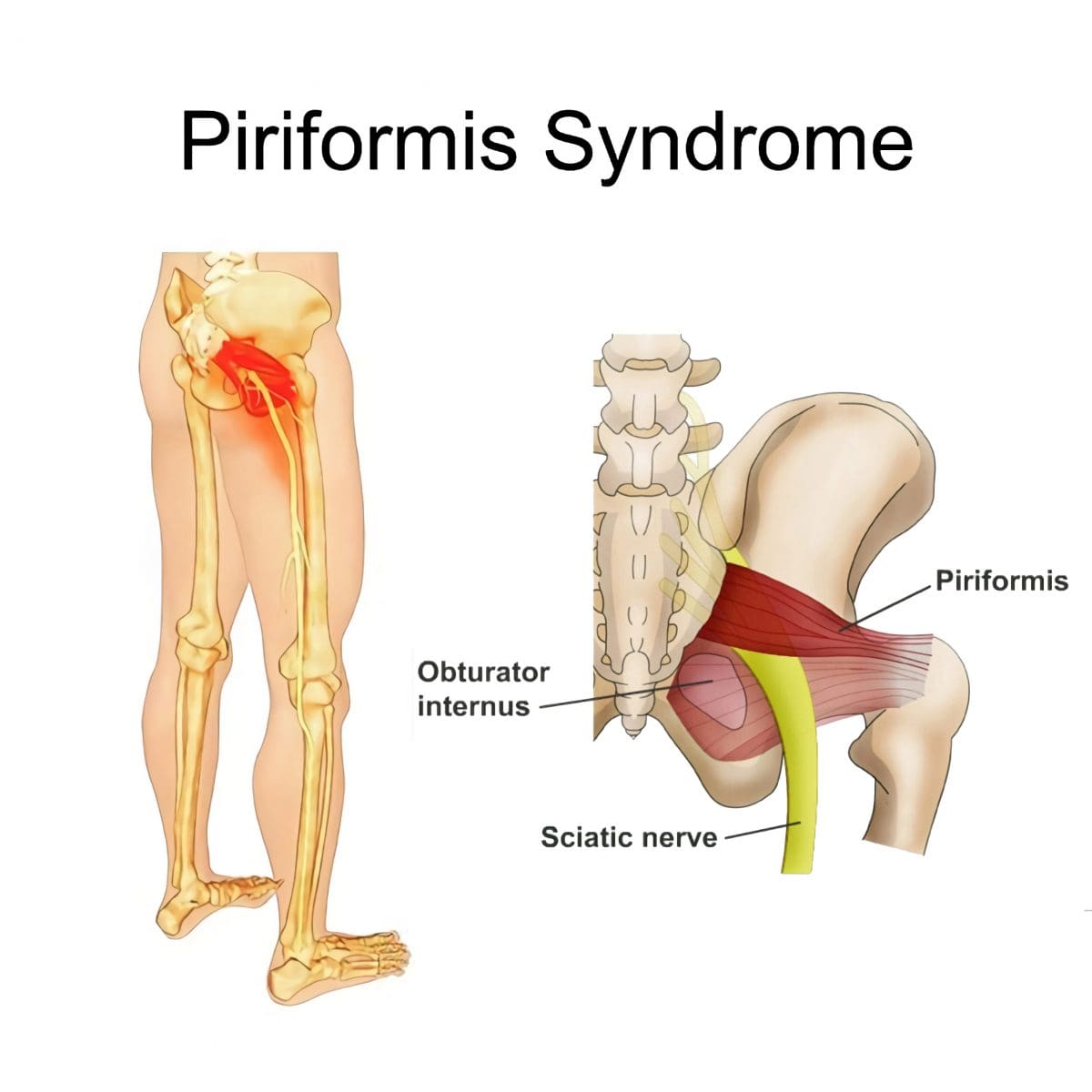
Table of Contents
Deep Buttock Pain
- Piriformis syndrome, a.k .a. deep buttock pain, is described as sciatic nerve irritation from the piriformis muscle.
- The piriformis is a small muscle behind the hip joint in the buttocks.
- It is about one centimeter in diameter and functions in the hip joint’s external rotation or turning outward.
- The piriformis muscle and tendon are close to the sciatic nerve, which supplies the lower extremities with motor and sensory functions.
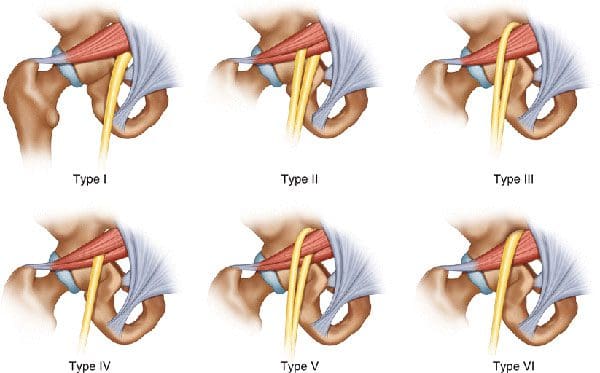
- Depending on an individual’s anatomic variation of the muscle and tendon:
- The two cross over, under, or through each other behind the hip joint in the deep buttock.
- This relationship is thought to irritate the nerve, leading to sciatica symptoms.
Piriformis Syndrome
- When diagnosed with piriformis syndrome, it is thought that the muscle and tendon bind to and/or spasm around the nerve, causing irritation and pain symptoms.
- The theory supported is that when the piriformis muscle and its tendon tighten, the sciatic nerve becomes compressed or pinched. This decreases blood circulation and irritates the nerve from the pressure. (Shane P. Cass 2015)
Symptoms
Common signs and symptoms include: (Shane P. Cass 2015)
- Tenderness with pressure on the piriformis muscle.
- Discomfort in the back of the thigh.
- Deep buttock pain behind the hip.
- Electric sensations, shocks, and pains travel down the back of the lower extremity.
- Numbness in the lower extremity.
- Some individuals develop symptoms abruptly, while others go through a gradual increase.
Diagnosis
- Doctors will order X-rays, MRIs, and nerve conduction studies, which is normal.
- Because piriformis syndrome can be challenging to diagnose, some individuals with minor hip pain may receive a piriformis syndrome diagnosis even if they don’t have the condition. (Shane P. Cass 2015)
- It is sometimes referred to as deep buttock pain. Other causes of this type of pain include back and spinal problems like:
- Herniated discs
- Spinal stenosis
- Radiculopathy – sciatica
- Hip bursitis
- A piriformis syndrome diagnosis is usually given when these other causes are eliminated.
- When the diagnosis is uncertain, an injection is administered in the area of the piriformis muscle. (Danilo Jankovic et al., 2013)
- Different medications can be used, but the injection itself is used to help determine the specific location of the discomfort.
- When an injection is given into the piriformis muscle or tendon, it is often administered by ultrasound guidance to ensure the needle delivers the medication to the correct location. (Elizabeth A. Bardowski, J. W. Thomas Byrd 2019)
Treatment
Common treatments include the following. (Danilo Jankovic et al., 2013)
Rest
- Avoiding activities that cause symptoms for at least a few weeks.
Physical Therapy
- Emphasize stretching and strengthening the hip rotator muscles.
Non-Surgical Decompression
- Gently pulls the spine to release any compression, allowing optimal rehydration and circulation and taking the pressure off the sciatic nerve.
Therapeutic Massage Techniques
- To relax and release muscle tension and increase circulation.
Acupuncture
- To help relax the piriformis muscle, sciatic nerve, and surrounding area.
- Relieve pain.
Chiropractic Adjustments
- Realignment rebalances the spine and musculoskeletal system to alleviate pain.
Anti-Inflammatory Medication
- To decrease inflammation around the tendon.
Cortisone Injections
- Injections are used to decrease inflammation and swelling.
Botulinum Toxin Injection
- Injections of botulinum toxin paralyze the muscle to relieve pain.
Surgery
- Surgery can be performed in rare cases to loosen the piriformis tendon, known as a piriformis release. (Shane P. Cass 2015)
- Surgery is a last resort when conservative treatments have been tried for at least 6 months with little to no relief.
- Recovery can take several months.
Sciatica Causes and Treatment
References
Cass S. P. (2015). Piriformis syndrome: a cause of nondiscogenic sciatica. Current sports medicine reports, 14(1), 41–44. doi.org/10.1249/JSR.0000000000000110
Jankovic, D., Peng, P., & van Zundert, A. (2013). Brief review: piriformis syndrome: etiology, diagnosis, and management. Canadian journal of anaesthesia = Journal canadien d’anesthesie, 60(10), 1003–1012. doi.org/10.1007/s12630-013-0009-5
Bardowski, E. A., & Byrd, J. W. T. (2019). Piriformis Injection: An Ultrasound-Guided Technique. Arthroscopy techniques, 8(12), e1457–e1461. doi.org/10.1016/j.eats.2019.07.033
What's your reaction?