Table of Contents
Christmas Holiday Accidents: What Happens Most Often and How Health Coaching Can Help You Prevent (and Recover)

The Christmas season is full of positive moments—family meals, decorations, travel, parties, and gift-giving. But it also adds extra risks. People rush, lift more, cook more, climb ladders, walk on icy paths, and drive in heavier traffic. Because of that, common holiday accidents include falls, fires, burns, cuts, strains, alcohol-related incidents, food poisoning, and injuries linked to toys and gifts. sja.org.uk+3UCLA Health+3U.S. Consumer Product Safety Commission+3
At HealthCoach Clinic, the goal is simple: help people improve health in a real-life way—by looking at lifestyle, daily habits, and root causes, not just symptoms. The clinic describes a functional medicine and nutrition-based approach, focused on listening closely, reviewing lifestyle and history, and building natural, personalized plans. El Paso, TX Health Coach Clinic+1
This article breaks down the most common Christmas injuries, how to prevent them, and how a health-coaching + integrative care approach (including chiropractic support and NP-level medical oversight when appropriate) can help recovery and lower risk as we advance. El Paso, TX Health Coach Clinic+2El Paso, TX Doctor Of Chiropractic+2
Why holiday accidents happen more often
Holiday injuries usually come from a few repeat patterns:
-
More “projects” at home (decorating, carrying bins, moving furniture) U.S. Consumer Product Safety Commission+1
-
More cooking (burns, knife cuts, grease fires, food safety mistakes) UCLA Health+1
-
More travel (more cars on the road, more distracted driving, more impaired driving risk) NHTSA+1
-
More alcohol (higher risk for falls, burns, and bad decisions) sja.org.uk+1
-
Winter conditions (ice, snow, wet floors at entryways) UCLA Health+1
Falls: decorating, shopping, and icy paths
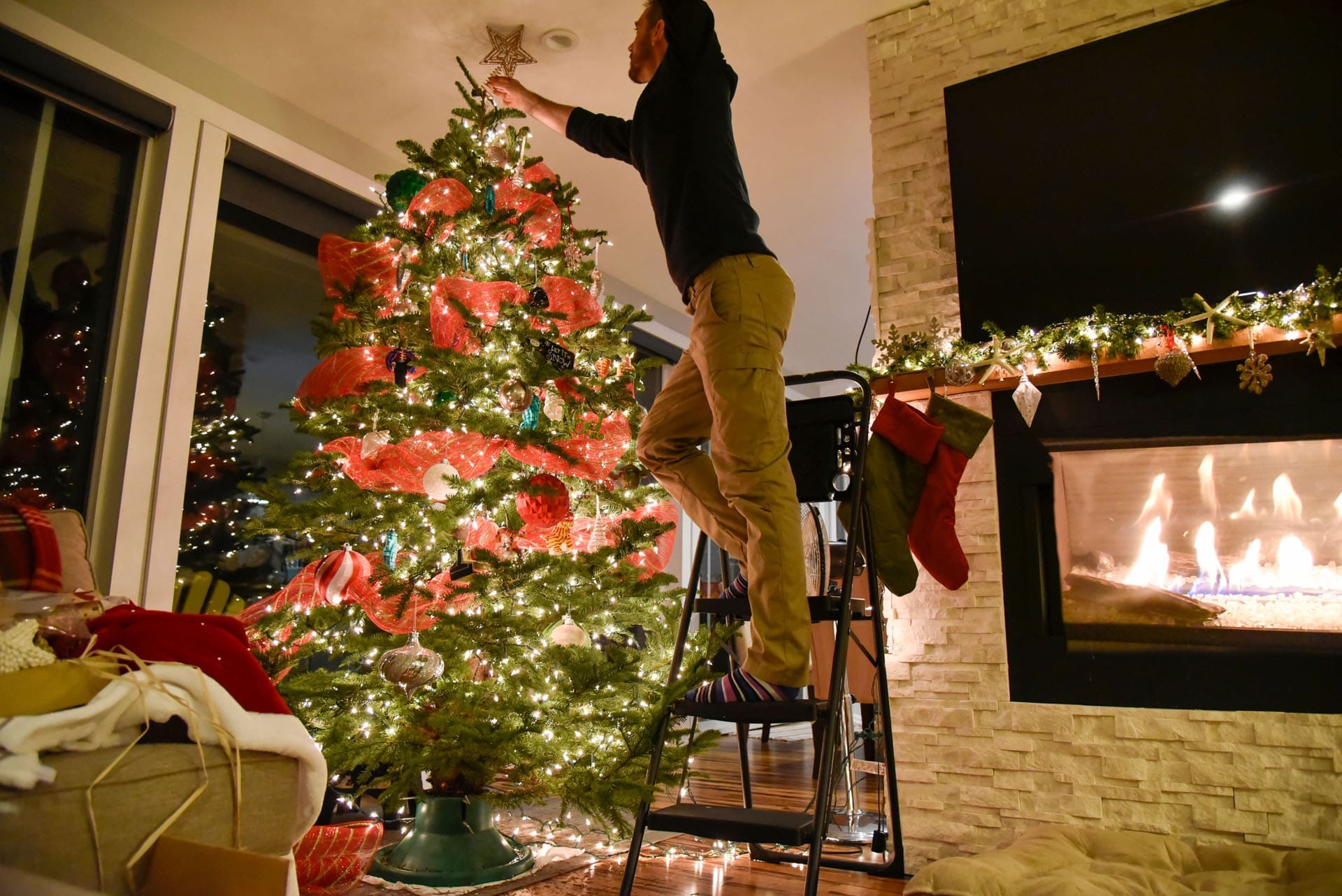
Falls are one of the most common holiday injuries. A big reason is ladders—people overreach, rush, or use unstable ladders while hanging lights. The U.S. Consumer Product Safety Commission (CPSC) reports that about 160 Christmas decorating-related injuries occur each day, and over 40% involve falls. U.S. Consumer Product Safety Commission+1
Common fall scenarios
-
Climbing ladders to hang lights or place decorations U.S. Consumer Product Safety Commission+1
-
Carrying storage boxes on stairs
-
Slipping on ice or wet floors near doorways William D. Shapiro Law, Inc.+1
-
Tripping over extension cords, clutter, toys, or gift bags Relias+1
Fall-prevention checklist
-
Use a stable ladder on level ground; have someone spot you. U.S. Consumer Product Safety Commission+1
-
Don’t overreach—move the ladder instead. UCLA Health
-
Keep cords out of walkways; tape them down when needed. Relias+1
-
Put a mat at entryways and wipe up water fast. UCLA Health
-
Clear ice/snow and improve lighting on steps and sidewalks. William D. Shapiro Law, Inc.+1
When to treat a fall as urgent
-
Head injury symptoms (confusion, worsening headache, vomiting, fainting)
-
Severe back/neck pain, weakness, numbness, or trouble walking
Fires: lights, trees, outlets, and candles
Holiday fires can start from:
-
Dry Christmas trees
-
Faulty lights or damaged cords
-
Overloaded outlets
-
Candles left unattended UCLA Health+1
CPSC holiday safety guidance highlights basic steps like watering live trees, avoiding overloaded outlets, and never leaving candles unattended. U.S. Consumer Product Safety Commission+1
Fire-prevention basics
-
Water live trees daily; keep them away from heaters and fireplaces. U.S. Consumer Product Safety Commission+1
-
Replace frayed cords; don’t run cords under rugs. U.S. Consumer Product Safety Commission
-
Avoid overloading outlets; follow light-string instructions. U.S. Consumer Product Safety Commission+1
-
Use flameless candles when possible; keep real flames in sight. U.S. Consumer Product Safety Commission+1
Burns: cooking, baking, and hot liquids
Cooking injuries rise during the holidays. Burns happen from ovens, hot pans, steam, and hot liquids. UCLA Health also lists burns as a common holiday problem, noting that kitchens get busier and people get distracted. UCLA Health
High-risk moments
-
Carrying hot trays through crowded rooms
-
Steam burns from pots or slow cookers
-
Grease splatters or grease fires
-
Touching hot decorations or bulbs
Burn-prevention tips
-
Keep handles turned inward; use oven mitts and stable trays. UCLA Health
-
Keep kids/pets out of the cooking zone during busy times. UCLA Health
-
Don’t leave cooking unattended—even “just for a minute.” UCLA Health+1
Cuts: wrapping, knives, and ornaments
Cuts happen in kitchens, while wrapping gifts, and when ornaments break. Law and safety summaries regularly list cuts/lacerations as a common holiday injury category (often from kitchen work, packaging, and decorations). D’Amore Law Group+1
Cut-prevention tips
-
Use a steady cutting surface; slow down when chopping. UCLA Health
-
Cut away from your body when opening boxes or wrapping. D’Amore Law Group+1
-
Clean up broken ornament glass right away (including tiny pieces). Relias
Strains and overexertion: lifting, carrying, decorating
Back strains and “pulled muscles” are common during holiday lifting and long decorating sessions. UCLA Health specifically cites strained back and neck as common holiday issues. UCLA Health
Common ways people strain themselves
-
Lifting bins from awkward angles
-
Carrying a tree alone
-
Twisting while holding weight
-
Doing long projects without breaks
Simple lifting rules
-
Bend hips and knees, keep the load close, and avoid twisting. UCLA Health
-
Break big loads into shorter trips.
-
Take short breaks every 30–60 minutes.
Alcohol-related incidents: falls, burns, fights, and risky choices
Alcohol can lower coordination and judgment. That increases the risk of falls, cuts, burns, and driving crashes. St John Ambulance highlights alcohol-related injuries and intoxication as common reasons for holiday emergency care. sja.org.uk
Safer party habits
-
Eat before drinking and pace yourself
-
Don’t climb ladders or cook with hot oil after drinking
-
Plan a sober ride before the party starts
Food poisoning: big meals, leftovers, and temperature mistakes
Food poisoning becomes more likely when people cook in large amounts, leave food out too long, or don’t cool leftovers safely. The CDC warns about the “danger zone” between 40°F and 140°F and says not to leave perishable food out more than 2 hours (or 1 hour if above 90°F). CDC
USDA food safety guidance also emphasizes reheating leftovers to 165°F. FSIS
FoodSafety.gov repeats the “two-hour rule” for leftovers and explains why quick refrigeration matters. FoodSafety.gov
Food safety bullet list (simple but powerful)
-
Refrigerate perishable foods within 2 hours. CDC+1
-
Keep hot foods hot and cold foods cold; don’t “park” food on the counter. CDC+1
-
Reheat leftovers to 165°F. FSIS+1
-
When in doubt, throw it out—especially if food sat out too long. FoodSafety.gov
When food poisoning needs urgent care
-
Signs of dehydration (dizziness, fainting, very dark urine)
-
Blood in stool, severe belly pain, high fever, or symptoms that don’t improve
Toy and gift injuries: choking, batteries, magnets, and falls
Toy injuries happen every year—especially when kids get excited, and supervision gets stretched thin. UCLA Health notes that emergency departments treated nearly 150,000 toy-related injuries (age 14 and under) in 2020 and highlights riding toys/scooters as a major source. UCLA Health
CPSC also warns about serious hazards such as button/coin batteries and high-powered magnets, as well as small parts that can cause choking. U.S. Consumer Product Safety Commission
Toy safety reminders
-
Match toys to age/skill level
-
Keep small parts away from children under 3
-
Store button batteries and magnets safely; treat ingestion as an emergency U.S. Consumer Product Safety Commission
-
Helmets for scooters, bikes, hoverboards, and skates UCLA Health
Driving risk: distracted and impaired driving increases
Holiday driving can be more dangerous because traffic is heavier, people are tired, and celebrations often include alcohol. NHTSA reports that in December 2023, 1,038 people died in drunk-driving traffic crashes, and from 2019 to 2023, there were more than 4,931 deaths in drunk-driving crashes during December. NHTSA+1
Safer holiday driving
-
Don’t drive impaired—use a sober driver or rideshare. NHTSA+1
-
Set GPS before driving; keep phones put away
-
Leave early so you don’t speed or take risks
-
If the weather is bad, slow down and increase following distance
How HealthCoach Clinic’s style of care fits the holiday season
Holiday accidents are not only “bad luck.” They often connect to:
-
poor sleep
-
high stress
-
weak balance or low strength
-
inflammation and poor recovery habits
-
blood sugar swings (cravings + fatigue)
-
dehydration
-
rushing and distraction El Paso, TX Health Coach Clinic+2El Paso, TX Health Coach Clinic+2
HealthCoach Clinic describes a model that focuses on lifestyle, history, and root causes, with personalized plans and functional medicine/nutrition support. El Paso, TX Health Coach Clinic+1
They also note health coaching options, including telemedicine support. El Paso, TX Health Coach Clinic
Where chiropractic + NP support can connect (integrative model)
In many integrative clinics, chiropractic care helps address joint and spine mechanics, while NP-level medical training can support broader assessment, screening for red flags, and coordination of care. Dr. Alexander Jimenez (DC, APRN, FNP-BC) describes an integrated telemedicine + injury care approach that can include early evaluation, guidance on when emergency care is needed, documentation, and follow-up. El Paso, TX Doctor Of Chiropractic+1
HealthCoach Clinic also has an article describing a similar integrative telemedicine approach inside a health-coaching environment. El Paso, TX Health Coach Clinic
This kind of team approach can be helpful when a “simple” holiday injury turns into lingering pain, reduced mobility, or repeated flare-ups.
Practical prevention plan: a “Holiday Safety Reset” you can actually follow
Here’s a simple plan that fits real life.
Step 1: Pick your top risk
Choose the biggest risk for you this season:
-
Falls (ladder/ice)
-
Back strain (lifting/decorating)
-
Cooking injuries (burns/cuts)
-
Food safety
-
Alcohol choices
-
Driving risk
Step 2: Use one “rule” for each risk
Examples:
-
Ladder rule: spotter + no overreaching U.S. Consumer Product Safety Commission+1
-
Food rule: fridge within 2 hours CDC+1
-
Driving rule: no impaired driving, no phone NHTSA+1
-
Lifting rule: no twisting while lifting
Step 3: Add one recovery habit daily
-
10-minute walk after meals
-
2–3 minutes of gentle mobility (neck, shoulders, hips)
-
A protein + fiber breakfast
-
Water before coffee
-
Lights out 30 minutes earlier
This is where health coaching can be especially useful: it helps you choose habits that match your schedule and stick with them.
If you do get hurt: what to do next
A common holiday mistake is waiting too long and hoping pain “just goes away.” Some soreness is normal after a strain, but certain signs should push you to get checked sooner.
Get urgent evaluation if you have
-
Severe head pain or confusion after a fall
-
Weakness, numbness, or trouble walking
-
Chest pain, shortness of breath, or fainting
-
Severe swelling, deformity, or inability to bear weight
For non-emergency injuries
A successful recovery plan usually includes:
-
Calm the flare-up (rest, ice/heat guidance, short, gentle movement)
-
Restore mobility and strength in stages
-
Improve sleep, hydration, and nutrition so the body can repair itself
-
Address the reason it happened (balance, lifting strategy, footwear, etc.)
That “whole-person” approach aligns with how HealthCoach Clinic describes its focus: lifestyle, nutrition, and root-cause planning, with support that can be delivered in person or via telemedicine. El Paso, TX Health Coach Clinic+1
Medical Disclaimer
This article is for general education and is not medical advice. If you think you may have a serious injury or emergency symptoms, seek urgent or emergency care right away.
References
-
Make it a “Home Safe Home” for the Holidays — U.S. Consumer Product Safety Commission (CPSC) (2023)
-
7 common holiday injuries and accidents (and how to avoid them) — UCLA Health (2021)
-
Seasonal holiday injuries: A research roundup — The Journalist’s Resource (2023)
-
Tinsel & Trauma: Hazardous Christmas Statistics — St John Ambulance (2025)
-
What Are the Most Common Christmas-Related Injuries? — D’Amore Law Group
-
Winter Holidays: Drive Sober or Get Pulled Over — Traffic Safety Marketing (U.S. DOT/NHTSA)
-
Connected Care: Telemedicine and Patient Convenience — HealthCoach Clinic (2025)
-
Telemedicine Personal Injury Care in El Paso — Dr. Alex Jimenez (2025)
-
Telemedicine Injury Care: Virtual Assessments and Follow-Up — Dr. Alex Jimenez (2025)
Disclaimers
Professional Scope of Practice *
The information herein on "Christmas Holiday Accidents: Stay Safe This Season" is not intended to replace a one-on-one relationship with a qualified health care professional or licensed physician and is not medical advice. We encourage you to make healthcare decisions based on your research and partnership with a qualified healthcare professional.
Blog Information & Scope Discussions
Welcome to El Paso's wellness blog, where Dr. Alex Jimenez, DC, FNP-C, a board-certified Family Practice Nurse Practitioner (FNP-C) and Chiropractor (DC), presents insights on how our team is dedicated to holistic healing and personalized care. Our practice aligns with evidence-based treatment protocols inspired by integrative medicine principles, similar to those found on dralexjimenez.com, focusing on restoring health naturally for patients of all ages.
Our areas of chiropractic practice include Wellness & Nutrition, Chronic Pain, Personal Injury, Auto Accident Care, Work Injuries, Back Injury, Low Back Pain, Neck Pain, Migraine Headaches, Sports Injuries, Severe Sciatica, Scoliosis, Complex Herniated Discs, Fibromyalgia, Chronic Pain, Complex Injuries, Stress Management, Functional Medicine Treatments, and in-scope care protocols.
Our information scope is limited to chiropractic, musculoskeletal, physical medicine, wellness, contributing etiological viscerosomatic disturbances within clinical presentations, associated somato-visceral reflex clinical dynamics, subluxation complexes, sensitive health issues, and functional medicine articles, topics, and discussions.
We provide and present clinical collaboration with specialists from various disciplines. Each specialist is governed by their professional scope of practice and their jurisdiction of licensure. We use functional health & wellness protocols to treat and support care for the injuries or disorders of the musculoskeletal system.
Our videos, posts, topics, subjects, and insights cover clinical matters, issues, and topics that relate to and directly or indirectly support our clinical scope of practice.*
Our office has reasonably attempted to provide supportive citations and has identified the relevant research studies or studies supporting our posts. We provide copies of supporting research studies available to regulatory boards and the public upon request.
We understand that we cover matters that require an additional explanation of how they may assist in a particular care plan or treatment protocol; therefore, to discuss the subject matter above further, please feel free to ask Dr. Alex Jimenez, DC, APRN, FNP-BC, or contact us at 915-850-0900.
We are here to help you and your family.
Blessings
Dr. Alex Jimenez DC, MSACP, APRN, FNP-BC*, CCST, IFMCP, CFMP, ATN
email: coach@elpasofunctionalmedicine.com
Licensed as a Doctor of Chiropractic (DC) in Texas & New Mexico*
Texas DC License # TX5807
New Mexico DC License # NM-DC2182
Licensed as a Registered Nurse (RN*) in Texas & Multistate
Texas RN License # 1191402
ANCC FNP-BC: Board Certified Nurse Practitioner*
Compact Status: Multi-State License: Authorized to Practice in 40 States*
Graduate with Honors: ICHS: MSN-FNP (Family Nurse Practitioner Program)
Degree Granted. Master's in Family Practice MSN Diploma (Cum Laude)
Dr. Alex Jimenez, DC, APRN, FNP-BC*, CFMP, IFMCP, ATN, CCST
My Digital Business Card
What's your reaction?