Table of Contents
Backpack Safety and Spinal Health: A Practical Guide for the U.S. and El Paso, TX

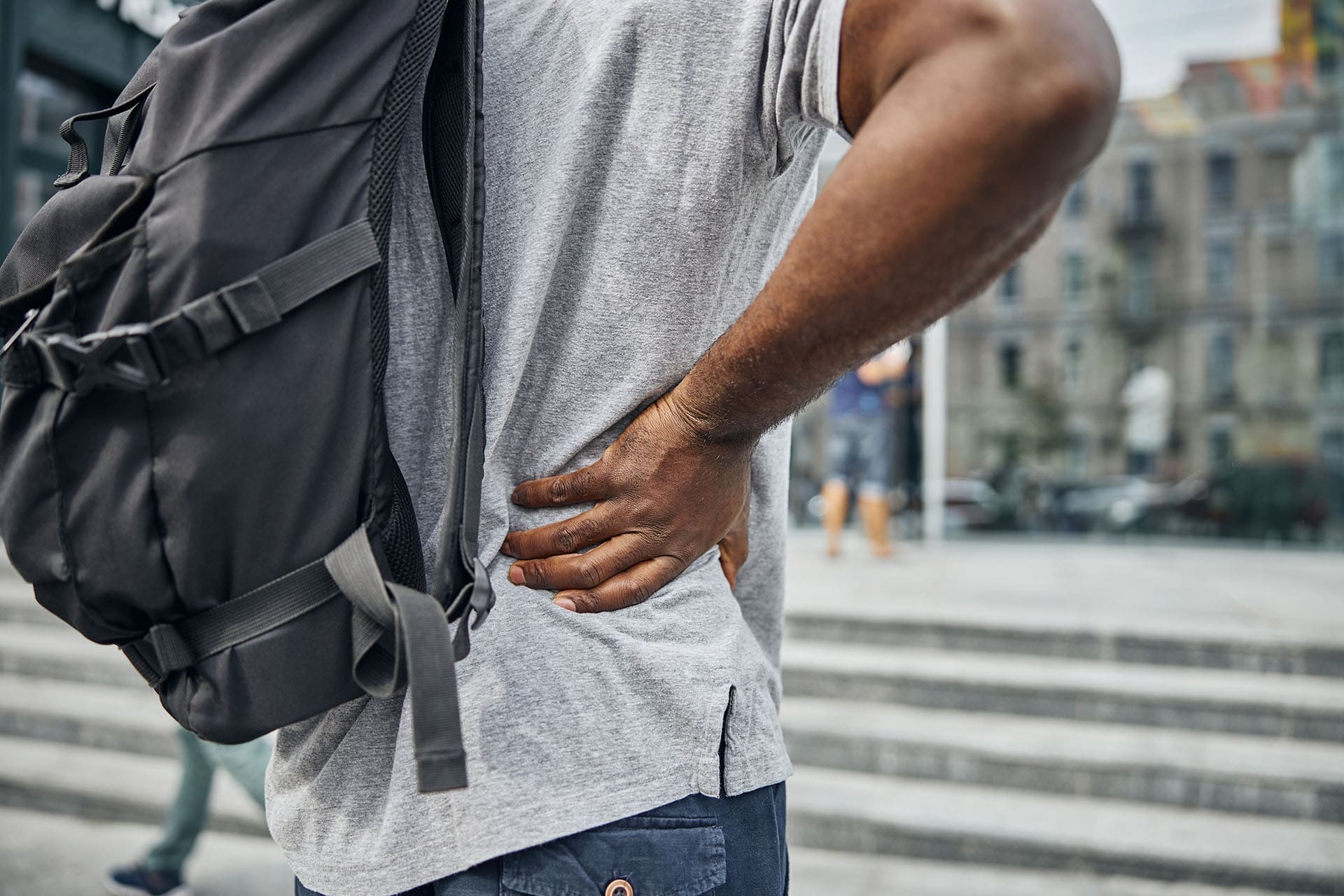
A backpack can be a smart way to carry your stuff—if it fits well, the load is reasonable, and you wear it the right way. When it’s too heavy or fits poorly, a backpack can irritate the neck, shoulders, and lower back and exacerbate issues like sciatica or disc pain. Major orthopedic guidance states that backpacks are common and generally safe when used correctly, but problems arise from poor fit, improper packing, and overload. The American Academy of Orthopaedic Surgeons provides clear safety tips on straps, weight, and packing. Mayo Clinic Health System and other medical systems also emphasize conservative care, healthy habits, and knowing when symptoms need medical evaluation. (AAOS, n.d.; Mayo Clinic Health System, n.d.).
This topic matters because back pain is extremely common and costly in the United States. A major clinical overview explains that low back pain is one of the most common reasons for disability and healthcare use, creating a large economic burden. NCBI Bookshelf summarizes the scope and burden of low back pain across populations. (NCBI Bookshelf, n.d.). In El Paso, many people also ask about herniated discs, sciatica, spinal stenosis, and recovery after accidents—especially with physically demanding work, lots of driving, and active lifestyles. Local spine education pages discuss lumbar radiculopathy/sciatica symptoms and conservative treatment options. (EP Spine, n.d.; EP Manual Physical Therapy, n.d.).
This rewrite is geared to HealthCoach.Clinic by focusing on what a health-coaching approach does best: simple habits, realistic load management, step-by-step progress, and accountability—so you can protect your spine over the long term, not just “get through” today.
Is wearing a backpack advisable?
Yes—for most people, a backpack is advisable when used correctly.
A backpack can actually be better than a purse or a one-strap bag because it can:
-
Spread weight across both shoulders
-
Keep the load closer to your center
-
Reduce one-sided strain when it fits properly (AAOS, n.d.).
But a backpack can be a problem when:
-
It’s too heavy
-
You wear it on one strap
-
It hangs too low
-
The load shifts around because it’s packed poorly (AAOS, n.d.; Denn Chiropractic, n.d.).
Coaching mindset: Don’t ask, “Is a backpack bad?” Ask: “Is my backpack setup helping or hurting my body today?” Small setup changes often make a big difference.
Weight distribution: the simplest rule that prevents most strain
Many clinical safety guides recommend keeping your backpack at approximately 10–15% of your body weight when possible. If you already have pain, you may need to aim lower. (Denn Chiropractic, n.d.; Medrite Urgent Care, n.d.).
Quick examples
-
150 lb person ? 10–15% = 15–22.5 lb
-
200 lb person ? 10–15% = 20–30 lb
Signs your backpack is too heavy
-
You lean forward when walking
-
Your shoulders feel pulled down or rounded
-
Your neck tightens within minutes
-
You feel numbness/tingling or burning pain down an arm or leg (Medrite Urgent Care, n.d.; Nebraska Medicine, n.d.).
If the backpack causes symptoms that spread into the arm/hand or leg/foot, that’s not something to “tough out.” It may mean nerves are irritated. (Nebraska Medicine, n.d.; EP Spine, n.d.).
How to wear a backpack safely (the 60-second setup)
Orthopedic guidance is consistent: fit, packing, and two straps. (AAOS, n.d.).
Pick the right backpack
Look for:
-
Two wide, padded shoulder straps
-
A padded back panel
-
A chest strap and/or waist strap for heavier loads
-
Enough compartments to keep items from shifting (AAOS, n.d.; Spine Health & Wellness, n.d.).
Wear it the right way
-
Use both straps (not one).
-
Tighten straps so the bag sits snug and doesn’t bounce.
-
Aim for the pack to sit in the mid-back area—not hanging near your hips (AAOS, n.d.).
Pack it the smart way
-
Place heavier items at the back of the bag (center).
-
Use compartments to prevent the weight from shifting side-to-side.
-
Remove “just in case” items each day—extra weight adds up fast (AAOS, n.d.; Ireland Clinic, n.d.).
Lift it safely
If it’s heavy:
-
Place it on a chair or table first
-
Put one strap on, then the other (avoid twisting)
-
Use your legs to lift, not a rounded back (AAOS, n.d.).
Common question: “Does wearing a backpack strengthen your spine?”
Not directly. Carrying a load can build tolerance over time, but it can also cause overuse strain if you increase the load too quickly or carry it for long periods. Social media answers vary widely—so it’s best to stick to basic biomechanics: load, time, posture, and recovery determine whether it helps or hurts. (Quora discussion, n.d.; TikTok video, n.d.).
HealthCoach.Clinic approach: If your goal is a stronger back, use a plan that builds strength safely—rather than relying on a heavy backpack as “training.”
Can backpacks cause scoliosis?
Major orthopedic guidance states that backpacks do not cause scoliosis. (AAOS, n.d.). Yale Medicine explains that scoliosis has multiple causes and patterns and is not attributed to backpacks. (Yale Medicine, n.d.). That said, heavy backpacks can cause pain and muscle tightness, and they can make someone with scoliosis feel worse if the load is uneven. (AAOS, n.d.; Yale Medicine, n.d.).
Why do Americans ask so many spine questions
Across the U.S., the most common spine questions usually fall into three buckets:
“Why does my back hurt, and is it serious?”
People want to know whether their pain is muscular, joint-based, disc-related, or nerve-related, and whether they need medical evaluation. (Nebraska Medicine, n.d.; Mayo Clinic Health System, n.d.).
“Do I need surgery—or can I fix this without it?”
Many people want conservative options first. Medical system guidance often notes that many back problems improve with conservative care, activity, and time, while also identifying red flags that warrant a faster evaluation. (Mayo Clinic Health System, n.d.; Hackensack Meridian Health, 2021).
“How do I reduce costs and still get real long-term relief?”
Low back pain is expensive for individuals and healthcare systems, and the burden includes missed work and repeated episodes. (NCBI Bookshelf, n.d.; Healthgrades, n.d.).
El Paso focus: sciatica, discs, stenosis, and accident recovery
In El Paso, questions often sound like:
-
“My leg hurts or goes numb—is this sciatica?”
-
“Is it a herniated disc?”
-
“Do I have spinal stenosis?”
-
“Should I try chiropractic care first, or see an orthopedic surgeon?”
Local orthopedic spine education describes lumbar radiculopathy (often called sciatica) as symptoms that can include radiating leg pain, numbness, tingling, and weakness, and it outlines conservative treatment options and when more advanced care may be needed. (EP Spine, n.d.). A local PT education resource addresses common stenosis questions and explains how symptoms can vary with activity and position, particularly standing and walking tolerance. (EP Manual Physical Therapy, n.d.).
Backpack connection: If you already have sciatica or stenosis symptoms, a heavy backpack can increase strain and trigger flares—especially when walking long distances, climbing stairs, or standing in lines.
When to see a clinician: red flags you should not ignore
A helpful way to think about back pain is: most episodes improve, but certain symptoms need evaluation. Nebraska Medicine outlines questions to determine whether evaluation is needed and highlights concerning symptoms such as weakness, unusual sensations, or serious neurological signs. (Nebraska Medicine, n.d.). Mayo Clinic-style spine-surgery question guides also emphasize identifying which symptoms require more urgent care and what to expect during recovery planning. (Mayo Clinic Health System, n.d.).
Seek care sooner if you have:
-
New or worsening weakness
-
Numbness that spreads or worsens
-
Pain after an accident
-
Fever, unexplained weight loss, or feeling very ill with back pain
-
Bowel/bladder control changes (Nebraska Medicine, n.d.; Yale Medicine, n.d.).
Conservative care: what “non-surgical” really means
Many people hear “conservative care” and assume it means “do nothing.” It doesn’t.
Conservative care often includes:
-
Guided movement and strengthening
-
Activity modifications (not total bed rest)
-
Physical therapy and rehab
-
Manual therapy in appropriate cases
-
Education on posture and daily habits
-
Targeted pain strategies (as appropriate) (UC Davis Health, 2025; Spine Health, n.d.).
UC Davis Health emphasizes movement, core and back strengthening, and staying active in many recovery plans. (UC Davis Health, 2025). Spine-focused educational resources also highlight lifestyle prevention strategies and the importance of protecting spinal motion as you age. (Spine Health, n.d.; Spine Health, n.d.-b).
What about spinal decompression?
Some clinics offer decompression therapy as part of conservative management. Patient-facing FAQ pages explain what decompression is, what people might feel, and how sessions are structured. These pages are not equivalent to high-level clinical guidelines, but they reflect common patient questions and expectations. (Rightway Chiropractic, n.d.; Southwest Chiropractors, n.d.).
“Chiropractic vs. orthopedic surgery” is often the wrong question
A better question is: “What level of care fits my condition right now?”
Medical education pages explaining the differences between chiropractors and orthopedic spine specialists typically describe:
-
Orthopedic spine surgeons: evaluation of structural conditions, imaging interpretation, and surgical planning when appropriate
-
Chiropractors: conservative musculoskeletal care, manual therapy, and functional rehab approaches (Moran, n.d.; Bone & Joint, n.d.).
In clinical education content written by Alexander Jimenez, patients often seek clarity on what to expect from integrative chiropractic care, safety screening, and how imaging, functional testing, and rehabilitation fit together—especially for back pain and injury recovery. (Jimenez, n.d.-a; Jimenez, n.d.-b).
HealthCoach.Clinic angle: Health coaching helps people consistently follow the plan—sleep, movement, pacing, nutrition, hydration, stress management, and habit tracking—so conservative care has a real chance to work.
Questions to ask your spine clinician (and why they matter)
People often feel rushed in appointments. A good question list helps you leave with a plan, not confusion.
Multiple spine and orthopedic resources encourage patients to ask about:
-
Diagnosis and pain source
-
Conservative options
-
Imaging needs
-
Risks and benefits
-
Recovery expectations
-
What happens if symptoms don’t improve (PopbMD, 2025; FSAP Care, n.d.; Mayo Clinic Health System, n.d.).
Bring these questions (copy/paste into your notes)
-
What do you think is the main cause of my pain?
-
Do I need imaging now, or can we start with conservative care?
-
What are the best first steps for the next 2–6 weeks?
-
What symptoms mean I should call you right away?
-
What is the expected timeline for improvement?
-
If we consider surgery later, what are the risks, benefits, and alternatives? (PopbMD, 2025; TexasBack Institute, n.d.; Inspired Spine, 2024).
These question guides are especially helpful for people considering minimally invasive surgery or evaluating options. (Inspired Spine, 2024; Mayo Clinic Health System, n.d.).
Backpack safety plan for people with sciatica, stenosis, or disc pain
If you have nerve symptoms, your backpack needs to be extra intentional.
Coaching-friendly rules
-
Keep your load light (often below the 10–15% guideline if you flare easily). (Medrite Urgent Care, n.d.).
-
Use both straps, and consider a waist strap for heavier loads. (AAOS, n.d.).
-
Avoid long carry times—break it up if possible.
-
If walking triggers leg symptoms, reduce the load and get evaluated. (EP Spine, n.d.; EP Manual Physical Therapy, n.d.).
Movement, “micro-habits” that help
-
5–10 minutes daily: gentle hip mobility + core stability
-
Short walks, but stop before symptoms spike
-
Regular posture resets during work/commuting (Jefferson Health, n.d.; UC Davis Health, 2025).
Reducing the financial burden of back care
People often feel trapped between pain and cost. The economic burden is real. A clinical overview describes how low back pain drives major healthcare use and lost productivity. (NCBI Bookshelf, n.d.).
Cost-lowering steps that are still evidence-aligned
-
Start with a clear evaluation, so you’re not “randomly trying things.” (Nebraska Medicine, n.d.).
-
Ask what “success” looks like at 2, 4, and 6 weeks. (PopbMD, 2025; FSAP Care, n.d.).
-
Use coaching tools: symptom tracking, activity pacing, and habit plans to prevent flare cycles.
-
Ask insurance questions early (coverage, visit limits, documentation needs). (Healthgrades, n.d.; Dallas Accident & Injury Rehab, n.d.).
-
Use a “maintenance plan” mindset once stable—small routines often prevent repeat episodes. (MySpineDoc, 2026; SpineMD, n.d.).
The bottom line
Wearing a backpack is usually advisable when the load is reasonable and the fit is correct. For many people, a backpack is safer than a one-strap bag because it distributes weight more evenly. The main risks come from carrying too much, wearing it on one shoulder, letting it hang too low, and ignoring warning signs. (AAOS, n.d.; Medrite Urgent Care, n.d.).
For the U.S. and El Paso, the bigger spine questions are often the same:
-
How do I get long-term relief without wasting time or money?
-
When do I need imaging or specialist care?
-
How do I choose between conservative care and surgery?
A HealthCoach. The clinic’s approach supports the “missing middle” many people struggle with: consistently completing daily steps so the care plan can actually work.
References
-
American Academy of Orthopaedic Surgeons. (n.d.). Backpack safety. OrthoInfo.
-
Bone & Joint. (n.d.). Back and spine specialist vs. chiropractor: Key differences.
-
Dallas Accident & Injury Rehab. (n.d.). FAQs about chiropractic and insurance.
-
Denn Chiropractic. (n.d.). Backpack safety.
-
EP Manual Physical Therapy. (n.d.). 11 most frequently asked questions about lumbar spinal stenosis.
-
EP Spine. (n.d.). Conditions orthopedic spine surgeon El Paso, TX.
-
EP Spine. (n.d.). Low back pain orthopedic spine surgeon El Paso, TX.
-
EP Spine. (n.d.). Lumbar radiculopathy treatment El Paso, TX.
-
FSAP Care. (n.d.). Key questions to ask your spine doctor.
-
Hackensack Meridian Health. (2021, September 16). Answers to 10 common questions about back pain.
-
Healthgrades. (n.d.). 7 things to know about going to a chiropractor.
-
Inspired Spine. (2024, March). Looking for minimally invasive spine surgery? 8 questions to ask your doctor first.
-
Ireland Clinic. (n.d.). Protecting your spine with backpack safety.
-
Jimenez, A. (n.d.-a). Back pain. DrAlexJimenez.com.
-
Jimenez, A. (n.d.-b). Safe chiropractic care in El Paso: What to expect. DrAlexJimenez.com.
-
Jefferson Health. (n.d.). Tips for maintaining spine health.
-
Mayo Clinic Health System. (n.d.). 9 questions to ask your spine surgeon.
-
Medrite Urgent Care. (n.d.). Backpack safety injury prevention.
-
Moran, K. (n.d.). What is the difference between an orthopedic spine surgeon and a chiropractor?.
-
NCBI Bookshelf. (n.d.). Low back pain.
-
Nebraska Medicine. (n.d.). Back pain: Five questions to determine if you need medical evaluation.
-
PopbMD. (2025, May 16). Top questions to ask your orthopedic doctor regarding back pain.
-
Rightway Chiropractic. (n.d.). Spinal decompression FAQs.
-
Spine Health. (n.d.). Answers to your most pressing spine health questions.
-
Spine Health. (n.d.-b). Common conditions that hinder spinal motion.
-
Spine Health & Wellness. (n.d.). Backpacks, briefcases, and your spine: Everyday carriers that can cause damage.
-
Southwest Chiropractors. (n.d.). Decompression therapy.
-
TexasBack Institute. (n.d.). Questions to ask your spine surgeons.
-
UC Davis Health. (2025, October). Your top low back pain questions answered: Causes, symptoms, and when you need to see a doctor.
-
Yale Medicine. (n.d.). Scoliosis.
-
TikTok. (n.d.). Backpack/posture discussion video.
-
Quora. (n.d.). Does wearing a backpack actually strengthen your spine?.
Disclaimers
Professional Scope of Practice *
The information herein on "Backpack Safety and Spinal Health: Key Guidelines" is not intended to replace a one-on-one relationship with a qualified health care professional or licensed physician and is not medical advice. We encourage you to make healthcare decisions based on your research and partnership with a qualified healthcare professional.
Blog Information & Scope Discussions
Welcome to El Paso's wellness blog, where Dr. Alex Jimenez, DC, FNP-C, a board-certified Family Practice Nurse Practitioner (FNP-C) and Chiropractor (DC), presents insights on how our team is dedicated to holistic healing and personalized care. Our practice aligns with evidence-based treatment protocols inspired by integrative medicine principles, similar to those found on dralexjimenez.com, focusing on restoring health naturally for patients of all ages.
Our areas of chiropractic practice include Wellness & Nutrition, Chronic Pain, Personal Injury, Auto Accident Care, Work Injuries, Back Injury, Low Back Pain, Neck Pain, Migraine Headaches, Sports Injuries, Severe Sciatica, Scoliosis, Complex Herniated Discs, Fibromyalgia, Chronic Pain, Complex Injuries, Stress Management, Functional Medicine Treatments, and in-scope care protocols.
Our information scope is limited to chiropractic, musculoskeletal, physical medicine, wellness, contributing etiological viscerosomatic disturbances within clinical presentations, associated somato-visceral reflex clinical dynamics, subluxation complexes, sensitive health issues, and functional medicine articles, topics, and discussions.
We provide and present clinical collaboration with specialists from various disciplines. Each specialist is governed by their professional scope of practice and their jurisdiction of licensure. We use functional health & wellness protocols to treat and support care for the injuries or disorders of the musculoskeletal system.
Our videos, posts, topics, subjects, and insights cover clinical matters, issues, and topics that relate to and directly or indirectly support our clinical scope of practice.*
Our office has reasonably attempted to provide supportive citations and has identified the relevant research studies or studies supporting our posts. We provide copies of supporting research studies available to regulatory boards and the public upon request.
We understand that we cover matters that require an additional explanation of how they may assist in a particular care plan or treatment protocol; therefore, to discuss the subject matter above further, please feel free to ask Dr. Alex Jimenez, DC, APRN, FNP-BC, or contact us at 915-850-0900.
We are here to help you and your family.
Blessings
Dr. Alex Jimenez DC, MSACP, APRN, FNP-BC*, CCST, IFMCP, CFMP, ATN
email: coach@elpasofunctionalmedicine.com
Licensed as a Doctor of Chiropractic (DC) in Texas & New Mexico*
Texas DC License # TX5807
New Mexico DC License # NM-DC2182
Licensed as a Registered Nurse (RN*) in Texas & Multistate
Texas RN License # 1191402
ANCC FNP-BC: Board Certified Nurse Practitioner*
Compact Status: Multi-State License: Authorized to Practice in 40 States*
Graduate with Honors: ICHS: MSN-FNP (Family Nurse Practitioner Program)
Degree Granted. Master's in Family Practice MSN Diploma (Cum Laude)
Dr. Alex Jimenez, DC, APRN, FNP-BC*, CFMP, IFMCP, ATN, CCST
My Digital Business Card
What's your reaction?