Understand the implications of whiplash work injuries and learn how to address them effectively for better health.
Table of Contents
Returning to Work After Motor Vehicle Accidents: A Comprehensive Guide
Motor vehicle accidents (MVAs) are a leading cause of injury worldwide, impacting millions annually. In the United States, over 6 million car accidents occur each year, resulting in injuries like whiplash, which is particularly common in rear-end collisions (National Highway Traffic Safety Administration, 2024). Whiplash, a cervical acceleration-deceleration injury, can significantly affect an individual’s ability to work and their quality of life. This blog post explores the clinical rationale for returning to work after MVAs, focusing on whiplash, its symptoms, nonsurgical treatments, and the role of Dr. Alexander Jimenez, a distinguished practitioner in El Paso, Texas. Written for a high school reading level, this SEO-optimized post uses APA 7 style citations and includes a touch of humor to make it engaging, concluding with a serious note and disclaimer.
Whiplash and Its Symptoms
Whiplash is a neck injury caused by a sudden, forceful back-and-forth motion of the head, often during a car crash. Imagine your head acting like a bobblehead toy—that’s whiplash in action! This motion can strain or tear neck muscles, ligaments, and tendons, leading to various symptoms (Mayo Clinic, 2024).
What is Whiplash?
Whiplash, or cervical acceleration-deceleration injury, occurs when the neck is subjected to rapid movement, typically in rear-end collisions. The force can damage soft tissues and sometimes affect the spine or nerves (Cleveland Clinic, 2022). The Quebec Task Force classifies whiplash into grades, with Grade 1 involving neck pain and stiffness, and Grade 2 adding symptoms like headaches (Spine-Health, 2024).
Common Symptoms
Symptoms of whiplash can include:
- Neck pain and stiffness (like waking up after sleeping funny, but worse)
- Headaches
- Dizziness or vertigo
- Fatigue
- Pain in shoulders, back, or arms
- Numbness or tingling in arms
- Blurred vision
- Ringing in the ears (tinnitus)
- Trouble concentrating or remembering
These symptoms may appear right away or sneak up days later. Most people recover within weeks, but 5-8% develop chronic symptoms that can impact work (Kasch et al., 2001).
| Symptom | Description |
|---|---|
| Neck Pain/Stiffness | Most common, feels like your neck’s stuck in a bad position |
| Headaches | Often start at the base of the skull |
| Dizziness | Can make you feel like you’re on a merry-go-round |
| Fatigue | You might feel wiped out, even after a good night’s sleep |
| Numbness/Tingling | Pins-and-needles sensation in arms, like when your foot falls asleep |
References:
- Cleveland Clinic. (2022). Whiplash (Neck Strain): What It Is, Symptoms & Treatment. my.clevelandclinic.org/health/diseases/11982-whiplash
- Mayo Clinic. (2024). Whiplash – Symptoms and causes. www.mayoclinic.org/diseases-conditions/whiplash/symptoms-causes/syc-20378921
- Kasch, H., et al. (2001). Handicap after acute whiplash injury: A 1-year prospective study with gender-specific differences. BMC Musculoskeletal Disorders, 2(1), 1-8. doi.org/10.1186/1471-2474-2-7
The Power of Chiropractic Chiropractic Care In Injury Rehabilitation- Video
Nonsurgical Treatments for Whiplash
Treating whiplash is like fixing a car after a fender-bender—you want to get it running smoothly without major surgery. Nonsurgical treatments are the go-to approach, focusing on pain relief, reducing inflammation, and restoring neck function (Mayo Clinic, 2024).
Treatment Options
-
Rest and Activity Modification:
- What It Is: Take it easy for a few days, but don’t become a couch potato.
- Why It Works: Brief rest reduces inflammation, while gradual activity prevents stiffness (Spine-Health, 2024).
-
Ice and Heat Therapy:
- What It Is: Ice for the first 48 hours, then heat to relax muscles.
- Why It Works: Ice cuts swelling; heat boosts blood flow. It’s like a spa day for your neck!
-
Over-the-Counter Medications:
- What It Is: Ibuprofen or acetaminophen for pain and inflammation.
- Why It Works: These meds are like a quick fix for mild to moderate pain (WebMD, 2025).
-
Physical Therapy:
- What It Is: Exercises, massage, or ultrasound to improve movement.
- Why It Works: Strengthens neck muscles and restores range of motion (Mayo Clinic, 2024).
-
Chiropractic Care:
- What It Is: Spinal adjustments to realign the neck.
- Why It Works: Can reduce pain and improve alignment, especially with experts like Dr. Jimenez (El Paso Chiropractor Blog, 2016).
-
Acupuncture:
- What It Is: Tiny needles to ease pain and tension.
- Why It Works: May help for some, though it’s not everyone’s cup of tea.
-
Prescription Medications:
- What It Is: Muscle relaxants or stronger pain meds for severe cases.
- Why It Works: Provides relief when over-the-counter options aren’t enough.
-
Injections:
- What It Is: Corticosteroid shots for persistent pain.
- Why It Works: Targets specific pain areas for quick relief.
Clinical Rationale
These treatments aim to get you back to normal life, including work. For instance, managing ligament injuries is key, as weakened ligaments can lead to chronic pain (Pearson et al., 2006). Physical therapy and chiropractic care strengthen and realign, making it easier to handle work tasks.
| Treatment | Purpose | Typical Duration |
|---|---|---|
| Rest | Reduce inflammation | 1-3 days |
| Ice/Heat Therapy | Manage swelling and relax muscles | Ongoing as needed |
| Physical Therapy | Restore strength and mobility | Weeks to months |
| Chiropractic Care | Realign spine, reduce pain | Varies |
References:
- Mayo Clinic. (2024). Whiplash – Diagnosis and treatment. www.mayoclinic.org/diseases-conditions/whiplash/diagnosis-treatment/drc-20378926
- Spine-Health. (2024). Whiplash Treatments and Recovery. www.spine-health.com/conditions/neck-pain/whiplash-treatments-and-recovery
- Pearson, A. M., et al. (2006). Ligament strength in whiplash-associated disorders: A systematic review. BMC Musculoskeletal Disorders, 7(1), 103. doi.org/10.1186/1471-2474-7-103
- El Paso Chiropractor Blog. (2016). Return to Work Rates After Whiplash. www.elpasochiropractorblog.com/2016/06/return-to-work-rates-after-whiplash.html
Return to Work After Auto Injury
Getting back to work after a car accident is like returning to school after a long break—exciting but challenging. The decision depends on your injury, job, and recovery progress. Let’s break down why people return, what affects it, and what the numbers say.
Why Return to Work?
- Money Matters: Bills don’t stop, so many need to get back to earning.
- Mental Boost: Work can feel like a return to normal, lifting your spirits.
- Social Push: Bosses or family might nudge you to get back in the game.
- Doctor’s Orders: Docs often say work can help recovery if done right.
Factors Affecting Return
- Injury Severity: Chronic pain, seen in 5-8% of whiplash cases, can delay return (Kasch et al., 2001).
- Job Type: Lifting heavy boxes? You might need more time than a desk job.
- Mindset: Fear of pain or stress can make you hesitant.
- Treatment Success: Good therapy can get you back faster.
Return to Work Rates
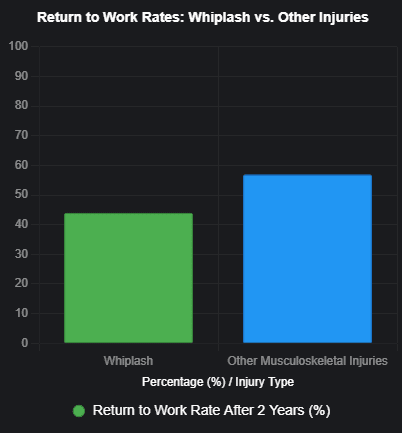
The chart above shows return to work rates. Studies provide mixed insights:
- A BMC Public Health study found 44% of whiplash patients returned after two years, compared to 57% with other injuries (Cassidy et al., 2000).
- A Danish study noted 56% of whiplash patients were still on sick leave after two years (El Paso Chiropractor Blog, 2016).
- A 2001 study showed 12% hadn’t resumed normal activities after one year.
| Study | Return Rate | Time Frame | Comparison |
|---|---|---|---|
| BMC Public Health | 44% | 2 years | 57% for other injuries |
| Danish Study | 44% | 2 years | Not specified |
| 2001 Study | 88% | 1 year | Not specified |
Clinical Perspectives
Doctors like Dr. Jimenez assess if you can handle work tasks. They check your neck’s movement, pain levels, and job demands. A gradual return, maybe with lighter duties, helps avoid re-injury. Think of it as easing back into gym class after a sprain.
References:
- Cassidy, J. D., et al. (2000). Effect of eliminating compensation for pain and suffering on the outcome of insurance claims for whiplash injury. New England Journal of Medicine, 342(16), 1179-1186. doi.org/10.1056/NEJM200004203421603
- El Paso Chiropractor Blog. (2016). Return to Work Rates After Whiplash. www.elpasochiropractorblog.com/2016/06/return-to-work-rates-after-whiplash.html
Role of Dr. Alexander Jimenez
Dr. Alexander Jimenez, DC, APRN, FNP-BC, is El Paso’s go-to expert for car accident injuries. With over 30 years of experience, he’s like the superhero of chiropractic care, using high-tech tools to help patients recover and navigate legal battles (Health Coach Clinic).
Expertise in Auto Injuries
Dr. Jimenez’s approach is thorough:
- Advanced Imaging: MRI and CT scans to spot injuries precisely.
- Diagnostic Evaluations: Deep dives into your injury’s impact.
- Dual-Scope Procedures: Combines chiropractic and medical treatments for full recovery.
His methods ensure you get a plan that fits your needs, like a custom-made suit for your neck.
Liaison in Personal Injury Cases
Dr. Jimenez is a bridge between medical and legal worlds:
- Medical Reports: Detailed documents for your lawyer.
- Court Testimony: Explains your injuries to judges.
- Care Coordination: Ensures you get top-notch treatment.
His work is vital in El Paso, where car accidents are common.
References:
- Health Coach Clinic. (n.d.). Southwest Functional Medicine. healthcoach.clinic/southwest-functional-medicine/
- LinkedIn. (n.d.). Dr. Alexander Jimenez. www.linkedin.com/in/dralexjimenez/
Personal Injury Cases in El Paso
El Paso’s busy highways make car accidents a big deal, leading to many personal injury cases. Dr. Jimenez shines here, helping victims recover and fight for justice. His local know-how and dedication make him a standout (GVI Law, 2025).
Why Personal Injury Cases Matter
- Compensation: Covers medical bills, lost wages, and pain.
- Justice: Holds negligent drivers accountable.
- Recovery Support: Funds treatments for long-term healing.
El Paso’s legal firms, like GVI Law, work with experts like Dr. Jimenez to win cases.
| Case Type | Common Issues | Role of Dr. Jimenez |
|---|---|---|
| Car Accidents | Whiplash, back injuries | Diagnoses and documents injuries |
| Truck Accidents | Severe injuries | Provides expert testimony |
| Wrongful Death | Loss due to negligence | Supports legal claims |
References:
- GVI Law. (2025). El Paso Personal Injury Attorney. gvilaw.com/our-office-locations/el-paso/
Conclusion
Returning to work after a car accident, especially with whiplash, is a journey that blends medical care, mental strength, and practical needs. Nonsurgical treatments like physical therapy and chiropractic care, guided by experts like Dr. Jimenez, pave the way for recovery. In El Paso, where car accidents are common, Dr. Jimenez’s role in treating injuries and supporting legal cases is invaluable.
Disclaimer: This post is for information only and not medical or legal advice. Consult a healthcare provider for medical concerns and a licensed attorney for legal matters.
Key Citations
- Whiplash – Symptoms and causes – Mayo Clinic
- Whiplash – Diagnosis and treatment – Mayo Clinic
- Whiplash (Neck Strain): What It Is, Symptoms & Treatment – Cleveland Clinic
- Whiplash Treatments and Recovery – Spine-Health
- Whiplash Injury: Pain, Treatment, Symptoms, Causes, and More – WebMD
- Return to Work Rates After Whiplash – El Paso Chiropractor Blog
- Southwest Functional Medicine – Health Coach Clinic
- Dr. Alexander Jimenez – LinkedIn
- El Paso Personal Injury Attorney – GVI Law
- Handicap after acute whiplash injury: A 1-year prospective study – BMC Musculoskeletal Disorders
- Ligament strength in whiplash-associated disorders: A systematic review – BMC Musculoskeletal Disorders
- Effect of eliminating compensation for pain and suffering on the outcome of insurance claims – New England Journal of Medicine
What's your reaction?