Table of Contents
Failure to Yield Left Turn Accidents: Understanding T-Bone Crashes and Recovery Options
A failure-to-yield left-turn accident occurs when a driver tries to make a left turn but does not wait for oncoming traffic to pass safely. This common mistake often leads to a serious side-impact crash known as a T-bone collision. In these cases, the turning car may stick out into the path of straight-moving traffic, causing the front of the approaching vehicle to slam into the side of the turning one. The result looks like the letter “T” at the moment of impact. Police and insurance adjusters often call these “sticking out” accidents because the turning vehicle does not fully clear the intersection or median opening. (Daniel Stark Injury Lawyers, n.d.)
These crashes happen at busy intersections, median breaks, or crossovers where drivers must cross lanes of traffic. The driver making the left turn almost always breaks the law by failing to yield the right-of-way. Even small errors in judgment can turn a routine drive into a dangerous situation.

What Happens in a Failure to Yield Left Turn Accident?
Picture this: A driver waits at an intersection or median gap to turn left. Instead of staying fully behind the line or pulling safely into the median area, the car inches forward. Part of the vehicle protrudes into the oncoming lanes. An approaching car cannot stop in time and hits the side of the turning vehicle. This is the classic “failure to yield on a left turn” disaster.
The turning driver violated traffic rules by failing to yield the right of way. Oncoming vehicles have the legal priority in most cases. When the crash occurs, it often becomes a T-bone or side-impact collision. The physics are straightforward but powerful: the front end of the straight-moving car strikes the weaker side of the other vehicle. The sides of cars have less protection than the front or rear, so the force is transferred directly to the doors, passengers, and frame. (TopDog Law, n.d.)
The Physics Behind T-Bone Collisions
In a T-bone crash, energy from the impact moves sideways through the struck vehicle. The front bumper of the oncoming car strikes the side panel or door area. This creates sudden lateral forces that whip the body sideways. Unlike front-end crashes, where crumple zones absorb energy, side impacts offer little protection.
The result is often severe for the occupants in the turning car. Their vehicle may spin or slide after the hit. Insurance reports frequently note that the turning car “stuck out” because it did not complete the crossover or clear the junction. These details matter in accident investigations because they show exactly how the failure to yield happened. (Torts Law, n.d.)
Why the Left-Turning Driver Is Usually at Fault
Traffic laws are clear: the driver making a left turn must wait until the intersection or roadway is completely clear. This means checking the speed and distance of every oncoming vehicle. Nearly all failure-to-yield left-turn accidents place fault on the turning driver. They have the legal duty to yield.
Common reasons for the mistake include:
- Being in a hurry and rushing through the turn
- Not paying close attention to the distance or speed of approaching cars
- Misjudging gaps in traffic, especially at high speeds
- Poor vehicle placement, such as not pulling fully into the median area before turning
Even if the oncoming driver was going the speed limit, the left-turning driver is expected to wait. Only in rare cases does the blame shift, such as when the straight driver was speeding wildly or ran a red light. (Farah & Farah, n.d.; Uptown Injury, n.d.)
Common Causes of These Crashes
Many factors contribute to failure-to-yield left-turn accidents. Drivers often underestimate how fast oncoming traffic moves. Distraction from phones or passengers plays a big role, too. At busy intersections or along roads with medians, the pressure to “squeeze in” grows.
Disregarding the median gap—sometimes called a median break or crossover—adds extra risk. Drivers may try to cross before the gate is fully open and end up stuck halfway. This technical error violates lane-positioning rules and creates a protruding front end that causes the crash.
Risky Left Turn Situations to Watch For
Certain maneuvers raise the chance of a T-bone crash. Drivers should learn these patterns to stay safe:
- Failure to Yield / T-Bone pulling away with a protruding front end: The car edges into traffic but does not fully clear the path.
- Performing an Incorrect Median Crossover Turn Prior to the Median Gap: Turning too soon and blocking lanes instead of using the full median opening.
- Making an incorrect left turn entails changing lanes: improper lane changes while turning create confusion and sudden stops.
Each of these situations involves failing to yield or misusing the roadway layout. Staying aware helps prevent them. (Blane Law, n.d.; Hoffmann Personal Injury, n.d.)
Injuries from T-Bone Accidents
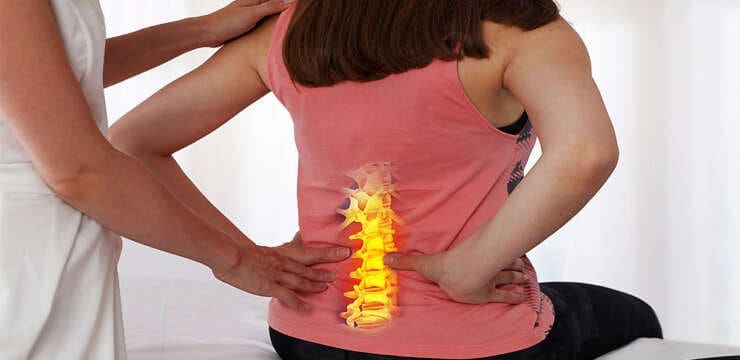
The side impact in these crashes often causes serious harm. The sudden jolt produces lateral whiplash, where the head and neck snap sideways. Soft tissue injuries, muscle strains, and spinal misalignments are common. Passengers may suffer bruises, fractures, or internal injuries from the force exerted by doors and seat belts.
Symptoms can show up right away or days later. Pain in the neck, back, shoulders, or hips often limits movement. Inflammation and swelling make daily tasks hard. Without proper care, these issues can become long-term problems that affect work and life. (Cascade Spine and Injury Center, n.d.; East Coast Trial Lawyers, n.d.)
Chiropractic Care for Healing After a Left Turn Crash
Many people turn to integrative chiropractic clinics for help after a T-bone collision. These non-invasive treatments focus on the whole person rather than just symptoms. Chiropractic care addresses the direct impact that causes lateral whiplash, soft tissue damage, and misalignment.
An integrative team usually combines spinal adjustments with physical therapy, massage, and functional rehabilitation. Spinal adjustments realign the vertebrae to reduce nerve pressure and restore motion. Massage eases tight muscles and improves blood flow. Physical therapy builds strength and coordination so patients regain normal movement.
Dr. Alexander Jimenez, DC, APRN, FNP-BC, brings unique clinical observations to this field. As a chiropractor and nurse practitioner with decades of experience treating auto accident victims in El Paso, Texas, he uses a dual-scope approach. He combines chiropractic evaluation with medical assessment, advanced imaging review, and detailed documentation. His practice emphasizes early intervention to establish that injuries were crash-related and to expedite healing. Dr. Jimenez notes that prompt chiropractic care helps correct cervical instability, relieve nerve irritation, and address soft tissue strains common in side-impact crashes. Techniques like spinal decompression strengthen weakened muscles, while functional rehab helps patients return to daily activities pain-free. (Jimenez, n.d.; The Neck and Back Clinics, n.d.)
Patients often report fast relief from acute pain and inflammation. The holistic method supports quick progress toward Maximum Medical Improvement (MMI). This means reaching the highest level of recovery possible. By treating the full body—spine, muscles, nerves, and overall function—integrative chiropractic avoids surgery or heavy medications in many cases.
Benefits of Integrative Chiropractic Treatment
Chiropractic care after a failure-to-yield left-turn accident offers several clear advantages:
- Reduces neck and back pain from lateral whiplash
- Improves range of motion and joint flexibility
- Lowers inflammation through natural methods like massage and adjustments
- Strengthens core and stabilizing muscles to prevent future issues
- Provides thorough medical records that support insurance or legal claims
- Helps patients reach MMI faster by focusing on root causes, not just symptoms
Dr. Jimenez and similar clinics stress that waiting too long after a crash can make recovery harder. Early chiropractic visits restore balance, mobility, and strength without risking re-injury. (DrKal Chiropractic, n.d.; Allied Medical Centers, n.d.)
Staying Safe and Seeking Help
Left-turn accidents are preventable with patience and attention. Always wait until traffic is clear. Use medians and crossovers correctly. Check mirrors and blind spots every time. These simple habits save lives and avoid the pain of a T-bone crash.
If you experience a failure-to-yield left-turn accident, get checked right away. Prompt chiropractic care can make a big difference in your recovery. Integrative teams like those led by experts such as Dr. Alexander Jimenez help victims move from pain and limited mobility back to active, healthy lives.
References
Cascade Spine and Injury Center. (n.d.). T-bone car accident injuries: Common symptoms, treatments, and recovery. cascadespineandinjury.com/blog/t-bone-car-accident-injuries-common-symptoms-treatments-and-recovery
Daniel Stark Injury Lawyers. (n.d.). Left turns explained: Why so many serious crashes happen. www.danielstark.com/blog/left-turns-explained-why-so-many-serious-crashes-happen/
DrKal Chiropractic. (n.d.). Chiropractic care for car accident soft tissue injuries. drkal.com/chiropractic-care-for-car-accident-soft-tissue-injuries/
East Coast Trial Lawyers. (n.d.). Common injuries in T-bone accidents. www.eastcoasttriallawyers.com/2021/12/common-injuries-t-bone-accidents/
Farah & Farah. (n.d.). Who is at fault in left turn car accidents. farahandfarah.com/blog/who-fault-left-turn-car-accidents/
Jimenez, A. (n.d.). T-bone side impact car collision injuries chiropractor. dralexjimenez.com/t-bone-car-collision-chiropractor/
Jimenez, A. (n.d.). How chiropractic care helps treat whiplash and neck injury. dralexjimenez.com/how-chiropractic-care-helps-treat-whiplash-and-neck-injury/
The Neck and Back Clinics. (n.d.). What are your chiropractic treatment options after a car accident? theneckandbackclinics.com/what-are-your-chiropractic-treatment-options-after-a-car-accident/
TopDog Law. (n.d.). Who is at fault for a T-bone accident? topdoglaw.com/who-is-at-fault-for-a-t-bone-accident/
Torts Law. (n.d.). T-bone accident. www.tortslaw.com/car-accident-lawyers/types-of-car-accidents/t-bone-accident/
Uptown Injury. (n.d.). Who is liable in a T-bone car accident? uptowninjury.com/who-is-liable-in-a-t-bone-car-accident/
What's your reaction?