What is the treatment for early bunions?
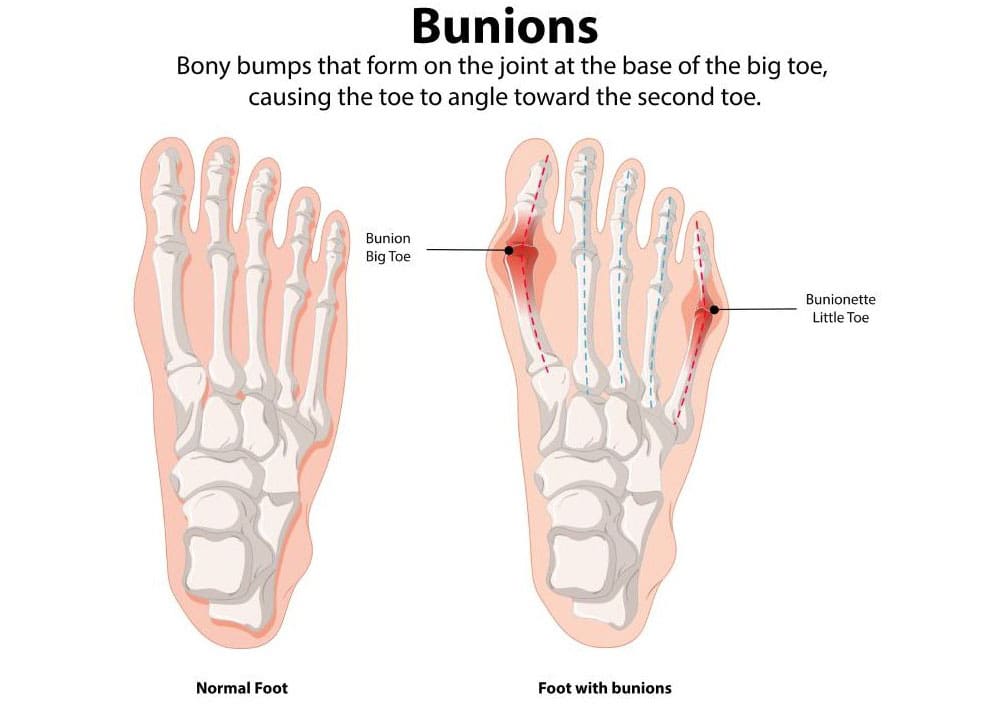
Table of Contents
Bunions
Bunions, also known as hallux valgus, are bony and painful bumps on the big toe. Big toe misalignment causes most bunions. Bunions typically begin with redness, thicker skin, swelling, and soreness around the big toe. You can control bunion symptoms but not reverse its progression. Early symptoms of bunions include pain management and treatment choices. (MedlinePlus, 2024)
Visual Early Signs
In the early stages, bunions are relatively small and do not cause significant discomfort. In the early stages of a bunion, you may experience the following symptoms around the metatarsophalangeal (MTP) joint, the joint that connects the base of your big toe to the rest of your foot. (American Academy of Orthopaedic Surgeons, 2022)
- Redness
- Skin darkening and swelling
- Hardened, thick skin
- A bony bulge
- Big toe prominence toward or under the second toe
- Corns and calluses
Initial Physical Indications
Bunions can cause pain even before they are visible. These are early bunion symptoms. (MedlinePlus, 2024)
- Pain in the foot and big toe
- When walking or wearing shoes with a narrow toe box, this pain becomes more pronounced.
- Decreased movement of the big toe
- Tenderness
- Inflammation
- Swelling
- Stiffness
- Heat
Stages
Bunions typically exhibit a progressive nature, indicating that their severity tends to increase over time. Failure to implement preventive measures for your bunions may lead to the emergence of complications. Additional symptoms often accompany bunions in their more advanced stages. (American Academy of Orthopaedic Surgeons, 2022)
- Chronic, severe pain situated in and around the MTP joint, as well as the sides and sole of your foot
- Bursitis is a condition that results in the formation of a fluid-filled cyst at the base of the big toe.
- Your big toe is bending toward and even crossing over your second toe.
- Overgrowth of bone along the side of your big toe
- Inability to accommodate your typical footwear
- Struggling to continue
- In hammer toe deformities, the middle of the second, third, or fourth toes bends upwards, approximating a claw or hammer.
- The large toe is affected by Hallux rigidus, a type of arthritis.
Put an End to the Growth
Once bunions have begun to manifest, they will inevitably become a lasting condition. Nonetheless, several strategies exist to mitigate their progression or prevent additional complications. Included are the following methods: (American Academy of Orthopaedic Surgeons, 2022)
- Steering clear of improperly fitting footwear and elevated heels
- Utilizing orthopedic footwear and/or broad, accommodating, cushioned-soled, and low-heeled shoes
- Utilizing spacers between the toes serves to mitigate friction and chafing.
- Utilizing over-the-counter pads composed of felt, silicone, or foam to shield the bunion
- Extending your calf muscles to enhance joint alignment
Management of Pain
Utilizing ice packs in conjunction with non-steroidal anti-inflammatory drugs (NSAIDs), including Advil or Motrin (ibuprofen), may provide effective relief from the discomfort associated with bunions. Research suggests that administering Botox into the muscles of the forefoot may yield analgesic effects. (Hurn, S. E., et al., 2022)
Conservative Management in Initial Phases
If your bunions worsen despite self-care, you may need to consult a podiatrist or other medical professional. Medical professionals may advise
Foot orthotics, or orthoses
- Orthoses, or foot orthoses, are specific inserts that help with bunion pain and stop skin from chafing.
Splints
- Bunion splints are orthotic devices that can help straighten your toes. People often use them at night. (Aebischer, A. S., & Duff, S. 2020)
Physical Therapy
- A physical therapist can assist you by offering exercises to help your joints and feet align better. Additionally, they could use manual therapy to relieve discomfort. (Hurn, S. E., et al., 2022)
Podiatrist
A podiatrist is a medical doctor (M.D.) who focuses on diagnosing and treating health issues related to the feet, ankles, and lower extremities. Consult your healthcare provider for a referral to a podiatrist if you need help addressing your bunion symptoms. (American Podiatric Medical Association, 2025)
Chiropractor’s Role
From a health coach perspective, a chiropractor and nurse practitioner (NP) can play complementary roles in managing bunions, focusing on pain relief, functional improvement, and holistic care. Here’s how each can contribute:
Chiropractors specialize in musculoskeletal health, which can be beneficial for bunions (hallux valgus), as they affect foot alignment and biomechanics.
- Foot and Joint Adjustments:
- Chiropractors can perform gentle manipulations to improve joint mobility in the foot, particularly the big toe, to reduce stiffness and pain.
- They may address misalignments in the foot, ankle, or even the spine, as poor posture or gait can exacerbate bunion discomfort.
- Gait and Biomechanical Assessment:
- Analyze walking patterns to identify imbalances contributing to bunion progression.
- Recommend corrective exercises or stretches to strengthen foot muscles (e.g., toe flexors, arch supporters) and improve alignment.
- Custom Orthotics:
- Prescribe or recommend custom orthotic inserts to support the arch, reduce pressure on the bunion, and promote proper foot mechanics.
- Orthotics can help redistribute weight away from the affected joint, thereby reducing pressure on it.
- Soft Tissue Therapy:
- Use techniques such as massage or myofascial release to relieve tension in the foot’s soft tissues, thereby reducing inflammation and discomfort around the bunion.
- Lifestyle and Preventive Advice:
- Advise on proper footwear (wide-toe, low-heel shoes) to minimize pressure on the bunion.
- Recommend anti-inflammatory strategies, such as ice therapy or dietary modifications, to help manage pain and swelling.
Nurse Practitioner’s Role
NPs provide a medical perspective, focusing on diagnosis, symptom management, and coordinating care for bunions, especially in cases of significant pain or complications.
- Diagnosis and Evaluation:
- Conduct a thorough physical exam to assess bunion severity, including X-rays to evaluate joint deformity or arthritis.
- Rule out related conditions, such as gout or rheumatoid arthritis, that may mimic or worsen bunion symptoms.
- Pain Management:
- Prescribe medications like NSAIDs (e.g., ibuprofen) for pain and inflammation or corticosteroid injections for severe cases.
- Educate on the proper use of over-the-counter pain relief options or topical treatments.
- Wound Care and Infection Prevention:
- Address complications like blisters, calluses, or infections caused by bunion-related pressure or ill-fitting shoes.
- Guide proper foot hygiene and care to prevent skin breakdown.
- Referral to Specialists:
- If conservative treatments fail or surgery (e.g., bunionectomy) becomes necessary, coordinate care with podiatrists or orthopedic surgeons.
- Refer to physical therapists for targeted rehabilitation if mobility is significantly impaired.
- Holistic Health Support:
- Address underlying health factors, such as obesity or diabetes, that may exacerbate bunion symptoms or complicate the healing process.
- Offer nutritional counseling to reduce inflammation (e.g., an anti-inflammatory diet rich in omega-3s) and support overall wellness.
Collaborative Approach
A health coach can bridge the efforts of chiropractors and NPs by integrating their recommendations into a personalized wellness plan.
- Exercise and Mobility: Combine the chiropractor’s corrective exercises with NP-approved physical therapy to strengthen foot muscles and improve flexibility.
- Lifestyle Changes: Reinforce footwear advice, weight management, and anti-inflammatory nutrition to slow bunion progression.
- Pain Management: Support adherence to NP-prescribed medications or therapies while incorporating chiropractor-suggested natural remedies (e.g., ice, stretches).
- Education and Motivation: Help the client understand the importance of consistent self-care and follow-through with both providers’ recommendations.
Injury Medical Chiropractic and Functional Medicine Clinic
To treat various illnesses, Dr. Jimenez, a nurse practitioner, combines chiropractic care with medical expertise to provide comprehensive care. The clinic’s individualized care plans combine sports medicine, acupuncture, electroacupuncture, and functional medicine. Focusing on strength, agility, and flexibility, the clinic tackles injuries and chronic pain conditions. Patients of all ages and abilities can benefit from personalized treatment and wellness outcomes when comprehensive care plans are paired with both in-person and virtual health coaching.
Enhance Your Performance with Functional Foot Orthotics
References
What's your reaction?