The NHTSA records show that rear-end collisions are the most common and make up 30% of all traffic accidents, crashes, and collisions. Rear-end collisions can come out of nowhere. One moment a driver is waiting at a stop or light, and suddenly they are catapulted forward by the intense force of another vehicle/s resulting in serious and sustaining injuries that can impact an individual’s physical capabilities. Rear-end collision injuries most commonly affect the neck and back. This is because of the excessive force and intense shifting and whipping the body goes through. Chiropractic care, massage, and decompression therapy can realign the body, relax the muscles, release compressed nerves, expedite recovery, and restore mobility and function.
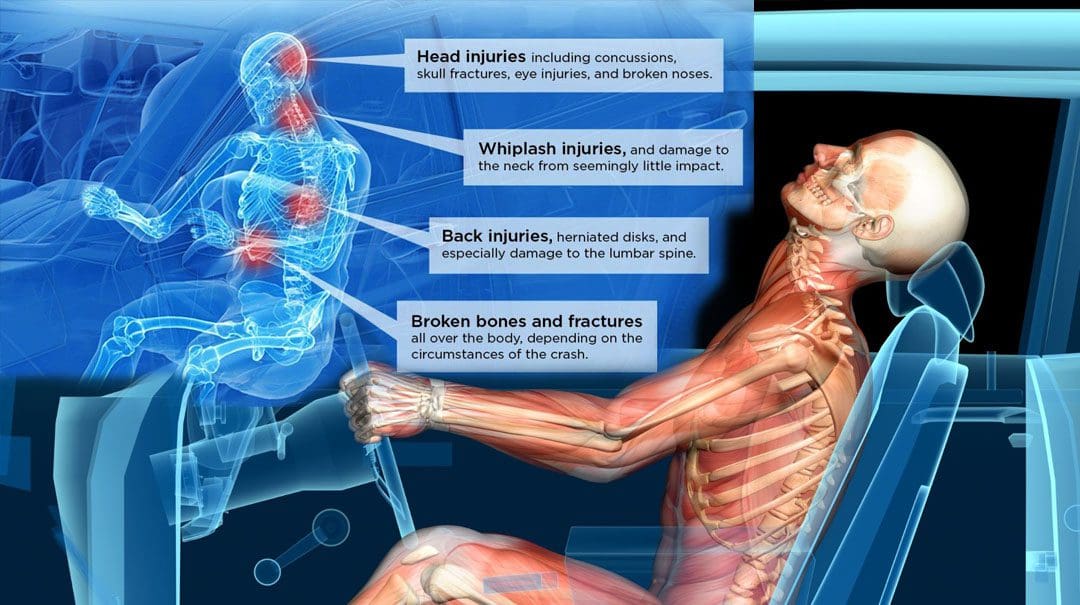
Table of Contents
Rear-End Collision Injuries
Rear-end collision injuries can range from mild to serious, and what seems like a minor pull can result in a severe injury. The most common injuries include:
- Contusions
- Neck and spinal injuries
- Whiplash
- Concussion
- Traumatic brain and other head injuries.
- Facial injuries
- Dental injuries
- Lacerations
- Broken bones
- Crushed or fractured ribs
- Punctured lungs
- Internal bleeding
- Paralysis
- Pre-existing conditions such as degenerative disc disease can worsen.
Collision Types
A rear-end collision can occur in several ways. The most common types include:
Tailgating
- When drivers in the rear follow another motorist too closely, and the lead motorist slows down or has to stop quickly, the rear driver hits the vehicle because there was not enough adequate time and distance to stop.
Slow Speed Collisions
- Slow-speed/low-impact collisions or fender benders can result in spinal injuries and concussions.
- They can also lead to facial and head injuries from sudden airbag deployment.
Vehicle Pile-Ups
- A single rear-end collision on a busy street or interstate highway can cause a chain reaction of multiple-vehicle collisions.
- These accidents can cause devastating injuries.
Causes
Causes that can take attention away from the road include:
- Speeding
- Distracted driving – Talking or texting.
- Tailgating
- Looking at something like an accident while driving by.
- Unsafe lane changes
- Drowsy or fatigued driving
- Construction site hazards
- Poor weather conditions
- Parking lot accidents
Chiropractic Care
Symptoms of rear-end collision injuries may not immediately present following an accident. It can take 24 to 48 hours for discomfort symptoms to come on and sometimes longer. The adrenaline rush allows the individual not to experience the physical symptoms, which is why individuals think they’re fine when they are not. Ignoring signs increases the risk of permanent injury. A herniated disc, for example, left untreated, can lead to permanent nerve damage. Chiropractic treatment for rear-end collisions is one of the most effective options available. A chiropractor manipulates the spine to realign the spinal cord, allowing the body to decrease inflammatory cytokine production, which reduces the inflammatory response. Specific techniques and various tools can realign individual vertebrae, restore joint flexibility, and break up the scar tissue so the areas can heal faster.
The Spine In A Rear-End Auto Accident
References
Chen, Feng, et al. “Investigation on the Injury Severity of Drivers in Rear-End Collisions Between Cars Using a Random Parameters Bivariate Ordered Probit Model.” International journal of environmental research and public health vol. 16,14 2632. 23 Jul. 2019, doi:10.3390/ijerph16142632
Davis, C G. “Rear-end impacts: vehicle and occupant response.” Journal of manipulative and physiological therapeutics vol. 21,9 (1998): 629-39.
Dies, Stephen, and J Walter Strapp. “Chiropractic treatment of patients in motor vehicle accidents: a statistical analysis.” The Journal of the Canadian Chiropractic Association vol. 36,3 (1992): 139–145.
Garmoe, W. “Rear-end collisions.” Archives of physical medicine and rehabilitation vol. 79,8 (1998): 1024-5. doi:10.1016/s0003-9993(98)90106-x
What's your reaction?