The most common form of pain is the headache. Whether dealing with a mild, dull ache, severe throbbing, or painful tension along the scalp and neck, headaches can disrupt and get in the way of everyday life. Over-the-counter pain medications can offer temporary relief, but they don’t get to the root and solve the cause. Chiropractic is a safe and effective treatment option that will bring head pain relief and treat what is causing the headache/s.
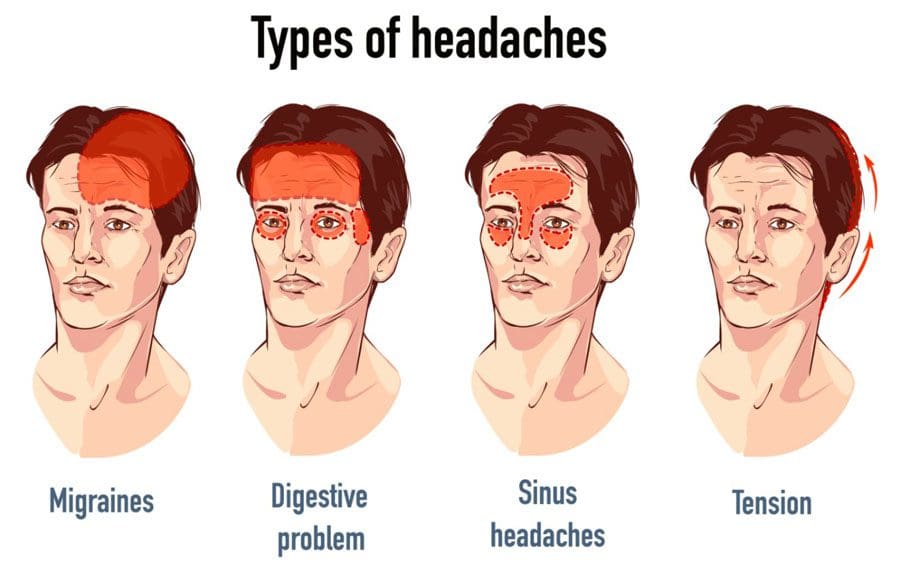
Table of Contents
Triggers
Individuals engage in more sedentary activities, and more hours spent in one fixed position combined with poor posture can increase joint irritation and muscle tension in the neck, upper back, and scalp. Headaches can have a variety of causes or triggers. These can include:
- Stress is the most common trigger
- Muscle tension
- Insomnia
- Environmental stimuli – noises, lights, smells
- Dehydration
- Weather changes
- Foods
- Blood sugar changes
- Excessive exercise
Most Common Types
There are two main categories: primary and secondary headaches.
Primary headaches
Primary headaches are when the headache itself is the main problem and is not a symptom of underlying diseases or conditions. These include:
- Cluster headaches
- Migraine
- New daily persistent headaches – NDPH
- Tension headaches
- Secondary headaches
Secondary headaches
These are related to medical condition/s like:
- Sinus congestion
- Medication overuse
- Infection
- High blood pressure
- Trauma
- Head injury
- Diseased blood vessels in the brain
- Tumor
Frequency
Headache pain comes from interacting signals in the brain, blood vessels, and nerves. A mechanism activates specific nerves that affect the muscles and blood vessels, sending pain signals back to the brain. If any of the following is occurring it is recommended to contact a doctor, headache specialist, or chiropractor.
- Three or more headaches a week.
- Headaches that get worse or don’t go away.
- Having to take a pain reliever every day or almost every day.
- Need more than 2-3 doses of over-the-counter medications a week to relieve symptoms.
- Headaches triggered by strenuous activity, hard work/exertion, bending, coughing.
- Recent changes in headache symptoms.
- Family history of headaches.
Clinical Description
To get to the root a doctor will ask:
- What time of day/night the headache usually occurs?
- How long does the headache last?
- Where the pain is located?
- Type of pain -Â throbbing, comes and goes, dull aching, one-sided, etc.
- Does the headache come on suddenly without warning or slowly progress?
- Are there other symptoms like weakness, nausea, sensitivity to light or noise, decreased appetite, changes in attitude or behavior?
Chiropractic
A chiropractor will assess, diagnose, conduct a physical examination to determine the cause and develop a personalized treatment plan to alleviate the pain and help to manage and prevent headaches. Treatment approaches include:
- A combination of chiropractic manipulative therapy.
- Activate trigger points to release tension and allow for optimal nerve and blood circulation.
- Active and passive exercises.
- Massage.
- Health coaching.
Body Composition
Water
Most of the body is made up of water with the percentage of body composition that is water changing based on individual functional needs. Essential functions of water include:
- Help to build/repair almost every cell in the body.
- Regulating body temperature through sweating and respiration.
- Energy from carbohydrates and proteins is transported by water through the blood.
- Assists in the removal of metabolic waste through urination.
- Acts as a shock absorber to protect the brain and spinal cord.
- Creates saliva/fluids to lubricate the joints.
The amount of water in the body depends on various factors that include:
- Age
- Gender
- Physical activity
- Is often referred to as Total Body Water or TBW.
The most common water comes from lean body mass. This includes blood, organs, and muscle. Major body organs’ water content:
- Lungs – 83%
- Muscles and kidneys – 79%
- Brain and heart – 73%
- Skin – 64%
- Bones – 31%
References
Bryans, Roland et al. “Evidence-based guidelines for the chiropractic treatment of adults with headache.†Journal of manipulative and physiological therapeutics vol. 34,5 (2011): 274-89. doi:10.1016/j.jmpt.2011.04.008
Tyagi, Alok. “New daily persistent headache.†Annals of Indian Academy of Neurology vol. 15,Suppl 1 (2012): S62-5. doi:10.4103/0972-2327.100011
What's your reaction?