Gastrointestinal stress and digestion issues/problems have become a familiar experience for many individuals. Gastrointestinal issues include:
- Dyspepsia or indigestionÂ
- Bloating
- Gas
- General abdominal pain
- Irritable bowel syndrome IBS
- Crohn’s Disease
- Constipation
- Diarrhea
- Persistent stomach pains
All of these can deplete the body of nutrients and drain the body’s energy. As a result, individuals can be distracted throughout the day, unable to leave the house, and unable to accomplish regular tasks. Gastrointestinal stress can be caused by a variety of factors, including:
- Unhealthy diet
- Interrupted sleep patterns
- Work/school changes
- Headaches
- Medications
- Fibromyalgia
Digestive issues are commonly associated with poor nutrition, but there could be an underlying cause in the spine and nervous system. Chiropractic can help manage gastrointestinal stress and stomach problems.
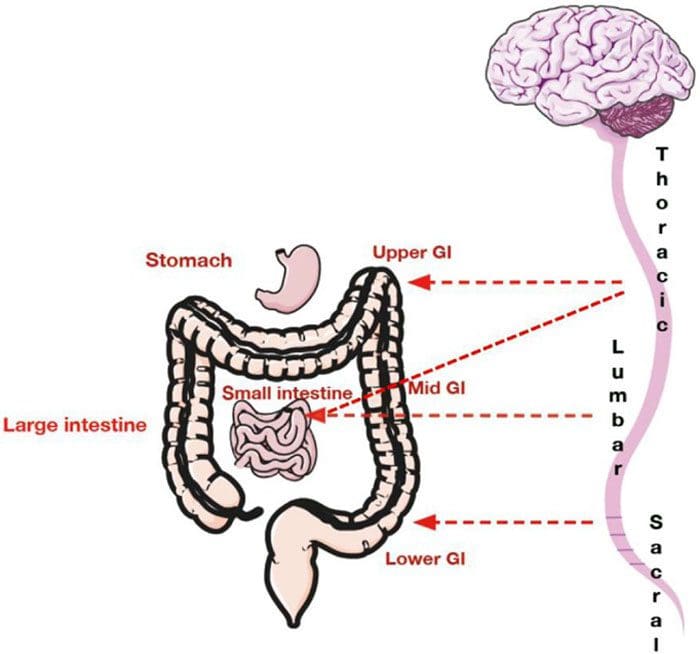
Table of Contents
Spinal Subluxation and Gastrointestinal Stress
The nervous system controls every function that the body performs, including digestion. The spine communicates with the stomach directly. The thoracic mid-back and lumbar low-back regions of the spine are responsible for regulating the rate of how food is physically broken down and digested. A subluxation or spinal misalignment can interfere with vital information transmissions from the brain to the digestive tract compromising digestive function.
Subluxation
Subluxation refers to a misalignment of the vertebrae that can cause health issues with the nerves in the spine, directly affecting digestion. If the vertebrae are out of alignment, this causes a misfire in the signals being sent to the nerves of the digestive system. This can cause problems for the body absorbing nutrients, vitamins, and minerals from food. Because of this, no matter how healthy the diet is, individuals can still suffer from digestive issues.
Chiropractic
Many individuals deal with stress through meditation, breathing exercises, physical activity/exercise, and diet adjustments.
Lifestyle adjustments help counter the effects of stress, but if the nervous system is blocked from spinal misalignment, disrupting vital nerve flow through the body, specifically the digestive tract, gastrointestinal stress will continue to cause damage and malfunction. Individuals with:
- Crohn’s Disease
- Acid Reflux
- GERD
- IBS
- Have experienced how chiropractic treatment corrects and helps manage symptoms.
Body Composition
Viscous and Nonviscous Fiber
Another way of classifying fiber is by its viscosity or thickness. Certain types of soluble fiber are thicker and are more likely to form firmer, stickier gels when mixed with water. When digesting food that consists of thick fiber it increases the thickness of the gel substance that passes through the gut. As a result, it reduces appetite because it makes the body feel fuller longer. Viscous fibers include:
- Pectins – abundant in berries and fruits.
- β-Glucans – Beta-glucans – abundant in barley and oats.
- Guar gum – derived from the Indian cluster bean.
- Psyllium – derived from psyllium seed husks.
The most frequently cited benefits of fiber include:
- Reduces cholesterol levels
- Improves glycemic control in type 2 diabetes
- Improves stool form in constipation and diarrhea directly related to viscosity.
Nonviscous food sources tend not to have these benefits. A recommended strategy is to lean toward foods higher in viscosity.
References
Angus, Katherine et al. “What effect does chiropractic treatment have on gastrointestinal (GI) disorders: a narrative review of the literature.†The Journal of the Canadian Chiropractic Association vol. 59,2 (2015): 122-33.
Qu, Liuxin et al. “Irritable bowel syndrome treated by traditional Chinese spinal orthopedic manipulation.†Journal of traditional Chinese medicine = Chung i tsa chih ying wen pan vol. 32,4 (2012): 565-70. doi:10.1016/s0254-6272(13)60072-2
What's your reaction?