“Can incorporating nopal or prickly pear cactus into one’s diet help individuals trying to lower blood glucose, inflammation, and risk factors associated with heart and metabolic diseases?”
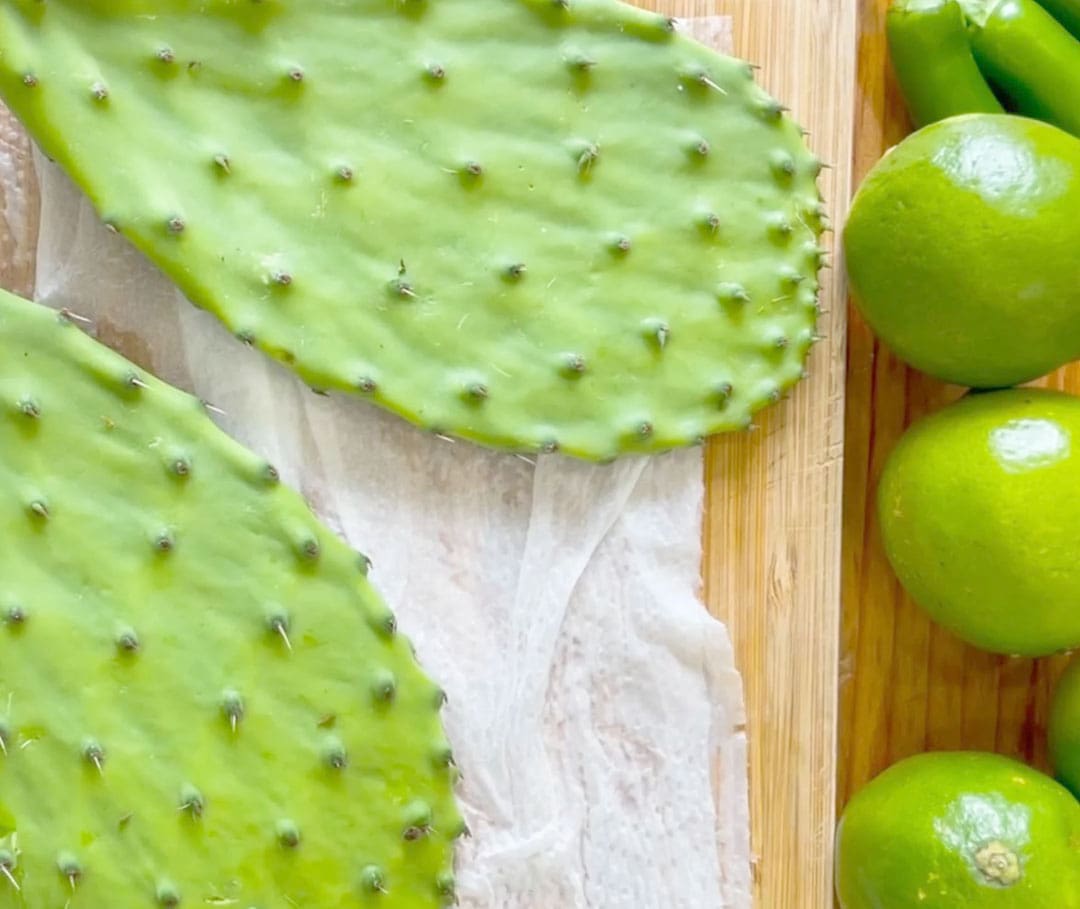
Table of Contents
Nopal
Nopal, also known as prickly pear cactus, is a versatile vegetable that can be added to nutrition plans to increase fiber intake, vitamins, minerals, and plant-based compounds. It grows in the U.S. Southwest, Latin America, and the Mediterranean. The pads, or the nopales or cactus paddles, have a texture like okra and slight tartness. The prickly pear cactus fruit, referred to as tuna in Spanish, is also consumed. (University of Arizona Cooperative Extension, 2019) It is often used in fruit salsas, salads, and desserts and is available as a supplement in tablet and powder form.
Serving Size and Nutrition
One cup of cooked nopales, around five pads, without added salt, contains: (U.S. Department of Agriculture, FoodData Central, 2018)
- Calories – 22
- Fat – 0 grams
- Sodium – 30 milligrams
- Carbohydrates – 5 grams
- Fiber – 3 grams
- Sugars – 1.7 grams
- Protein – 2 grams
- Vitamin A – 600 international units
- Vitamin C – 8 milligrams
- Vitamin K – 8 micrograms
- Potassium – 291 milligrams
- Choline – 11 milligrams
- Calcium – 244 milligrams
- Magnesium – 70 milligrams
It is generally recommended that most individuals consume 2.5 to 4 cups of vegetables per day. (U.S. Department of Agriculture, MyPlate, 2020)
Benefits
Nopal is highly nutritious, low in calories, free of fat, sodium, or cholesterol, and full of fiber, vitamins, minerals, and betalains. (Parisa Rahimi et al., 2019) Betalains are pigments with anti-inflammatory properties. The variety of fibers creates a low glycemic index (measures how much a specific food raises blood sugar levels after consumption) of about 32, a recommended addition to a diabetes-friendly diet. (Patricia López-Romero et al., 2014)
Compounds
- Nopal contains a variety of beneficial carbohydrates, vitamins, and minerals.
- Nopal has soluble and insoluble fiber, which benefits blood sugar.
- It also contains vitamin A, carotenoids, vitamin C, calcium, and plant-based compounds like phenols and betalains. (Karina Corona-Cervantes et al., 2022)
Blood Sugar Regulation
Research has evaluated regular nopal consumption and supplementation for blood sugar control. A study on blood sugar evaluated adding nopal to a high-carbohydrate breakfast or a breakfast high in soy protein in Mexican individuals with type 2 diabetes. The study found that consuming nopales, about 300 grams or 1.75 to 2 cups before a meal, could reduce after-meal/postprandial blood sugars. (Patricia López-Romero et al., 2014) An older study had similar results. (Montserrat Bacardi-Gascon et al., 2007) Individuals were randomly assigned to consume 85 grams of nopal with three different breakfast options:
- Chilaquiles – a casserole made with corn tortilla, vegetable oil, and pinto beans.
- Burritos – made with eggs, vegetable oil, and pinto beans.
- Quesadillas – made with flour tortillas, low-fat cheese, avocado, and pinto beans.
- The groups assigned to eat nopales had reductions in blood sugar. There was a:
- 30% reduction in the chilaquiles group.
- 20% decrease in the burrito group.
- 48% reduction in the quesadilla group.
However, the studies were small, and the population was not diverse. so further research is needed.
Increased Fiber
The combination of soluble and insoluble fiber benefits the gut in various ways. Soluble fiber can act as a prebiotic, feeding beneficial bacteria in the gut and assisting in removing low-density lipoprotein (LDL) cholesterol from the body. Insoluble fiber increases transit time, or how quickly food moves through the digestive system and promotes bowel regularity. (Centers for Disease Control and Prevention, 2022) In a short-term randomized clinical control trial, researchers found an improvement in irritable bowel syndrome symptoms in individuals supplemented with 20 and 30 grams of nopal fiber. (Jose M Remes-Troche et al., 2021) For individuals not used to consuming fibrous foods, it may cause mild diarrhea, so it is recommended to increase intake slowly and with adequate water to prevent gas and bloating.
Plant Based Calcium
One cup of nopal provides 244 milligrams or 24% of daily calcium needs. Calcium is a mineral that optimizes bone and teeth health. It also assists in blood vessel contraction and dilation, muscle function, blood clotting, nerve transmission, and hormonal secretion. (National Institutes of Health. Office of Dietary Supplements 2024) Individuals who follow diets that exclude dairy products can benefit from plant-based calcium sources. This includes cruciferous vegetables like kale, collards, and arugula.
Other Benefits
Studies done in animals and test tubes suggest that fresh nopal and extracts may assist in reducing triglycerides and cholesterol in metabolic dysfunction-associated steatotic liver disease or when unhealthy amounts of fat accumulate in the liver. (Karym El-Mostafa et al., 2014) Other potential benefits with limited evidence include:
- Inflammation and pain reduction.
- Body mass index (BMI), systolic, and diastolic blood pressure reduction. (Igho J Onakpoya et al., 2015)
- Positive changes in the gut microbiota and weight loss. (Karina Corona-Cervantes et al., 2022)
Consult a Dietician or Healthcare Provider
Unless individuals are allergic to it, most can eat whole nopal without a problem. However, supplementing is different because it provides a concentrated source. Individuals taking medication to manage diabetes and consuming nopal regularly may contribute to an increased risk of developing hypoglycemia or low blood sugar. Dermatitis has also been reported from contact with the cactus spines. (U.S. Department of Agriculture, FoodData Central, 2018) There have been rare reports of bowel obstruction in individuals who consume large amounts of the seeds found in the fruit. (Karym El-Mostafa et al., 2014) Ask a registered dietitian or primary healthcare provider if nopal can provide safe benefits.
Nutrition Fundamentals
References
University of Arizona Cooperative Extension. Hope Wilson, M. W., Patricia Zilliox. (2019). Prickly pear cactus: food of the desert. extension.arizona.edu/sites/extension.arizona.edu/files/pubs/az1800-2019.pdf
U.S. Department of Agriculture. FoodData Central. (2018). Nopales, cooked, without salt. Retrieved from fdc.nal.usda.gov/fdc-app.html#/food-details/169388/nutrients
U.S. Department of Agriculture. MyPlate. (2020-2025). Vegetables. Retrieved from www.myplate.gov/eat-healthy/vegetables
Rahimi, P., Abedimanesh, S., Mesbah-Namin, S. A., & Ostadrahimi, A. (2019). Betalains, the nature-inspired pigments, in health and diseases. Critical reviews in food science and nutrition, 59(18), 2949–2978. doi.org/10.1080/10408398.2018.1479830
López-Romero, P., Pichardo-Ontiveros, E., Avila-Nava, A., Vázquez-Manjarrez, N., Tovar, A. R., Pedraza-Chaverri, J., & Torres, N. (2014). The effect of nopal (Opuntia ficus indica) on postprandial blood glucose, incretins, and antioxidant activity in Mexican patients with type 2 diabetes after consumption of two different composition breakfasts. Journal of the Academy of Nutrition and Dietetics, 114(11), 1811–1818. doi.org/10.1016/j.jand.2014.06.352
Corona-Cervantes, K., Parra-Carriedo, A., Hernández-Quiroz, F., Martínez-Castro, N., Vélez-Ixta, J. M., Guajardo-López, D., García-Mena, J., & Hernández-Guerrero, C. (2022). Physical and Dietary Intervention with Opuntia ficus-indica (Nopal) in Women with Obesity Improves Health Condition through Gut Microbiota Adjustment. Nutrients, 14(5), 1008. doi.org/10.3390/nu14051008
Bacardi-Gascon, M., Dueñas-Mena, D., & Jimenez-Cruz, A. (2007). Lowering effect on postprandial glycemic response of nopales added to Mexican breakfasts. Diabetes care, 30(5), 1264–1265. doi.org/10.2337/dc06-2506
Centers for Disease Control and Prevention. (2022). Fiber: the carb that helps you manage diabetes. Retrieved from www.cdc.gov/diabetes/library/features/role-of-fiber.html
Remes-Troche, J. M., Taboada-Liceaga, H., Gill, S., Amieva-Balmori, M., Rossi, M., Hernández-Ramírez, G., García-Mazcorro, J. F., & Whelan, K. (2021). Nopal fiber (Opuntia ficus-indica) improves symptoms in irritable bowel syndrome in the short term: a randomized controlled trial. Neurogastroenterology and motility, 33(2), e13986. doi.org/10.1111/nmo.13986
National Institutes of Health (NIH). Office of Dietary Supplements. (2024). Calcium. Retrieved from ods.od.nih.gov/factsheets/Calcium-HealthProfessional/
El-Mostafa, K., El Kharrassi, Y., Badreddine, A., Andreoletti, P., Vamecq, J., El Kebbaj, M. S., Latruffe, N., Lizard, G., Nasser, B., & Cherkaoui-Malki, M. (2014). Nopal cactus (Opuntia ficus-indica) as a source of bioactive compounds for nutrition, health and disease. Molecules (Basel, Switzerland), 19(9), 14879–14901. doi.org/10.3390/molecules190914879
Onakpoya, I. J., O’Sullivan, J., & Heneghan, C. J. (2015). The effect of cactus pear (Opuntia ficus-indica) on body weight and cardiovascular risk factors: a systematic review and meta-analysis of randomized clinical trials. Nutrition (Burbank, Los Angeles County, Calif.), 31(5), 640–646. doi.org/10.1016/j.nut.2014.11.015
Corona-Cervantes, K., Parra-Carriedo, A., Hernández-Quiroz, F., Martínez-Castro, N., Vélez-Ixta, J. M., Guajardo-López, D., García-Mena, J., & Hernández-Guerrero, C. (2022). Physical and Dietary Intervention with Opuntia ficus-indica (Nopal) in Women with Obesity Improves Health Condition through Gut Microbiota Adjustment. Nutrients, 14(5), 1008. doi.org/10.3390/nu14051008
What's your reaction?