Managing rheumatoid arthritis is an ongoing balancing act. Despite following the rheumatologist’s lifestyle instructions, proper medication use, and a well-maintained RA plan, flare-ups can still present. Monitoring daily activities can help minimize the chances of experiencing episodes.
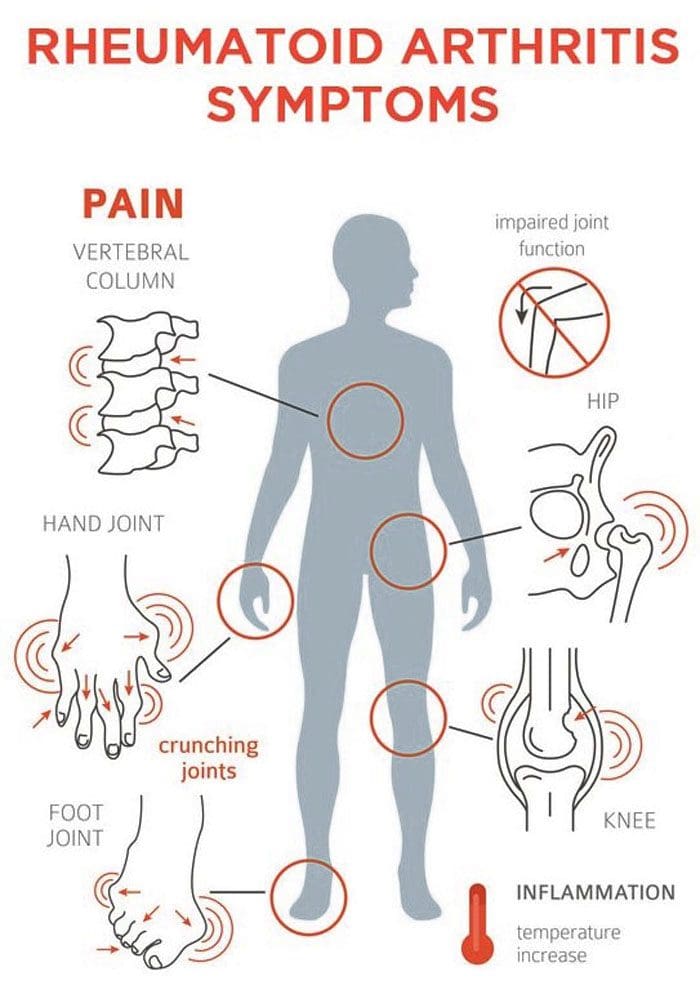
Table of Contents
Rheumatoid Arthritis Flare-Ups
A rheumatoid arthritis flare-up is a short-term escalation of arthritis symptoms. A flare-up can go away within a day or can persist for several weeks or months. A flare-up usually involves joint stiffness and pain but can also present as any symptoms worsening. If the flare-up is severe, it can affect the ability to perform regular everyday activities.
Symptoms
Symptoms can vary, and not every person experiences the same. Most individuals describe flare-ups with a sudden increase in:
- Pain
- Stiffness
- Swelling
- Limited joint mobility
- Fatigue
- Symptoms that feel like the flu.
- Frequency and severity can also vary.
Back Pain Symptoms
Rheumatoid arthritis can affect many joints. It is the inflammation of a joint’s synovial membrane. These include the facet joints in the spine. The most commonplace in the spine affected by rheumatoid arthritis is the upper neck, around the base of the skull. The joints at the top of the neck get inflamed and can become unstable or form abnormal tissue that sticks out and compress the spinal cord.
Triggers
Several potential flare-up triggers include:
- Stress
- Not getting enough sleep
- Medication changes
- Injury
- Excessive physical activity and/or exercise
- Repetitive overuse injury
- Smoking
- Spinal infections
Airborne toxins can also be a trigger to a flare-up. Substances include chemicals like household cleaners. Switching to organic and environmentally safe cleaners can help. Airborne toxins are a concern in densely populated cities and areas that experience air pollution and smog. To minimize risks, staying indoors during times of poor air quality is recommended.
However, flare-ups can happen without an identifiable trigger. Certain foods can increase inflammation and could contribute to a flare-up, including:
- Alcohol
- Processed meats
- Red meat
- Dairy products
- Processed sugars
- High salt foods
- High-MSG foods
- Gluten
Avoiding these foods and following a diet that has been developed to prevent symptoms will help significantly. The objective is to learn to identify an RA flare-up to moderate activities accordingly.
Prevention
Managing any chronic medical condition is challenging, especially when trying to predict when a flare-up will happen. There is not a foolproof strategy for prevention, but advice that can help minimize the risks of an RA flare-up.
- Follow a healthy lifestyle.
- Proper nutrition
- Eat as much whole, unprocessed foods
- Avoid pro-inflammatory foods
- Practice healthy sleep hygiene
- Reduce stress through relaxation and meditation techniques
- Regular light impact exercise
Understand that the disease can change over time. This means changes in medications and the need for multi-approach treatment. Learning healthy self-care techniques will go a long way in managing symptoms.
Body Composition
Antioxidants protection
Metabolic processes, like energy production, and environmental pollution, can result in free radical production. These are highly reactive molecules that can damage the body’s cells and lead to oxidative stress. This can develop into a disease, including heart disease. The body has natural protective mechanisms to neutralize free radical molecules, including glutathione, which is the body’s top antioxidant. If glutathione becomes depleted because of increased free radicals, the body switches to dietary antioxidants from food as a secondary defense.
Antioxidant therapy is a promising treatment for oxidative stress.
Fruit and Plant Sources
Fruits and veggies like:
- Berries
- Dark-colored grapes
- Spinach
- Kale
- Sweet potatoes
- Carrots
- All are great sources of antioxidants.
References
Arthritis Foundation. (n.d.) “Understanding rheumatoid arthritis flares.†www.arthritis.org/diseases/more-about/understanding-rheumatoid-arthritis-flares
Pham-Huy, Lien Ai et al. “Free radicals, antioxidants in disease and health.†International Journal of biomedical science: IJBS vol. 4,2 (2008): 89-96.
What's your reaction?