Table of Contents
Platelet-Rich Plasma (PRP) Therapy for Neuropathy: A Natural Way to Heal Damaged Nerves and Ease Pain
Neuropathy occurs when nerves are damaged and send incorrect signals to the brain. People feel burning pain, tingling, numbness, or weakness, often in their hands or feet. Common causes include diabetes, injuries, or long-term health issues. Many treatments only mask the pain with pills, but platelet-rich plasma (PRP) therapy takes a different path. It uses the body’s own healing power to resolve the problem at its source. This article explains how PRP works, why it helps, and how an integrative approach can bring lasting relief.
What Is Platelet-Rich Plasma Therapy?
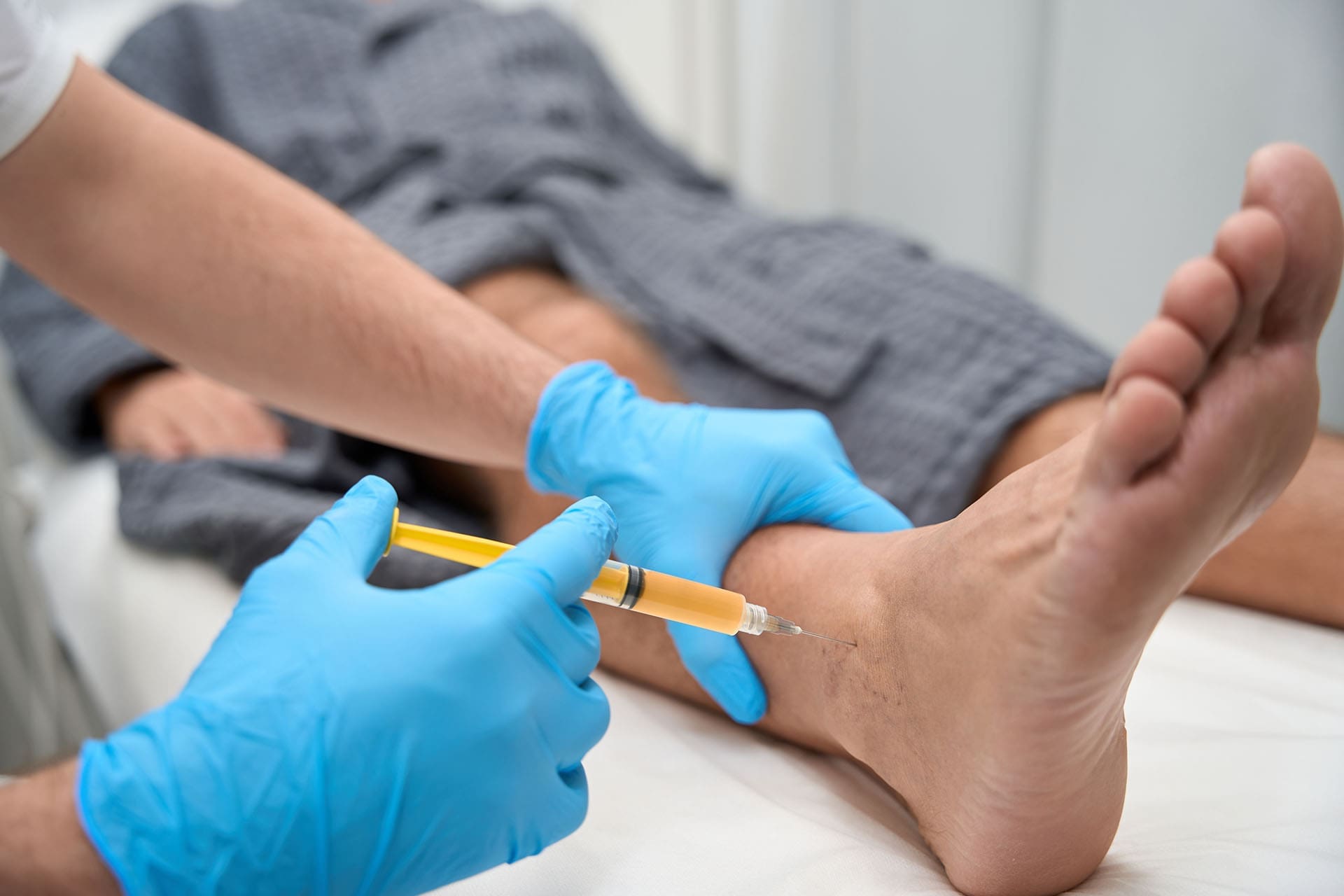
PRP therapy starts with a simple blood draw from the patient’s arm. The blood goes into a machine called a centrifuge that spins it fast. This process concentrates platelets, which are tiny cells rich in healing factors. Doctors then turn this rich plasma into an injection and place it right where the nerves are hurt. No surgery, no drugs from a pharmacy—just the patient’s own blood doing the work.
The whole visit usually takes about 30 minutes. Patients go home the same day and can quickly return to normal activities. Because the platelets come from the patient, the body accepts them without mounting an immune response.
How PRP Therapy Helps Repair Nerves
Damaged nerves require assistance to regenerate. PRP delivers a potent dose of growth factors directly to the injured site. These factors include proteins like nerve growth factor (NGF), brain-derived neurotrophic factor (BDNF), platelet-derived growth factor (PDGF), and vascular endothelial growth factor (VEGF). They tell the nerves to wake up, grow new connections, and rebuild their protective covering called myelin.
At the same time, PRP lowers swelling by calming angry immune cells. It shifts the body from a state of constant inflammation to one of repair. Better blood flow follows, bringing oxygen and nutrients that nerves need to heal. Studies show this process speeds up tissue repair and helps restore normal nerve signals.
For peripheral and diabetic neuropathy, PRP targets the small fibers responsible for burning pain in the feet and hands. It does not just cover up symptoms—it helps the nerves actually fix themselves.
Key Benefits of PRP for Neuropathy
- Faster nerve regeneration: Growth factors encourage axons to sprout and reconnect, helping signals travel normally again.
- Less inflammation and pain: PRP calms cytokines that cause burning and stabbing feelings, often bringing relief within weeks.
- Improved blood flow: New tiny blood vessels form, feeding damaged nerves and supporting long-term recovery.
- Better function and feeling: Patients report less numbness, steadier balance, and easier movement in daily life.
- Reduced need for strong medicines: Many cut back on pain pills or avoid surgery as the underlying issue begins to heal.
These benefits make PRP a smart choice for people tired of temporary fixes.
The Integrative Clinic Approach: Treating the Root Cause
The best results happen when PRP is part of a bigger plan. An integrative clinic brings together a team of specialists—advanced practice registered nurses (APRNs), family nurse practitioners (FNPs), certified functional medicine practitioners (CFMPs), and Institute for Functional Medicine certified practitioners (IFMCPs). They do not stop at the injection. They use imaging-guided shots for pinpoint accuracy, plus metabolic nutrition and functional medicine to fix what started the nerve damage in the first place.
Dr. Alexander Jimenez, DC, APRN, FNP-BC, CFMP, IFMCP, leads this kind of care at his Injury Medical Clinic in El Paso, Texas. With over 30 years of experience, he sees neuropathy as more than sore nerves. He notes that issues like poor blood sugar control, hidden inflammation, or gut problems often play a role. By combining PRP injections with chiropractic care, dietary changes, and whole-body support, his patients achieve tissue repair and improved overall health. Dr. Jimenez observes that this root-cause method leads to greater, longer-lasting improvements instead of just short-term symptom relief.
What the Research Shows About PRP
Scientists have studied PRP in labs and with real patients. Reviews of studies in animals and humans show that PRP helps nerves grow, repair their protective covering, and reduce pain in conditions such as carpal tunnel syndrome and diabetic neuropathy. One comprehensive review found PRP improves nerve function and cuts inflammation in peripheral nerve injuries.
Another study showed that PRP accelerates the delivery of repair signals by activating cells within the nerve. Clinical reports also note good outcomes for sciatic nerve problems and post-injury pain. Although we still require more extensive trials, the current evidence suggests that PRP is a promising option that aligns with the body’s natural systems.
Is PRP Therapy Safe?
Safety is a big plus with PRP. Because it uses the patient’s own blood, there is almost no risk of allergic reaction or infection from outside sources. Side effects are usually mild—maybe some soreness at the injection spot that fades in a day or two.
Doctors consider it safe for long-term nerve pain. Many people notice symptom relief within a few months, with benefits that can last. It is suitable for those who want to avoid opioids or repeated steroid shots.
What to Expect During and After Treatment
The process is straightforward. After the blood draw and centrifugation, the doctor uses ultrasound or other imaging to guide the injection to the exact location needed. Some patients feel a quick pinch, but numbing cream helps. Over the next few weeks, the growth factors get to work. Full benefits often build over two to three months as nerves slowly repair.
Lifestyle steps help too. Eating foods rich in vitamins, staying active within comfort limits, and following the clinic’s nutrition plan support the healing. Dr. Jimenez and his team guide each patient through a custom plan, giving PRP the best chance to succeed.
Why Choose PRP Over Traditional Options
Traditional medicines may dull pain but do nothing to repair damaged nerves. Surgery can be risky and slow to recover from. PRP offers a middle path—natural, minimally invasive, and focused on real repair. Clinics that blend it with functional medicine go even further by addressing diet, stress, and other factors that keep neuropathy going.
Patients often say they feel more in control of their health. Instead of chasing symptoms, they work with their bodies to rebuild.
A Promising Future for Neuropathy Care
PRP therapy stands out because it turns the patient’s own healing tools into medicine. It speeds nerve regeneration, cuts inflammation, boosts blood flow, and eases pain from peripheral and diabetic neuropathy. When paired with expert care from teams like Dr. Alexander Jimenez’s, it becomes a complete root-cause solution.
If you or someone you know deals with ongoing nerve pain, talk to a qualified provider about PRP. The path to feeling better may start with a simple blood draw and end with stronger, healthier nerves.
References
Shang, K., Liu, Y., & Qadeer, A. (2025). Platelet-rich plasma in peripheral nerve injury repair: A comprehensive review of mechanisms, clinical applications, and therapeutic potential. PMC.
Wang, S., Liu, Z., Wang, J., Cheng, L., Hu, J., & Tang, J. (2024). Platelet-rich plasma (PRP) in nerve repair. PMC.
Pain and Wellness Institute. (n.d.). Can platelet-rich plasma be used to treat neuropathy?.
The Regenerative Center. (n.d.). How stem cell and PRP therapy can naturally support nerve repair in neuropathy.
Heelex Medical Center. (n.d.). Neuropathy PRP treatment.
Matti, Z. (n.d.). Platelet-rich plasma (PRP) and neuropathy.
Wang, S., Liu, X., & Wang, Y. (2022). Evaluation of platelet-rich plasma therapy for peripheral nerve regeneration: A critical review of literature. PMC.
Jimenez, A. (n.d.). Injury specialists.
Jimenez, A. (n.d.). Dr. Alexander Jimenez, DC, APRN, FNP-BC, IFMCP, CFMP, ATN. LinkedIn.
Ospina Medical. (n.d.). Platelet-rich plasma: A better treatment option for neuropathic patients.
Disclaimers
Professional Scope of Practice *
The information herein on "Platelet-Rich Plasma (PRP) Therapy for Peripheral Neuropathy" is not intended to replace a one-on-one relationship with a qualified health care professional or licensed physician and is not medical advice. We encourage you to make healthcare decisions based on your research and partnership with a qualified healthcare professional.
Blog Information & Scope Discussions
Welcome to El Paso's wellness blog, where Dr. Alex Jimenez, DC, FNP-C, a board-certified Family Practice Nurse Practitioner (FNP-C) and Chiropractor (DC), presents insights on how our team is dedicated to holistic healing and personalized care. Our practice aligns with evidence-based treatment protocols inspired by integrative medicine principles, similar to those found on dralexjimenez.com, focusing on restoring health naturally for patients of all ages.
Our areas of chiropractic practice include Wellness & Nutrition, Chronic Pain, Personal Injury, Auto Accident Care, Work Injuries, Back Injury, Low Back Pain, Neck Pain, Migraine Headaches, Sports Injuries, Severe Sciatica, Scoliosis, Complex Herniated Discs, Fibromyalgia, Chronic Pain, Complex Injuries, Stress Management, Functional Medicine Treatments, and in-scope care protocols.
Our information scope is limited to chiropractic, musculoskeletal, physical medicine, wellness, contributing etiological viscerosomatic disturbances within clinical presentations, associated somato-visceral reflex clinical dynamics, subluxation complexes, sensitive health issues, and functional medicine articles, topics, and discussions.
We provide and present clinical collaboration with specialists from various disciplines. Each specialist is governed by their professional scope of practice and their jurisdiction of licensure. We use functional health & wellness protocols to treat and support care for the injuries or disorders of the musculoskeletal system.
Our videos, posts, topics, subjects, and insights cover clinical matters, issues, and topics that relate to and directly or indirectly support our clinical scope of practice.*
Our office has reasonably attempted to provide supportive citations and has identified the relevant research studies or studies supporting our posts. We provide copies of supporting research studies available to regulatory boards and the public upon request.
We understand that we cover matters that require an additional explanation of how they may assist in a particular care plan or treatment protocol; therefore, to discuss the subject matter above further, please feel free to ask Dr. Alex Jimenez, DC, APRN, FNP-BC, or contact us at 915-850-0900.
We are here to help you and your family.
Blessings
Dr. Alex Jimenez DC, MSACP, APRN, FNP-BC*, CCST, IFMCP, CFMP, ATN
email: coach@elpasofunctionalmedicine.com
Licensed as a Doctor of Chiropractic (DC) in Texas & New Mexico*
Texas DC License # TX5807
New Mexico DC License # NM-DC2182
Licensed as a Registered Nurse (RN*) in Texas & Multistate
Texas RN License # 1191402
ANCC FNP-BC: Board Certified Nurse Practitioner*
Compact Status: Multi-State License: Authorized to Practice in 40 States*
Graduate with Honors: ICHS: MSN-FNP (Family Nurse Practitioner Program)
Degree Granted. Master's in Family Practice MSN Diploma (Cum Laude)
Dr. Alex Jimenez, DC, APRN, FNP-BC*, CFMP, IFMCP, ATN, CCST
My Digital Business Card
What's your reaction?