When the body shifts out of homeostasis or when something in the body is out of balance, the body sweats. Sweating is a process known as perspiration that releases salt-based fluids from the body’s sweat glands to help the body stay cool and regulate body temperature. Sweat is commonly found under the arms, on the feet, and the palms of the hands. Body temperature, outdoor temperature, or emotional state changes can cause sweating.
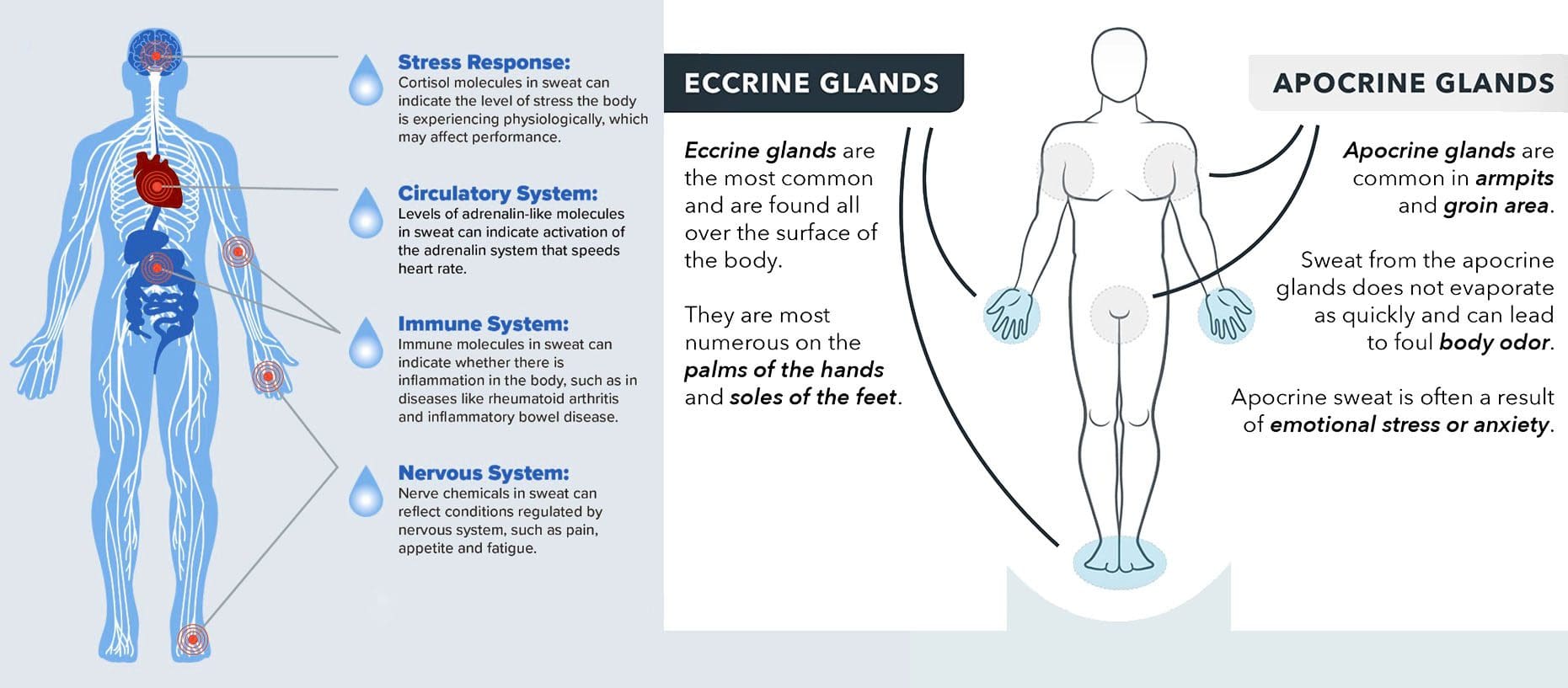
Table of Contents
Sweating
An individual has around 2-4 million sweat glands, which begin to become fully active during puberty. There are two types of sweat glands: eccrine and apocrine. The most common areas of sweating include:
- Face.
- Armpits.
- Palms of the hands.
- Soles of the feet.
- Sweating in normal amounts is an essential bodily process.
- Not sweating enough or sweating too much can cause problems.
- Sweat is mostly water but contains small amounts of salt.
- Sweat also contains electrolytes and minerals – including potassium, chloride, magnesium, zinc, copper, proteins, urea, and ammonia.
- Electrolyte levels need to be replenished after heavy sweating.
Causes
Sweating is normal. However, a variety of causes can stimulate increased sweating.
High Temperature
- Elevated body temperature.
- Elevated outdoor temperature.
- Are the primary cause of increased sweating.
Emotions and stress
Emotions and conditions can also make the body break out in a heavy sweat.
- Emotional stress
- Anxiety
- Anger
- Fear
- Embarrassment
Foods
Sweating may be a response to certain foods. This type of sweat is known as gustatory sweating, which can be caused by:
- Spicy foods
- Caffeinated drinks – like soda, coffee, and tea.
- Alcoholic beverages.
- Medications
Illness and Medications
Sweating may be caused by medication use and certain illnesses:
- Hypoglycemia – low blood sugar levels.
- Fever.
- Fever-reducing medications.
- Pain relieving medications.
- Infection.
- Cancer.
- Synthetic thyroid hormones.
- Complex regional pain syndrome – CRPS, is a rare form of chronic pain that usually affects an arm or leg.
Menopause
- The hormonal fluctuations associated with menopause can trigger sweating.
- Women going through menopause often experience night sweats and sweat during hot flashes.
Conditions
The following conditions result from either excessive sweating or not sweating enough.
Hyperhidrosis
- Hyperhidrosis is a condition of excessive sweating from the armpits, hands, and feet.
- This condition can be embarrassing and could prevent individuals from going about their daily routines.
Hypohidrosis
- Hypohidrosis is the absence of sweat.
- Sweat is how the body releases excess heat.
- Individuals can become dehydrated and have an increased risk of heatstroke.
Chiropractic Adjustments
The nervous system coordinates and oversees all functions of the body. Some can be consciously controlled, and others are automatic. The autonomic nervous system – ANS regulates involuntary processes, including blood pressure, heart rate, digestion, respiration, gland function, sweating, etc. The ANS is divided into the sympathetic and parasympathetic systems.
- The sympathetic nervous system – when activated, creates a state of elevated activity and attention or the fight or flight response.
- This process increases blood pressure and heart rate, preparing the body to respond to various stressors.
- The parasympathetic nervous system promotes resting and digesting processes that lower heart rate and blood pressure.
- The parasympathetic calms the body.
Chiropractic adjustments have been known to affect the autonomic nervous system. This is achieved by increasing parasympathetic activity/relaxation and down-shifting the sympathetic/fight or flight response and inflammation. A chiropractic adjustment can remove subluxations, which cause interferences in the nervous system. Chiropractic restores and improves the brain and body system communication.
Thoracic Spine Pain
References
Baker, Lindsay B. “Physiology of sweat gland function: The roles of sweating and sweat composition in human health.” Temperature (Austin, Tex.) vol. 6,3 211-259. 17 Jul. 2019, doi:10.1080/23328940.2019.1632145
Cabanac, M. “Temperature regulation.” Annual Review of Physiology vol. 37 (1975): 415-39. doi:10.1146/annurev.ph.37.030175.002215
Cui, Chang-Yi, and David Schlessinger. “Eccrine sweat gland development and sweat secretion.” Experimental dermatology vol. 24,9 (2015): 644-50. doi:10.1111/exd.12773
Kiani, Aysha Karim, et al. “Neurobiological basis of chiropractic manipulative treatment of the spine in the care of major depression.” Acta bio-medica : Atenei Parmensis vol. 91,13-S e2020006. 9 Nov. 2020, doi:10.23750/abm.v91i13-S.10536
McCutcheon, L J, and R J Geor. “Sweating. Fluid and ion losses and replacement.” The Veterinary clinics of North America. Equine practice vol. 14,1 (1998): 75-95. doi:10.1016/s0749-0739(17)30213-4
VACATKO, S. “O hydrataci epidermis” [Sweating]. Ceskoslovenska dermatologie vol. 26,3 (1951): 131-7.
What's your reaction?