Long-distance running, also known as endurance running, is a great way to improve fitness and relieve stress. Health experts say long-distance runners’ benefits include strong cardiovascular health, low cholesterol, healthy blood pressure levels, and improved metabolism. However, it is not easy and requires specific training, but it is not impossible even for beginners. Here is a beginner long-distance running training guide that goes over the fundamental areas needed to develop.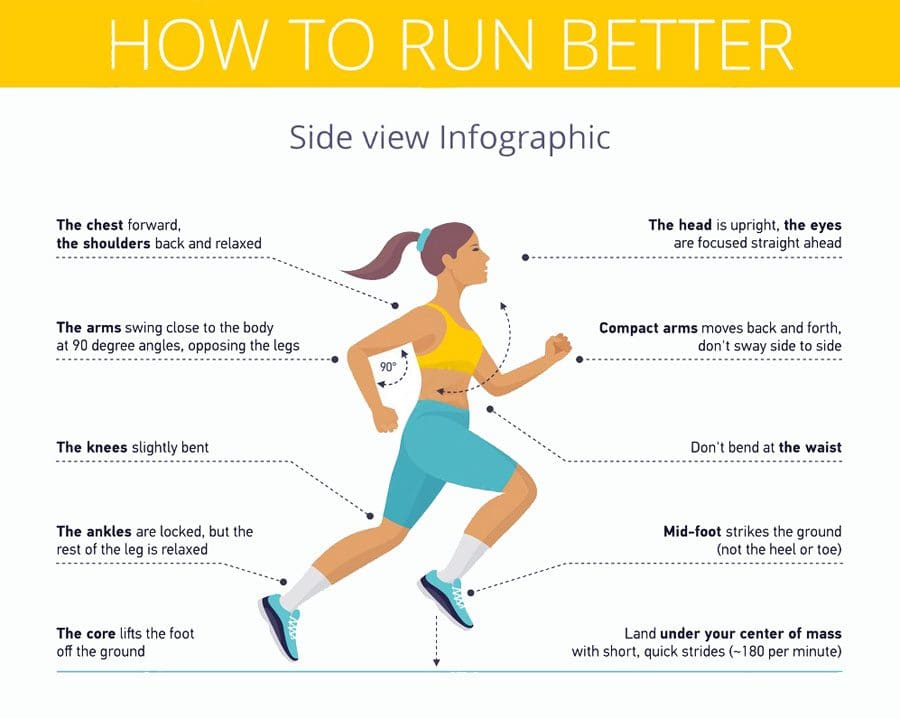
Table of Contents
Long Distance Running Training
Running is a great form of cardio that offers several health benefits that, includes:
- Weight loss
- Stronger muscles
- Stronger bones
- Improved cardiovascular functionality
One of the main prerequisites is building up the body’s ability to handle the exercise. To reach the full potential as a distance runner, key areas that need developing include:
- Using proper footwear
- Endurance
- Lactate threshold
- Aerobic capacity
- Basic speed
- Running technique
Running Shoes
- It’s essential to wear comfortable running shoes that can handle the terrain and the distance.
- Improper support can lead to injury and long-term damage.
- Wearing good athletic socks is also recommended.
- Stopping a run halfway because blisters form stops the flow of the workout and impacts stamina and momentum.
- It is important to find the correct size, weight, and comfort.
- Ask the experts for help from local sports or running shoe stores who will look at how you move and recommend a running shoe.
Endurance Base
- Endurance base refers to how long an individual can run at a comfortable pace before having to stop.
- Once an individual finds their endurance base, which for beginners could be around five minutes at a time, this can be a starting point to build off.
- On light days, a run could last for 10 minutes before walking.
- On harder days, a run could go for 20 minutes before walking.
- Incremental increases build up an individual’s endurance base.
Lactate Threshold
- The lactate threshold is similar to the endurance base in that it refers to how long an individual can run before feeling a buildup in lactate.
- Lactate is what makes the muscles cramp and become sore the following days.
- Understanding how much the individual’s body can take before this buildup becomes too much is their lactate threshold.
- The threshold will gradually increase with training.
Aerobic Capacity
- Maximum aerobic capacity measures the heart and lungs’ ability to send oxygen to the muscles.
- Understanding individual maximum cardio capacity will help identify the starting point to slowly and steadily increase running distances.
Basic Speed
- Basic speed is how fast individuals can run while holding a conversation.
- Knowing the basic running speed can help determine the starting point.
- As stamina increases, basic speed increases.
Running Technique
Running technique is essential for gaining the most speed and endurance. Using the correct form, the body is not expending unnecessary energy. The proper running form includes:
- Maintaining an upright spine with the head, shoulders, and hips aligned.
- Focus on maintaining a steady breathing rhythm.
- Follow through on strides.
- Do not cut the movements short.
- Find your natural stride, which could be leading with the heel or running toe to heel.
- Consult an experienced running coach or exercise physiologist for assistance in finding your running form.
Long-Term Goal
- The body adapts to the stress of training slowly and over time.
- Physiological adaptations cannot be rushed; however, the training program can be optimized to individual needs.
- The minimum time before seeing an improvement from training is around six weeks.
Gradual Increase
- Training load is a combination of distance, intensity, and the number of runs each week.
- The body can only develop with moderate increases over a short time.
- Increasing the load too much and too fast leads to injury, illness, and exhaustion.
- Limiting distance, intensity, or frequency changes is recommended no more than once a week.
Recovery
- Training provides the stimulus to improved fitness, but the body needs recovery time to grow and adapt.
- Often beginners want to train hard every day, trying to cover all the elements at once.
- This common mistake slows progress and can cause various injuries, fatigue, and loss of motivation.
- Rest days are essential to allow the body to recover, develop, adapt, and continue to progress healthily.
- The classic training program alternates a hard training day with an easy day or a rest day.
- Two consecutive hard training days can be done as long as they are followed by two full recovery days.
Beginner Tips
References
Berryman, Nicolas, et al. “Strength Training for Middle- and Long-Distance Performance: A Meta-Analysis.” International journal of sports physiology and performance vol. 13,1 (2018): 57-63. doi:10.1123/ijspp.2017-0032
Blagrove, Richard C et al. “Effects of Strength Training on the Physiological Determinants of Middle- and Long-Distance Running Performance: A Systematic Review.” Sports medicine (Auckland, N.Z.) vol. 48,5 (2018): 1117-1149. doi:10.1007/s40279-017-0835-7
Kenneally, Mark, et al. “The Effect of Periodization and Training Intensity Distribution on Middle- and Long-Distance Running Performance: A Systematic Review.” International journal of sports physiology and performance vol. 13,9 (2018): 1114-1121. doi:10.1123/ijspp.2017-0327
Tschopp, M, and F Brunner. “Erkrankungen und Überlastungsschäden an der unteren Extremität bei Langstreckenläufern” [Diseases and overuse injuries of the lower extremities in long distance runners]. Zeitschrift fur Rheumatologie vol. 76,5 (2017): 443-450. doi:10.1007/s00393-017-0276-6
van Poppel, Dennis, et al. “Risk factors for overuse injuries in short- and long-distance running: A systematic review.” Journal of sport and health science vol. 10,1 (2021): 14-28. doi:10.1016/j.jshs.2020.06.006
What's your reaction?